Korea Petroleum Association 2026 Press Academy
Association chief Park Ju-sun says refiners must fulfill shareholder duties under commercial law
Japan's advance-payment model cited as way to minimize refiner losses
Refiner losses from price cap estimated at 6 trillion won
Association also calls for lifting export restrictions if domestic supply is stable
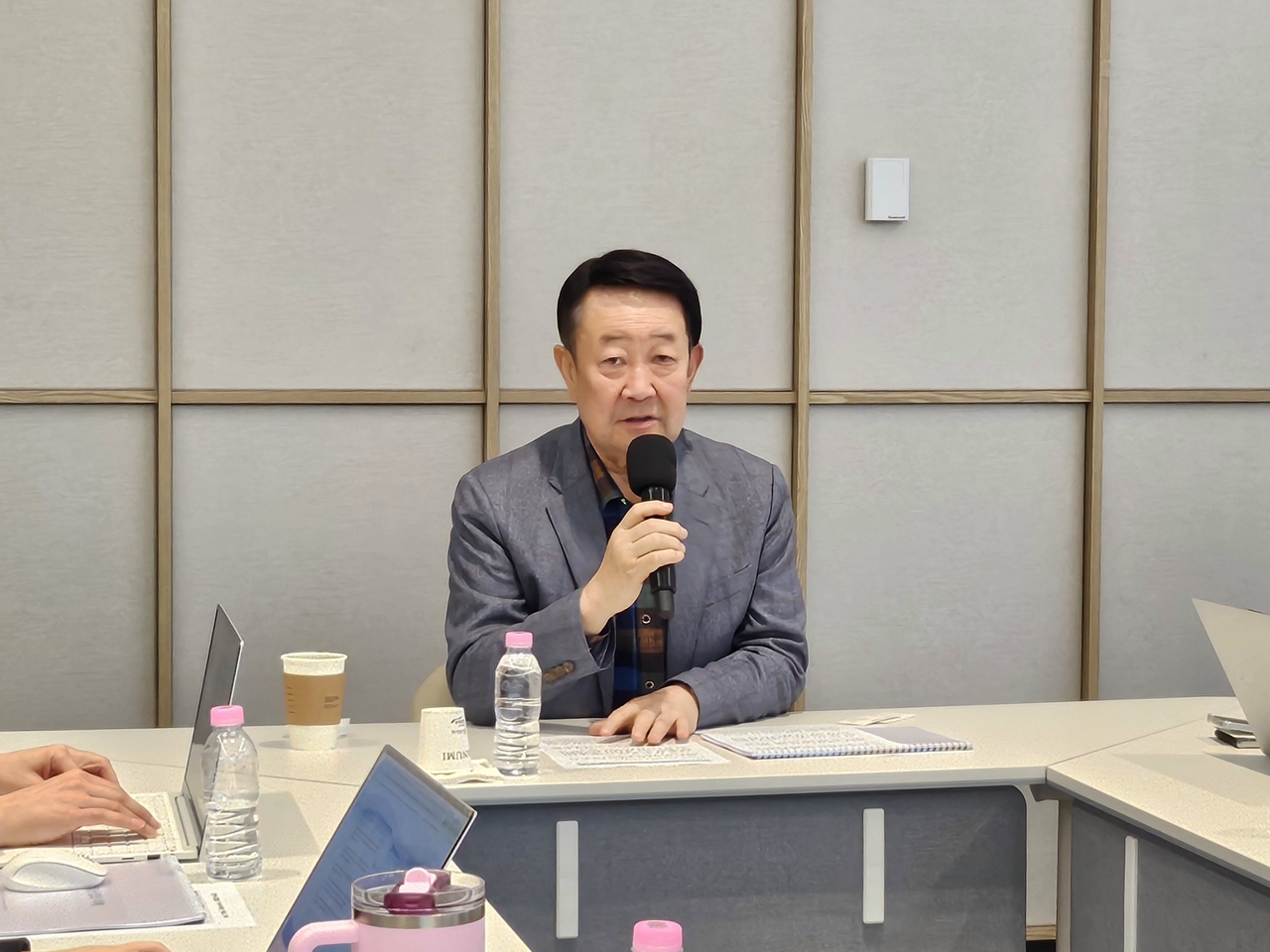
Korea Petroleum Association President Park Ju-sun on Thursday urged the government to prepare an exit strategy for its petroleum price cap, which has been in effect for eight months since the outbreak of the Middle East war.
Park made the remarks at a press academy held Thursday morning at Yeouido TP Tower. The government introduced the price cap on petroleum products in March after international oil prices surged in the wake of the US-Iran war. The government plans to notify refiners as early as the end of this month of the first settlement amount covering losses they incurred under the price cap between March and June.
Park expressed concern about whether the compensation would meet constitutional standards. "I am deeply worried about whether the loss compensation will conform to constitutional provisions," Park said — a reference to the constitutional requirement that the state provide just compensation when it restricts property rights for the public interest.
Park also raised the burden of fiduciary duties to shareholders under commercial law. "The intent is not for refiners to exploit the hardships of the public for excessive profit," Park said. "From the refiners' perspective, responsible measures must be taken toward shareholders, and the compensation amount must be finalized so that a smooth understanding can be reached with foreign investors as well."
An Guk-heon, the association's director of sustainability, added that a July revision to the Commercial Act expanded directors' duty of loyalty to cover shareholders as well as the company itself. "If a company fails to adequately protect shareholders' interests, there is a risk it could face lawsuits," An said.

The association argued that Japan has minimized refiner losses through an advance-payment model rather than after-the-fact compensation. Japan has been paying refiners weekly subsidies equivalent to the rise in international oil prices, keeping gasoline prices at around 170 yen per liter.
"Japan pays refiners in advance based on the expected consumer price for the following week — from March through October it paid 31.2 yen per liter, or about 284 won," An said. "That ultimately came out to slightly above the fluctuation in gasoline prices on the international spot market."
According to the association, refiner losses from the price cap since March have been estimated at 6 trillion won ($4.51 billion), calculated based on the difference between international petroleum product prices and domestic selling prices.
The association also argued that export restrictions on petroleum products have lost their practical effect. "Refiners operating their crude oil refining facilities at 100 percent capacity need to clear surplus inventory through exports as domestic demand has fallen, but the export restrictions are forcing them to reduce or halt refinery operations," An said.
The government had earlier imposed export restrictions on refiners to ensure priority domestic supply of petroleum products. In the early stages of the Middle East war, exports of gasoline, diesel and kerosene were capped at the same-month level of the previous year, though the government has since allowed up to 10 percent additional exports for diesel. "If there is no problem with domestic petroleum supply, the export restrictions should be lifted," An said.
klee@heraldcorp.com