Edvard Munch: The Sick Child
He painted his beloved older sister,
who died at 15, again and again
Editor's note
We tell stories through paintings — exploring the issues, the hidden histories, and the human longing and anguish embedded in great works of art. We begin with a single canvas, then step beyond the frame into the world outside.
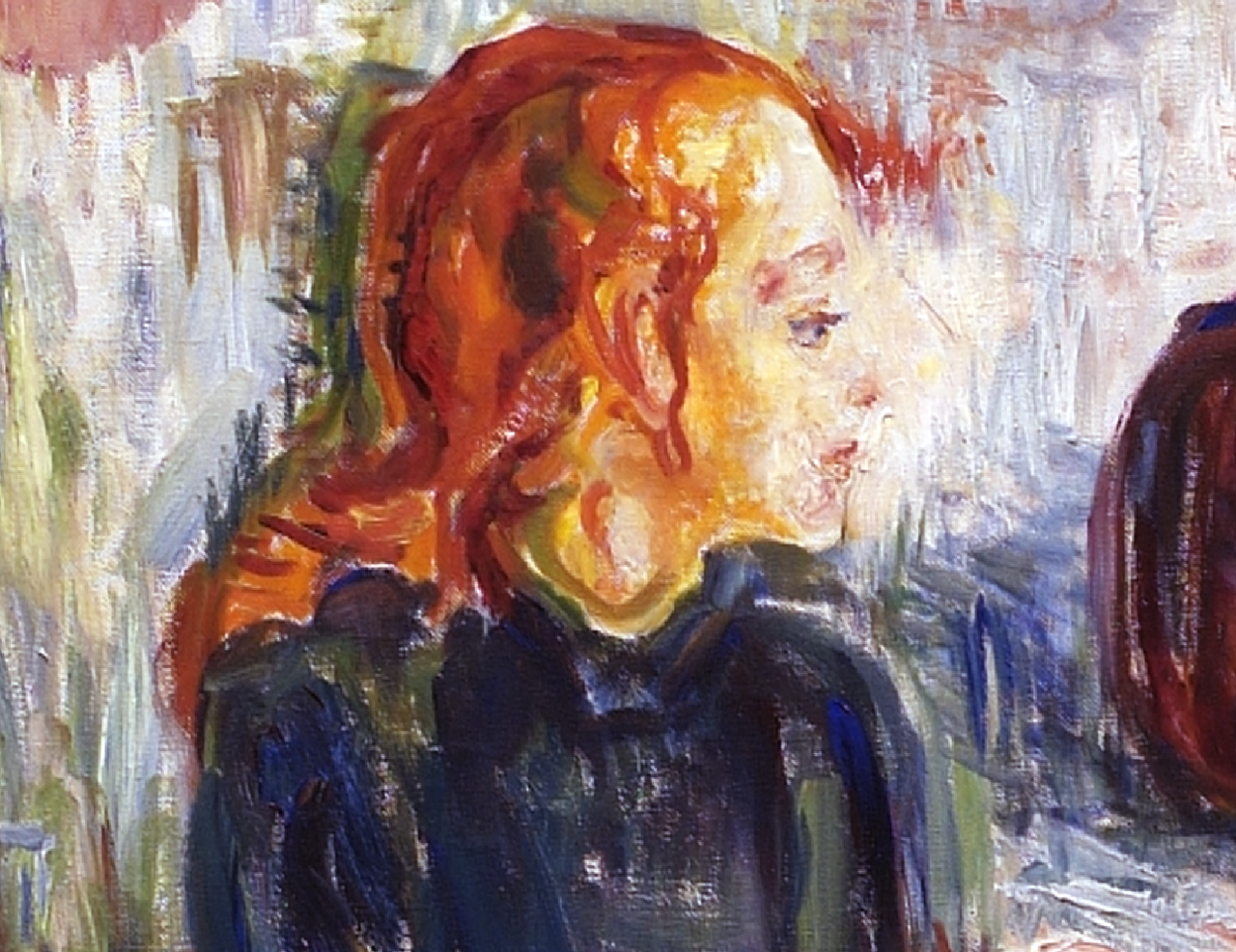
"Do you want to live longer with us?"
His father, Christian, asked. "Yes, Father. Being together makes me so happy," his sister Sophie replied. Her younger brother lowered his head.
Sophie was ill. A fever bloomed on her cheeks. Whenever the air turned cold, she coughed up blood. She shifted constantly in bed, unable to find a position that eased the numbness in her body. The diagnosis was tuberculosis. Death hovered close. She had a day or two at most. There was no miracle. Sophie died the next day — Nov. 9, 1877. She was only 15. The younger brother who could not let go of her cold hand was Edvard Munch.
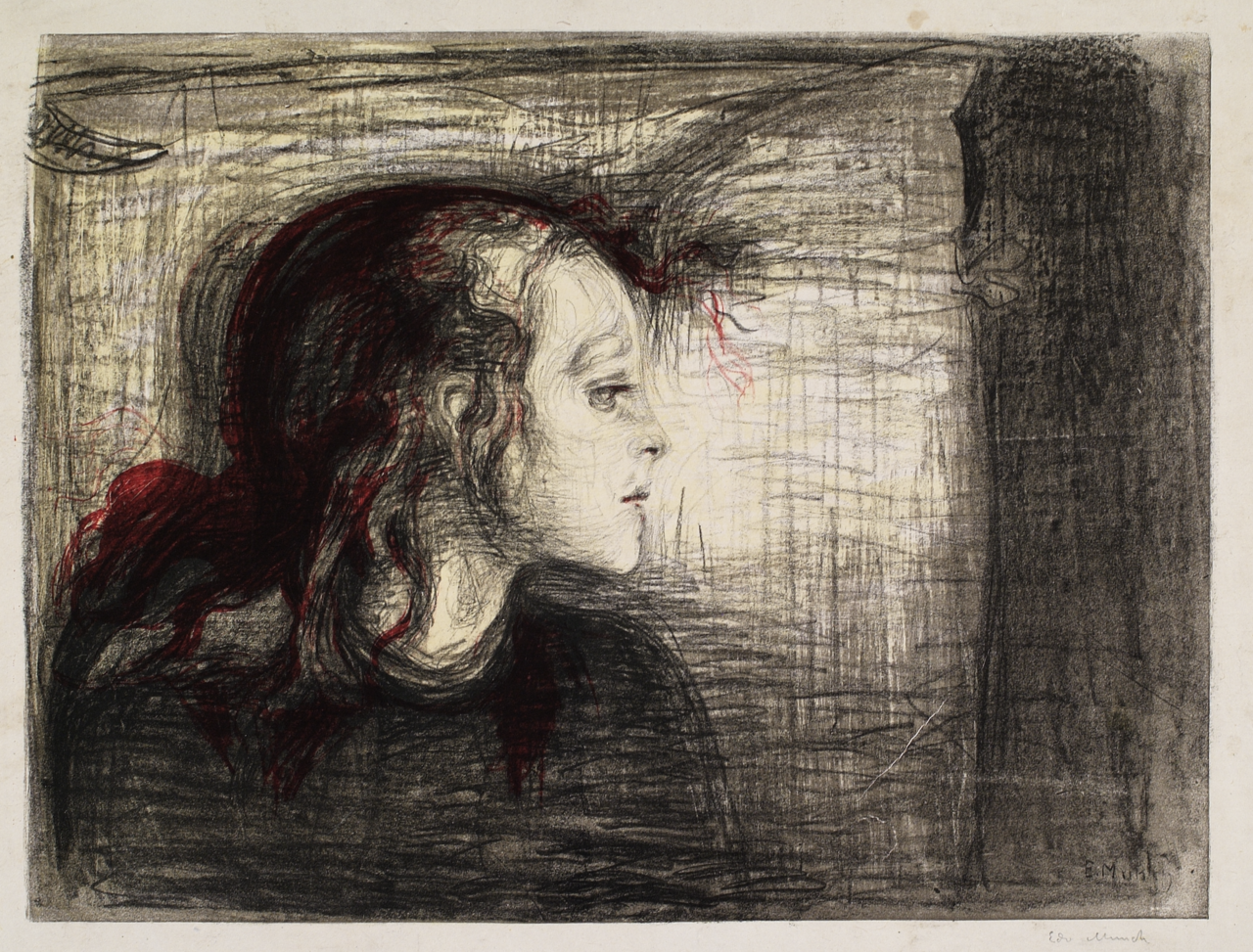
Munch loved his sister Sophie. They were just one year apart.
Sophie was the eldest child in the family. Their mother had already died when Sophie was six — also from tuberculosis. From that point on, Sophie seemed to grow up faster than her years, as if trying to fill the void their mother had left. Below her were Munch and three younger siblings, and she carried that responsibility with quiet resolve. Part of it, too, seemed to stem from the increasingly erratic behavior of their father, Christian.
Christian was a doctor. He was not a good earner, and his inner life was not particularly steady.
After his wife's untimely death, Christian grew strange. He became obsessed with religion. At night he would gather his children around him and tell them stories of God and ghosts. He read them the horror fiction of Edgar Allan Poe. He told them unsettling things — that their dead mother was watching everything they did, and that she would grieve in heaven if they misbehaved. He may have thought of it as a kind of education, even play. But years later, Munch looked back on those days and wrote: "Father was … obsessively clinging to religion. … I inherited the seeds of madness. … Angels of fear, sorrow and death stood by my side."
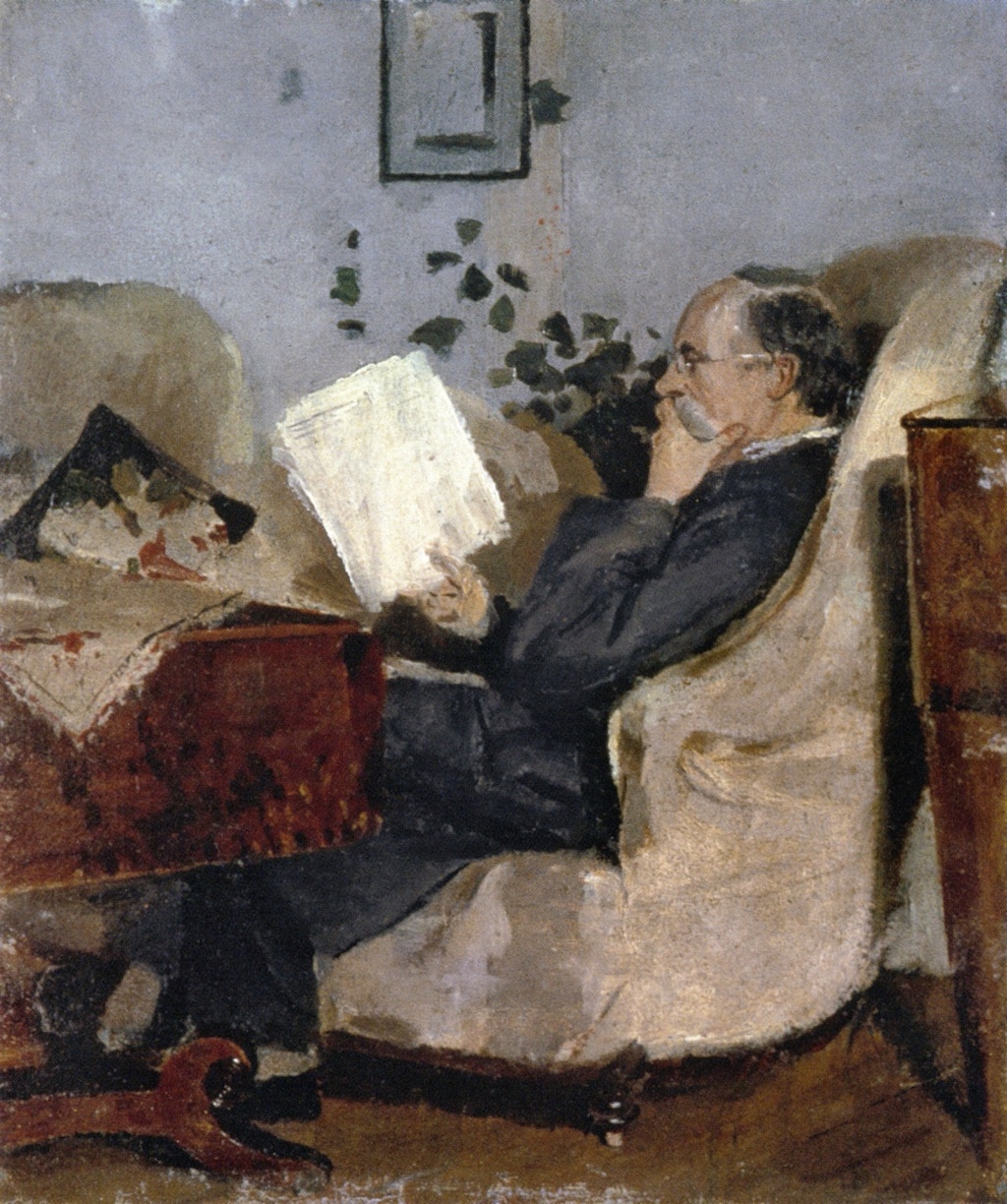
Sophie knew how fragile her brother Munch was.
She must also have seen how that delicate body and spirit were slowly crumbling.
Just as Munch cherished Sophie, she genuinely cared for him. They were well matched from the start — both had artistic talent, both loved books, and both delighted in daydreaming under the covers. Munch once wrote, almost boastfully: "I borrowed two interesting storybooks, and Sophie is reading them to me." As Christmas approached, Sophie never forgot to weave decorations, braiding baskets with her own hands. Sometimes Munch joined in, along with the younger siblings. Those were warm moments — a rare, hesitant harmony settling over the household. "With those pale, slender fingers she wove baskets," Munch recalled, "and we would sit there making our own decorations too."
And yet Munch once wrote that "Sophie had been ailing all through spring and summer."
The illness tightened its grip. She had a dry cough through spring and summer. By autumn she was coughing up blood. By the time winter came, she could barely rise from bed. Their aunt Karen cared for her — and that was all anyone could do. Sophie did not recover, and showed no sign of recovering. The death that came in 1877 was simply unavoidable.
Munch never forgot that moment. Not ever.
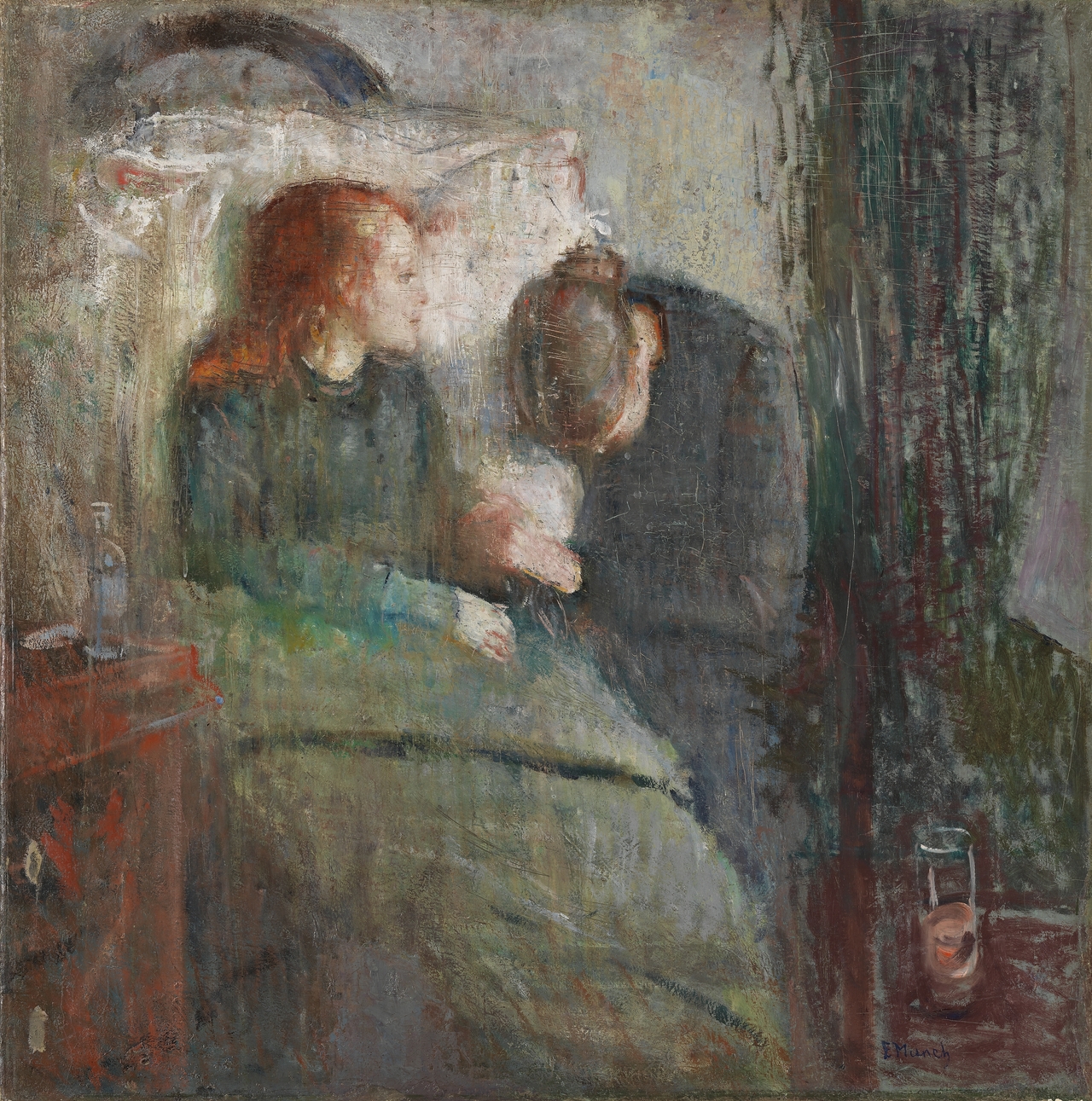
Munch painted The Sick Child in 1885–1886. He was in his early twenties — nearly eight years after Sophie's death.
A red-haired girl sits propped up in bed. Her gaze is hollow. Her face is pale, her form indistinct. The pillow is large; the blanket looks heavy. She looks toward the window, stealing a glimpse of the world outside — though there seems to be no way out of this room. She is almost certainly Sophie as Munch remembered her, sick and bedridden. An older woman holds the girl's hand, head bowed in a dark dress, swallowing tears. There is nothing more to be done. She is likely their aunt Karen. "The child, who knows there is nothing more that can be done, seems to be comforting the adult, who has reached the limits of grief," critic Patricia Donahue once wrote. The flecks of red scattered across the canvas are said to represent blood; the heavy strokes of yellow and green, disease. On the table in the lower right sits a glass barely half full — the little water remaining seems to hint at a life nearly spent.
The work is suffused with a quiet, muted quality. Critic Michele Facos described it as something seen "as if through a veil of tears or memory — experienced at very close range, yet seen hazily."
Munch raged inwardly. He scraped the canvas and repainted it again and again. "I struggled to recapture that first impression," he wrote in "The Genesis of the Frieze of Life." "The pallid complexion, the trembling lips, the trembling hands … ."
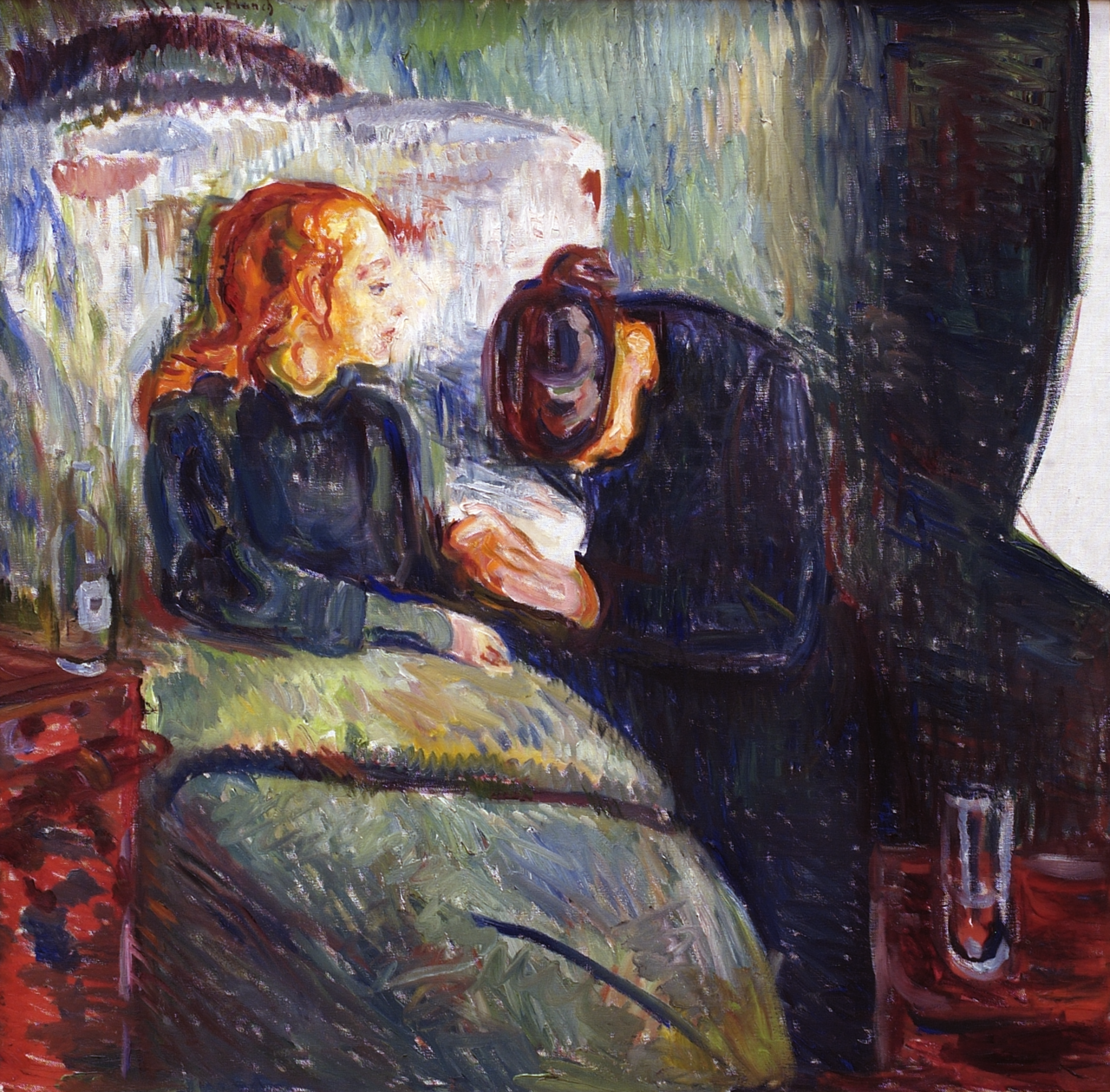
Munch did not paint The Sick Child just once.
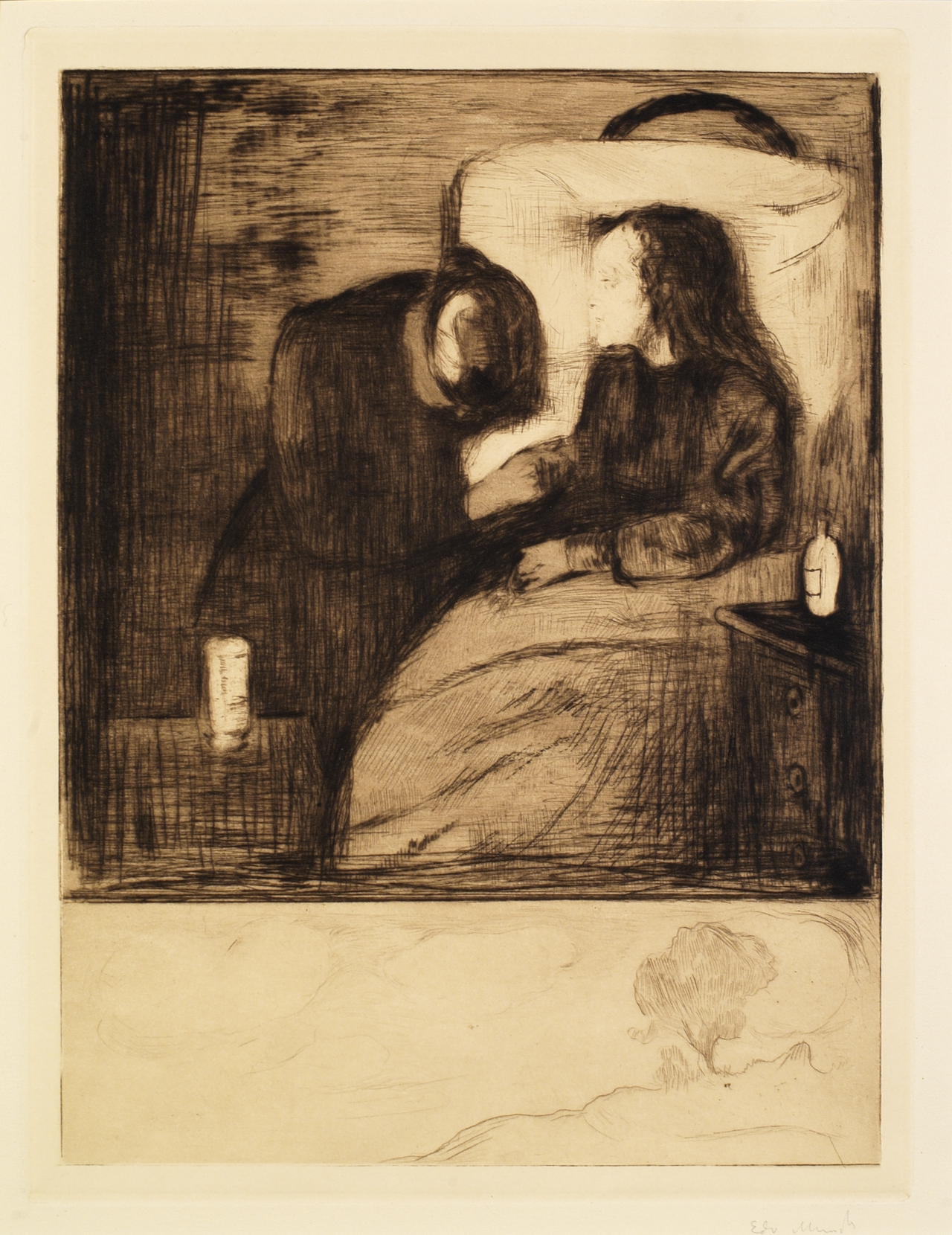
He returned to it at 33 in 1896, again at 44 in 1907, at 62 in 1925, and once more at 64 in 1927. Each version differed slightly — the brushwork and palette shifted in subtle ways. Sophie never changed. She could not. She remained in that bed, gazing at the window with a face that seemed to know everything, holding her aunt's hand as if to offer comfort in the face of the inevitable. He produced at least six versions in all.
Sophie had left life as a flower that never fully bloomed. For more than 40 years, Munch could neither release nor forget the image of her final moments.
The Sick Child was not well received. When the first version was shown at the Autumn Exhibition in Oslo in 1886, it drew considerable mockery. "There were shouts and laughter," Munch recalled. It did not matter. He had never painted it to please anyone. "I saw a new path — my own path. It was a breakthrough in my art. Most of what I did afterward grew out of this painting," Munch wrote. He now knew what kind of painter he needed to be. His work would grow more turbulent from that point on. That clarity was Sophie's final gift to him.
yul@heraldcorp.com