Blank-completion and sentence-insertion questions secure differentiation
Questions 21, 33, 34 and 39 seen as key discriminators for upper-mid tier
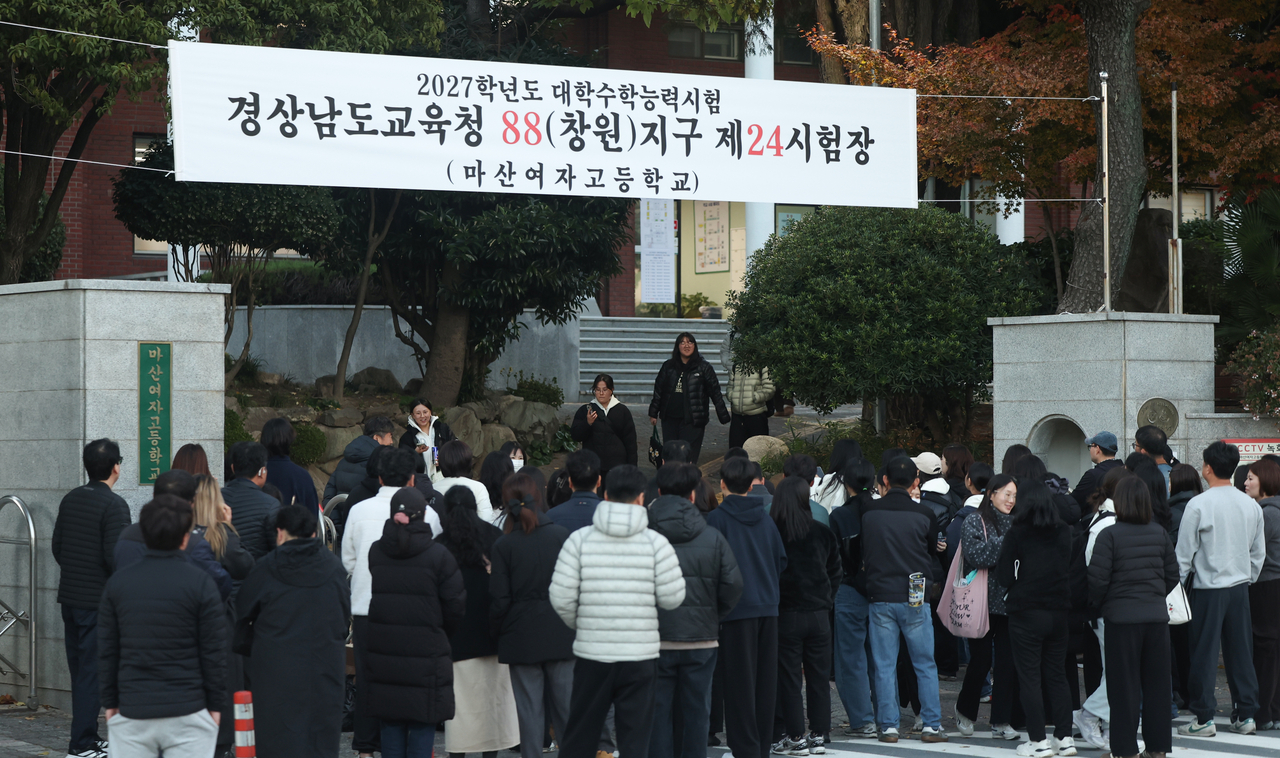
The English section of the 2027 College Scholastic Ability Test, held Thursday, was easier than last year's exam but harder than this year's September mock test, analysts said. The section secured differentiation through questions that required test-takers to accurately connect passages with answer choices, using familiar topics rather than introducing new question formats.
EBS, in its analysis of English section question trends, said the exam maintained its existing structure of 17 listening questions and 28 reading questions. Familiar topics — including the environmental impact of fireworks, respecting celebrities' privacy, sugar-free beverages and the number of extreme-heat days by city — were used to ease the burden on lower- and mid-tier test-takers, it said.
At the same time, passages expanding on familiar subjects — such as the limits of collective intelligence, the constraints of virtual reality and musical rhythm applied to visual art — assessed comprehensive thinking skills, EBS said. Passages using abstract expressions that would be difficult to understand even when translated into Korean were excluded, it added.
EBS identified questions 21, 33, 34 and 39 as the key discriminators: question 21 tested inferring implied meaning, questions 33 and 34 required blank completion, and question 39 involved sentence insertion. All required a precise understanding of the overall meaning and logical flow of the text, rather than selecting answers based on individual words or expressions alone.
Question 33 dealt with differences across cultures and shared standards within individual societies. Incorrect answer choices incorporated words from the passage, while the correct answer expressed the same meaning using different phrasing, making accurate reading comprehension essential. Question 34 required understanding the concept of musical rhythm as applied to visual art.
Question 39 was based on strategies companies use to survive in highly competitive environments. It was assessed as a question that would separate top-tier students, as it required identifying what specific expressions in a sentence referred to in the surrounding context while also tracking the overall flow of the passage.
Of the 45 total questions, 25 (55.6 percent) were linked to EBS study materials — 15 in the listening and indirect speaking sections and 10 in the reading and indirect writing sections. The exam board said it applied an indirect linkage method, using different passages with similar themes, topics or main points rather than reproducing textbook passages verbatim.
"Questions requiring integrated thinking based on accurate comprehension of passages were distributed across a variety of question types, and we assess that differentiation has been secured," EBS said.
brunch@heraldcorp.com