National Institute of Ecology confirms up to 6 flying squirrels living and breeding in artificial nests installed in Yeongyang-gun fire-damaged forest
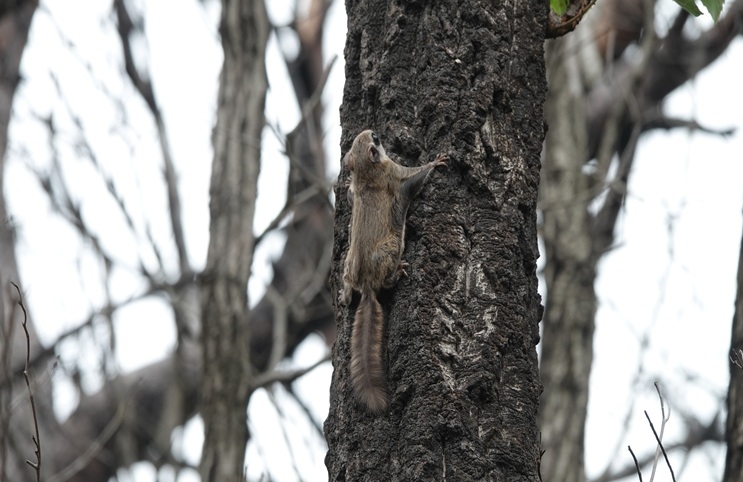
Up to six Siberian flying squirrels — a natural monument and Class II endangered species — have been found living in artificial nests installed in a forest in Yeongyang-gun, North Gyeongsang Province, an area devastated by a major wildfire in March last year.
While it can take more than a century for a fire-damaged forest ecosystem to fully recover, the installation of artificial nests as substitute habitats has already drawn the animals back, offering an early sign of ecological renewal.
The National Institute of Ecology, under the Ministry of Climate, Environment and Energy, said Friday it had recently confirmed the habitation and breeding of flying squirrels in artificial nests set up at the fire-damaged area in Posanri, Seokbo-myeon, Yeongyang-gun.
The Posanri area is home to Janggumaegi Wetland, designated a nationally protected wetland in September 2024. The roughly 4.5-hectare wetland had supported 458 species in total, including six endangered wildlife species such as the flying squirrel, yellow-throated marten and leopard cat.
Last March, the worst wildfire in the region's recorded history swept through North Gyeongsang Province, and the forests surrounding the wetland suffered significant damage.
In general, it takes more than 30 years for a fire-damaged forest to regain its former appearance, and full ecosystem stabilization can take over a century.
Flying squirrels are particularly vulnerable after wildfires because they rely primarily on tree cavities made by woodpeckers for shelter. When trees are destroyed by fire, the animals struggle to find suitable nesting sites.
In response, the institute's Endangered Species Restoration Center installed 65 artificial nests in October last year together with local residents, providing temporary substitute habitats while the forest recovers.
Researchers subsequently monitored the nests and observed up to six flying squirrels using them and breeding between July and October this year.
The National Institute of Ecology said the discovery was significant because it showed that the artificial nests, built in partnership with local residents, were in fact being used as habitat by wildlife in the fire-affected area.
Kang Jae-shin, director of the institute's Endangered Species Restoration Center, said the artificial nests had become a vital home for flying squirrels in a forest scarred by wildfire. "We hope this effort contributes to the stable habitation of flying squirrels and leads to a hopeful change in which life returns to the forest once again," Kang said.
thlee@heraldcorp.com