10 pilot classes held in fall semester; talks underway to add hansik to formal curriculum
Lecture draws about 50 aspiring chefs; domestic 'Sura School' set to open in 2027
Talks are gaining momentum to make hansik a regular course at the Culinary Institute of America, one of the world's most prestigious culinary schools. Following a series of pilot classes held during this fall semester, the South Korean government and the school have agreed to continue working together to expand the program and establish hansik as a formal part of the curriculum.
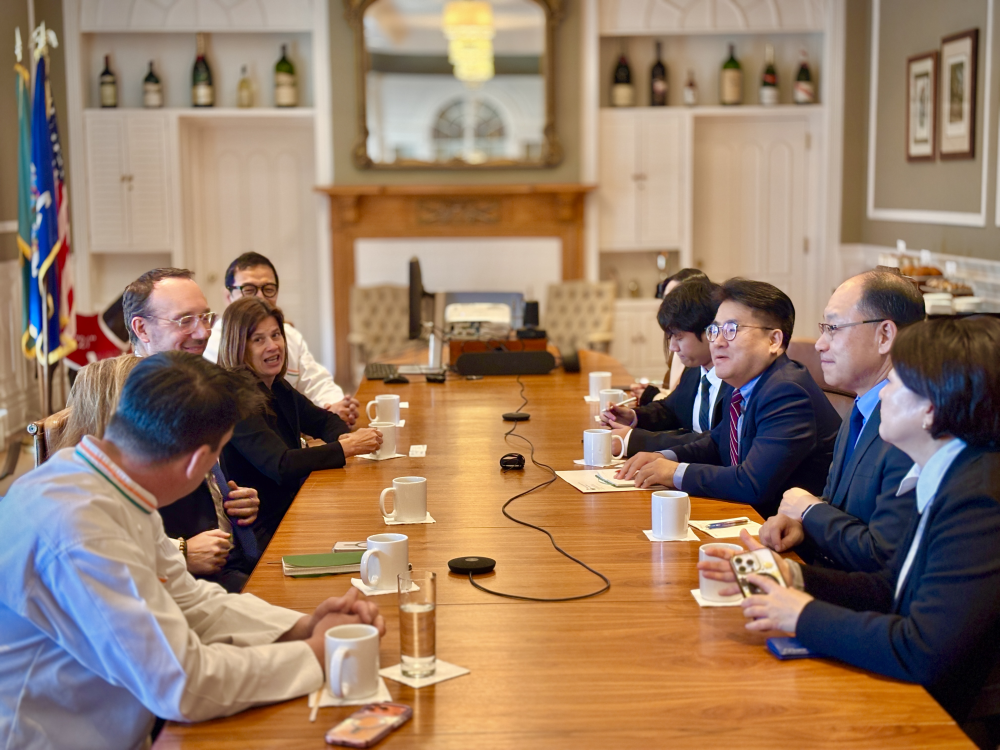
South Korea's Ministry of Agriculture, Food and Rural Affairs said Friday it visited the CIA in New York on Thursday (local time) to discuss medium- and long-term plans for advancing hansik education at the institution.
The CIA is widely recognized as one of the most authoritative culinary education institutions in the world. The ministry has supported the school since 2023, when it sponsored a special lecture on temple food, and again in 2025, when it funded a training visit to Korea for CIA faculty. This fall semester, it ran 10 pilot hansik classes led by Professor Yang Jong-jip.
During Thursday's visit, the ministry shared the results of the pilot classes and student feedback with school officials, and discussed ways to develop hansik into a regular course. The ministry plans to use next year's budget and related projects to develop joint educational and cultural content, and to expand personnel and academic exchanges.
That day, Jeong Gyeong-seok, the ministry's director general for food industry policy, delivered a lecture to about 50 CIA students and faculty members under the theme "HANSIK: From Heritage to Future."
Jeong introduced the umami qualities that develop during the fermentation of traditional Korean condiments such as soy sauce, doenjang and gochujang, as well as the fermentation characteristics of kimchi. The lecture also covered the cultural significance of kimjang — the tradition of making kimchi — and the practice of fermenting sauces, both of which are inscribed on UNESCO's list of intangible cultural heritage of humanity. Jeong said hansik's philosophy of harmonizing the five colors and five flavors, and its emphasis on seasonal ingredients, can be applied to contemporary cuisine.
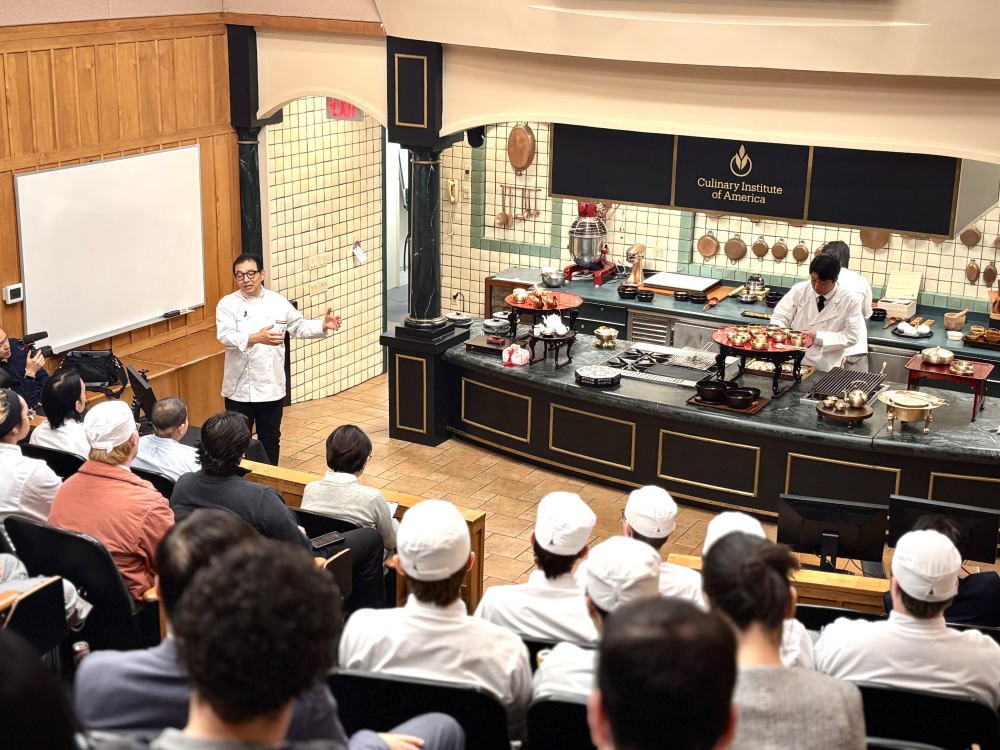
Following the lecture, Professor Yang held a hansik cooking demonstration, and a special hands-on event was organized for students who had taken the fall semester classes. Students worked directly with Korean ingredients, tasted hansik dishes and learned cooking techniques.
The ministry also plans to strengthen its system for training hansik professionals at home and abroad. Domestically, it will launch a dedicated hansik training institution — the Sura School — in 2027, while overseas it intends to expand educational programs through partnerships with culinary schools such as the CIA.
"The very fact that students at the CIA — the heart of global gastronomy — are experiencing the deep flavors and philosophy of hansik is itself a meaningful leap forward," Jeong said. "We will do our utmost to ensure hansik takes firm root as a regular part of the local curriculum."
adastra@heraldcorp.com