Over 19 million EVs produced
150 million tons of carbon cut
Thailand factory employs 6,000
More than 95% local workforce
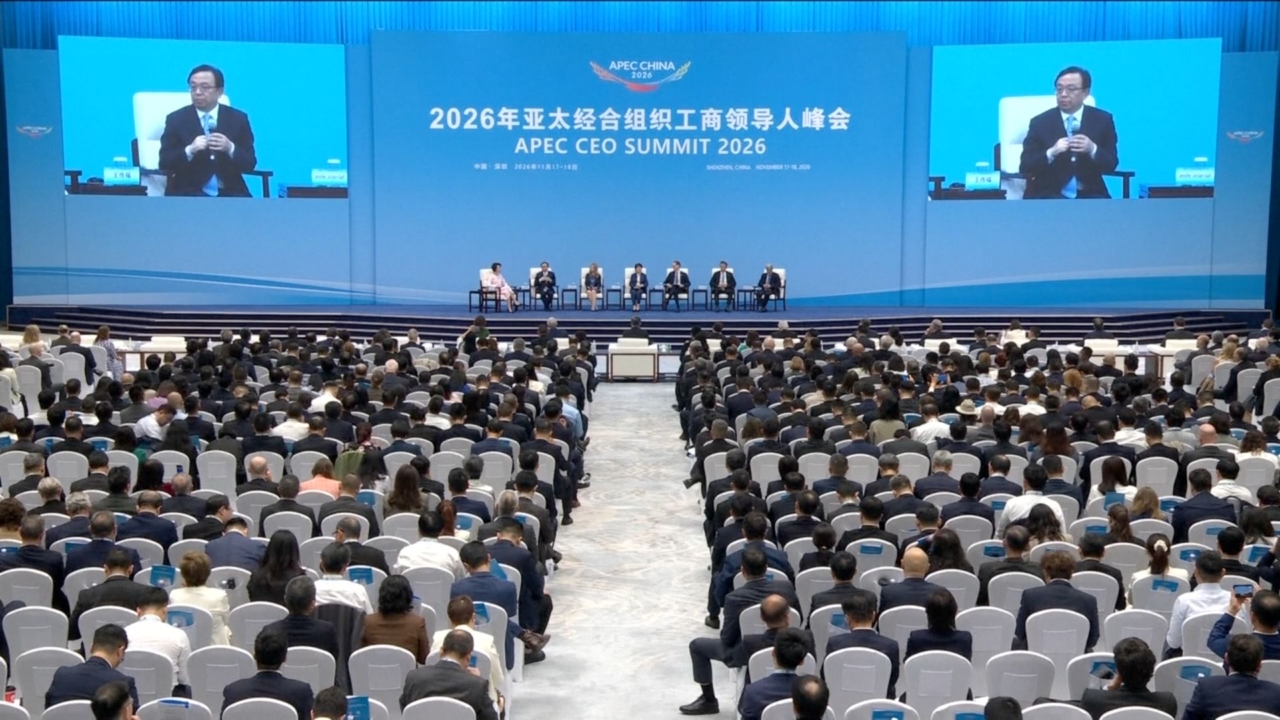
BYD Chairman and President Wang Chuanfu stressed the importance of Asia-Pacific cooperation and mutual benefit for sustainable development at the Asia-Pacific Economic Cooperation (APEC) CEO Summit held Tuesday and Wednesday in Shenzhen, China, BYD said Friday.
The summit, held under the theme "Promoting Common Prosperity, Securing a Shared Future," drew more than 2,000 government and business leaders.
Wang said sustainable development is a shared goal the entire world must pursue together, and highlighted China's achievements in energy conservation and carbon emission reduction. He also said nations and companies must move beyond a zero-sum mindset focused solely on competition and instead pursue cooperation and shared growth for long-term development.
Wang illustrated the tangible impact of green transition by pointing to Shenzhen, which converted all city buses and taxis to electric vehicles, cutting carbon emissions and improving air quality. He added that China accounts for roughly two-thirds of global new energy vehicle production, sales and supply chain capacity, positioning it as a key driver of the worldwide green transition.
Wang also highlighted BYD's technological achievements, saying the company has produced more than 19 million electric vehicles to date, contributing to a reduction of about 150 million tons of carbon emissions — equivalent to planting approximately 2.4 billion trees. He added that BYD, which employs about 120,000 engineers, is strengthening its research and development capabilities in solar power generation, ESS and electric vehicle technology.
Wang also cited examples of cooperation through local production and employment. BYD's factory in Thailand has an annual production capacity of 150,000 vehicles and employs about 6,000 workers, more than 95 percent of whom are local hires. The company maintains similarly high levels of local employment at its production bases in Indonesia and Brazil.
BYD said it plans to expand local procurement and research and development activities so that economic benefits — including technology transfer, job creation and tax revenue — accrue to the host countries. The company also intends to deepen cooperation with Asia-Pacific partners, drawing on its global supply chain and technological innovation capabilities.
Wang said the spread of electric vehicles can also contribute to the development of local industrial ecosystems. "The electric vehicles we introduce help fill gaps in local industrial ecosystems," he said. Using Chile as an example, he said BYD sources copper locally while supplying electric buses, contributing to the green transition of public transportation and improving air quality.
eyre@heraldcorp.com