Trump called into Berlin meeting from Air Force One after US-China-Russia summit
European leaders say there is no evidence to back Putin's stated willingness to negotiate
Divisions over Ukraine's territory and NATO security deepen, clouding peace talks
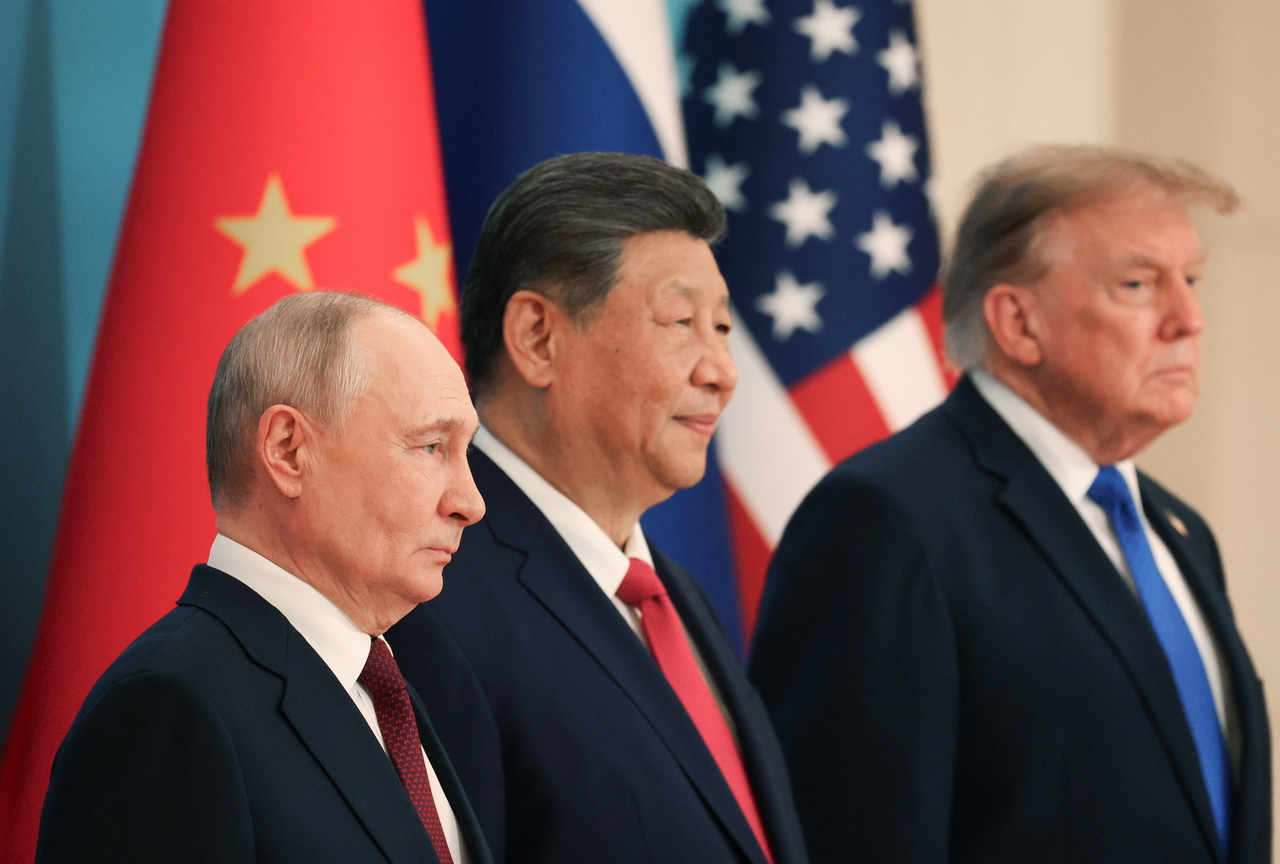
US President Donald Trump called European leaders after a trilateral summit with China and Russia to assure them that Vladimir Putin wants to end the war in Ukraine — but was met with a cold reception. Trump expressed confidence in Putin's willingness to pursue peace, while European leaders said there was no evidence to support that view. With Washington and Europe still divided over Ukrainian territory and the continent's security architecture, the path to peace negotiations looks increasingly difficult.
According to Bloomberg, Trump joined a meeting of European leaders gathered in Berlin by phone from Air Force One on Thursday (local time), shortly after wrapping up the US-China-Russia trilateral summit in Shenzhen, China.
Trump told the leaders that his talks with Putin had gone smoothly and that Russia was ready to end the war in Ukraine. He said Putin had expressed interest in peace negotiations, citing the enormous financial and human toll the war had taken on Russia.
European leaders were unmoved. Estonian Prime Minister Kristen Michal said Trump believed the situation was moving forward and that Putin was ready to discuss peace, "but I am a bit more skeptical."
Polish Prime Minister Donald Tusk said Trump's message "was received very carefully in the room," adding that Trump's faith in Putin's goodwill "is unshakeable, without any facts to support it."
European leaders are worried that Trump's trust in Putin could lead him to make concessions that disadvantage Ukraine.
Trump's decision to call Putin his "friend" at the trilateral summit drew open pushback.
Tusk, speaking at a meeting of the Coalition of the Willing — a grouping of Ukraine's supporter nations — in Berlin, said: "Putin is not our friend and never will be."
Danish Prime Minister Mette Frederiksen said she could not understand why the US president would sit across from Putin, warning that "after today's meeting, Putin will become more emboldened." She added that she believed the summit would embolden Putin to "hit us Europeans harder."
German Chancellor Friedrich Merz dismissed the trilateral summit as a photo opportunity, saying "peace in Ukraine cannot be achieved through a Yalta-style conference." Swedish Prime Minister Ulf Kristersson also raised concerns that the meeting could become a new Yalta, with major powers dividing the world into spheres of influence.
Tensions are also growing over the scope of any peace negotiations. Russia wants to go beyond a ceasefire in Ukraine and put NATO rules and troop deployments across Europe — the continent's entire security order — on the table.
The United States also believes comprehensive security negotiations are needed to resolve territorial issues. Bloomberg reported that the US side had even sounded out Ukraine on whether it would be willing to cede the Donbas region to Russia in exchange for a NATO membership offer.
European countries, by contrast, are cautious about addressing ceasefire talks and postwar security guarantees simultaneously, fearing Russia could use the peace process to expand its influence over Europe's security architecture.
European anxiety about being sidelined in the negotiations persists. Major European nations sent delegations to US-Russia-Ukraine peace talks held in Abu Dhabi, UAE, on Nov. 10-11, but Russia blocked them from joining the negotiating table.
The United States moved to reassure Europe. Jared Kushner, Trump's son-in-law and an envoy involved in the peace effort, said Thursday that "President Trump wants to negotiate with Europe" and "is not trying to impose anything unilaterally."
Kushner said Russia was open to a security arrangement for Ukraine modeled on NATO's collective defense framework, though he added that any US participation would need to serve American national interests as well.
Putin also said he was willing to invite European officials to Moscow for talks, saying that "Ukraine's security must be integrated into the European security system" but that "it is strange to discuss European security without Europe."
Russia, however, has ruled out a partial ceasefire since Ukraine's attack on the Crimean Bridge. Eastern European nations are on alert that Russia may be using the prospect of peace talks to distract the West while preparing a winter offensive.
Tusk said it was "unlikely that Russia will seriously come to the negotiating table before winter sets in."
The Coalition of the Willing meeting in Berlin, attended by leaders from 37 countries along with the heads of the EU and NATO, focused on postwar security guarantees for Ukraine and winter aid. In a joint statement, the leaders of Britain, France, Germany and Ukraine called for strong, legally binding security guarantees and urged Russia to agree to a ceasefire in the energy sector this winter.
Trump remains optimistic about Putin's desire to end the war, while Europe insists that concrete Russian actions must come first. With mutual distrust unresolved even after the trilateral summit, the prospects for a Ukraine peace deal remain deeply uncertain.
sjy@heraldcorp.com