Lotte GRS launches AI chatbot; Naver to release personal AI agent by year-end
Only 4.1% of consumers prefer chatbot support; experts urge retailers to understand what customers actually want
Retailers are rolling out AI-powered services one after another. Major e-commerce players including Naver and Coupang Inc are also expanding their use of AI into product search, recommendations and customer support. Whether these moves will translate into genuine improvements for consumers, however, remains an open question.
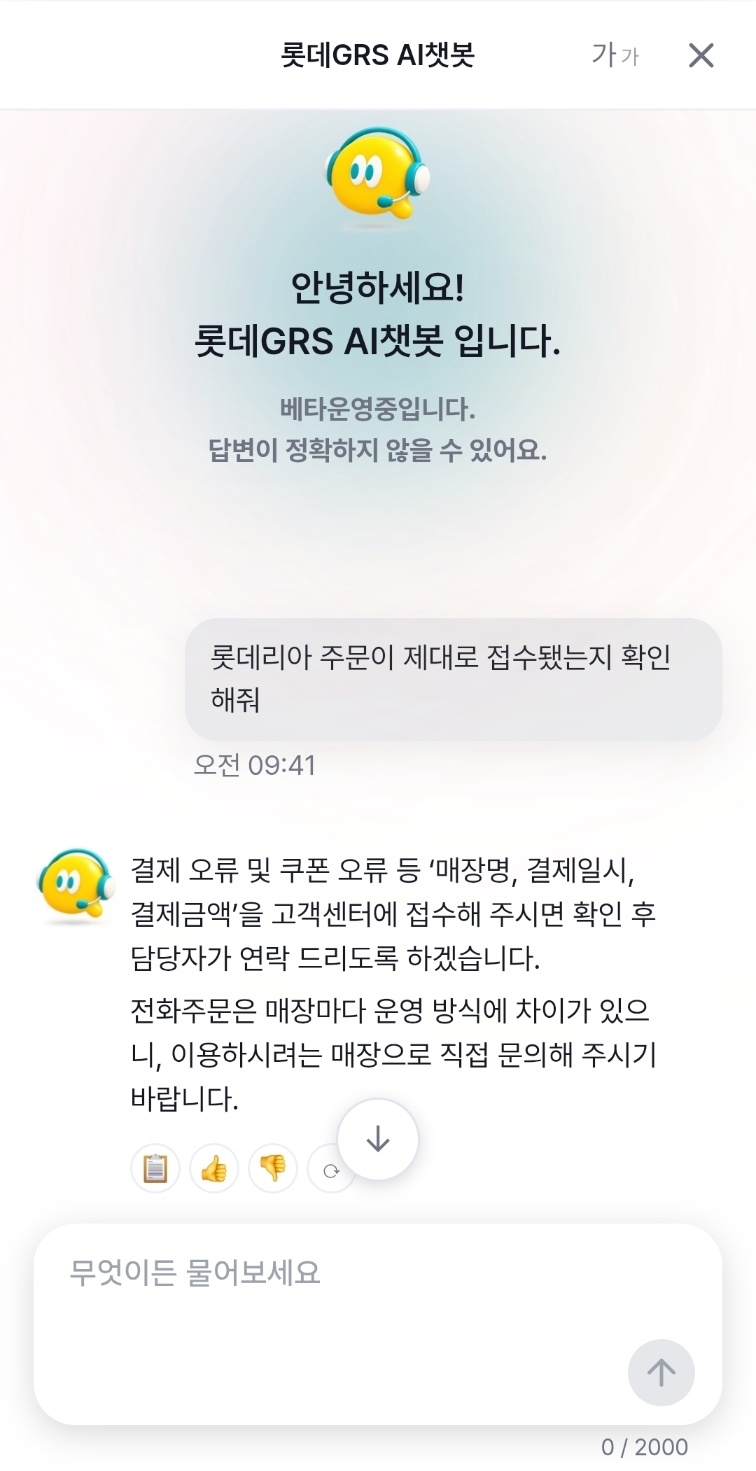
Lotte GRS launched a beta version of its AI chatbot service, "Jaresseu," on Friday, according to industry sources. The service uses AI to respond to customer inquiries in real time, handling routine and repetitive questions regardless of store hours or customer center operating times. More complex complaints or inquiries are escalated to human customer service representatives.
Jaresseu runs on the Lotte GPT model from "iMember," Lotte Group's AI platform. "AI enables real-time customer responses," a Lotte GRS official said. "Customers can get answers to their questions without being constrained by store hours or customer center operating times, which improves convenience."
Other Lotte Group affiliates are also expanding their AI services. Lotte On launched a conversational search service called "Fashion AI" in April, which recommends products based on style descriptions or occasion details typed in by the customer. Lotte Himart began a public beta of its AI shopping agent "HAVI" the same month.
Lotte Department Store unveiled an AI shopping chatbot called "Dustin" in December last year, which guides customers on store locations and promotional events. Lotte Wellfood, Lotte Chilsung Beverage and Lotte Home Shopping have also launched ChatGPT-integrated product search and recommendation services this year. Lotte Group is pushing an AI transformation, or AX, initiative at the group level. Chairman Shin Dong-bin said in June that "AX has become the top priority on which the group's survival depends, not a matter of choice."
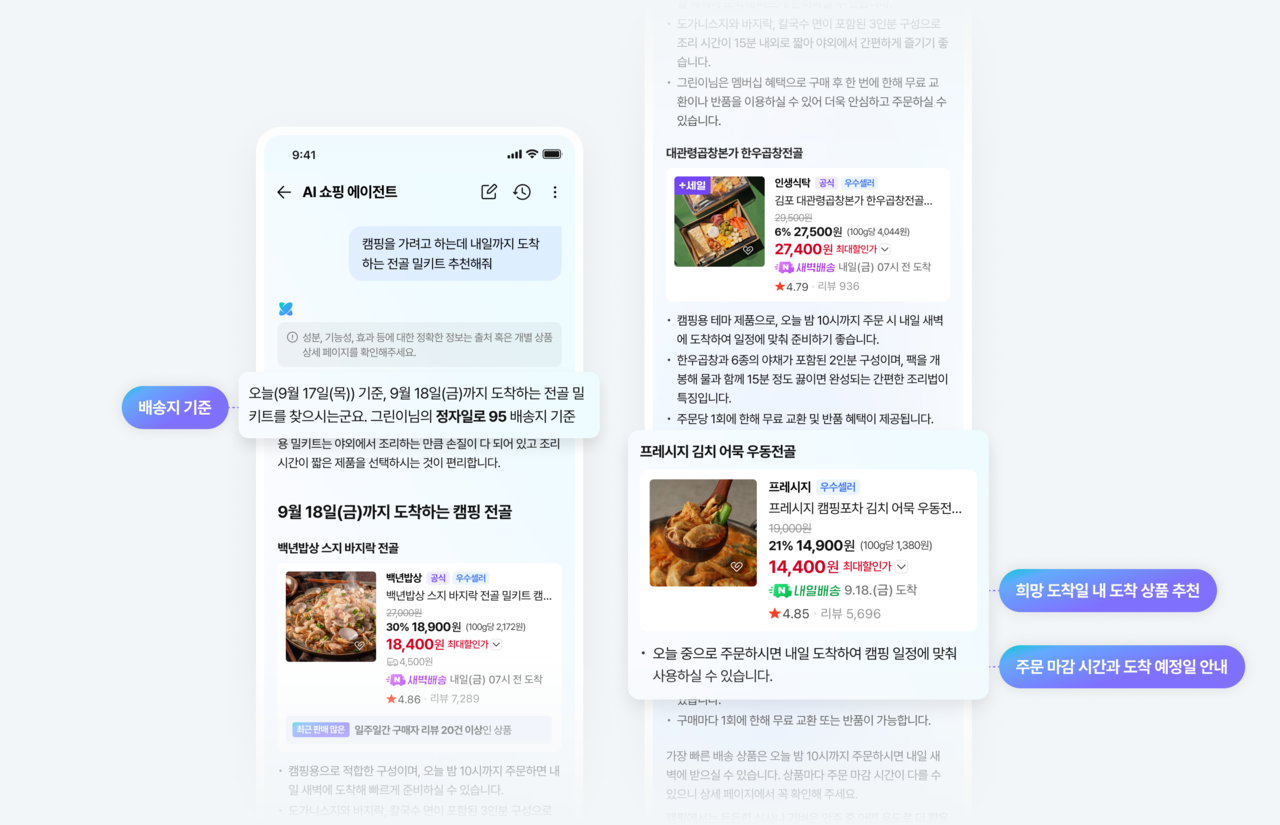
E-commerce companies are also accelerating their AI rollouts. Naver introduced an "AI shopping agent" on Naver Plus Store this year, which analyzes product information and purchase reviews to recommend suitable items based on conditions a customer enters through a conversational interface. The company also aims to release a new personal AI agent app — one that can carry out tasks on behalf of users — before the end of this year.
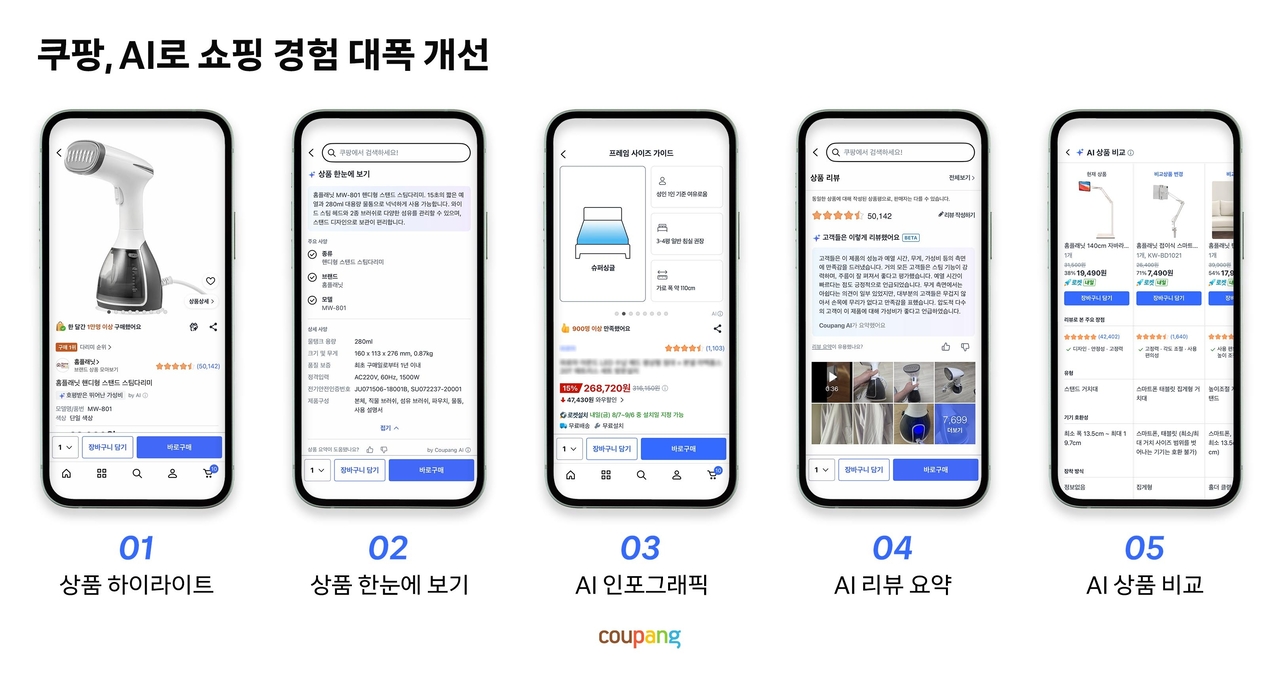
Coupang Inc unveiled features in August that use AI to summarize key product details, including "Product at a Glance" and "Product Highlights." G-market launched a shopping service in September allowing customers to search for and receive product recommendations through ChatGPT, and plans to formally introduce an LLM-based AI chatbot in early next year. 11st rolled out an "AI customer support system" last month that summarizes and analyzes customer inquiries and provides agents with relevant information, along with a customer-facing AI chatbot.
Behind retailers' push to expand AI services lies not only the goal of improving customer convenience but also expectations of operational efficiency and higher sales. Processing repetitive customer inquiries through AI can reduce the workload on human agents, while using AI for product search and recommendations is seen as a way to guide purchases and boost conversion rates.
Consumer appetite for AI-powered customer support, however, is low. A survey of 1,000 online shoppers conducted in October last year by the Seoul Metropolitan Government's e-commerce center found that consumers who had experienced complaints or problems most preferred phone support, at 46.5 percent. AI chatbot support was limited to 4.1 percent. The most commonly cited frustration with AI chatbots was "generic responses unrelated to the question," at 39.4 percent.
Whether AI adoption translates into actual business results is a separate question. A Gartner survey of 1,303 executives across multiple industries conducted between January and April this year found that only 24 percent of those responsible for customer service had demonstrated positive financial returns from AI use — suggesting that AI adoption does not necessarily lead to improved profitability.
Ultimately, experts say, what matters more than AI adoption itself is how well a service understands what consumers actually need and how effectively it solves their problems.
"AI is helping with internal operations, but the quality of AI-powered customer service is still lacking," said Lee Jong-woo, a professor in the distribution and marketing department at Namseoul University. "AI works by presenting what it determines to be the best answer to a question, but right now it is not delivering the best answers that consumers actually want." Lee added that "if AI services cannot provide the best answers consumers are looking for, it will be difficult for their usage rates to grow."

korean@heraldcorp.com