Banpo Hyundai complex set to be first hit under revised law
46 Seoul sites face combined levy of 2.12 trillion won
32 sites yet to complete construction, covering 21,927 units
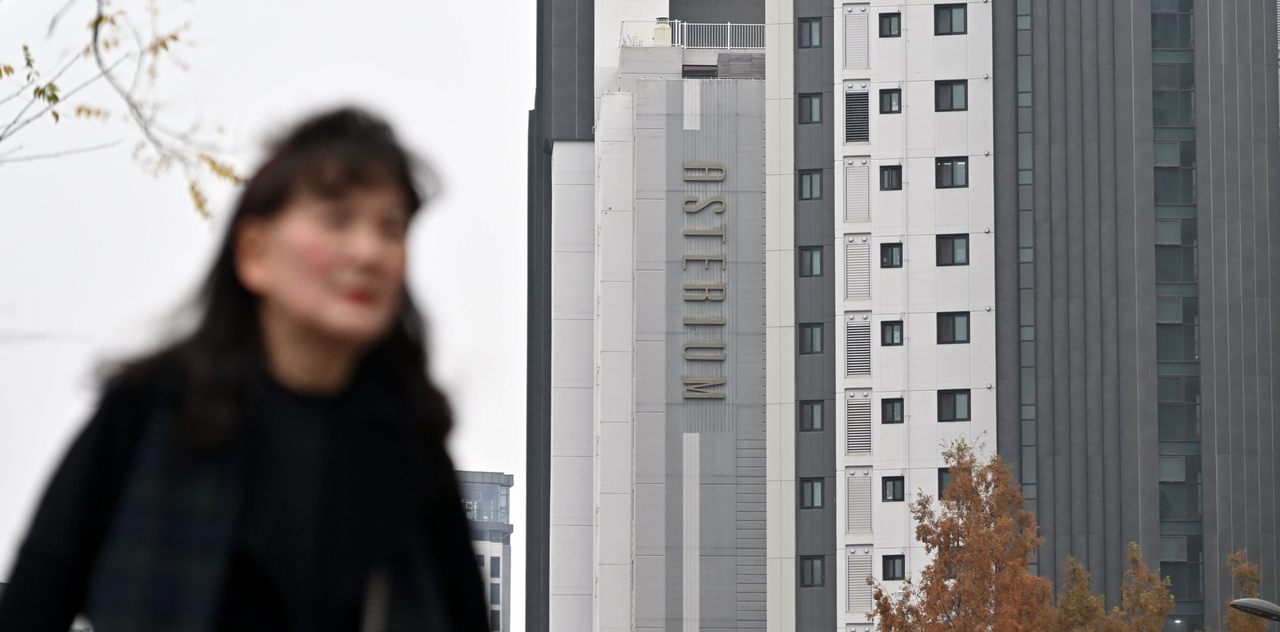
The Banpo Centreville Asterium complex in Seocho-gu — the reconstruction of the former Banpo Hyundai apartment — is expected to become the first site hit with a reconstruction excess profit recapture levy, known as "jaechohwan," by year's end. The levy follows the revised Reconstruction Profit Recapture Act, which took effect in March 2024. Forty-six reconstruction sites across Seoul are expected to face charges under the law, and 32 of them have yet to complete construction. With construction and financing costs already elevated, concerns are mounting that the added levy burden could push roughly 22,000 units into a holding pattern, delaying their supply to the market.
Levies begin at completed sites — Banpo Centreville Asterium faces 17.9 billion won charge
According to a list of sites expected to face reconstruction excess profit recapture levies that the Seoul Metropolitan Government submitted to the office of People Power Party lawmaker Jo Eun-hee on Friday, a total of 46 complexes across Seoul are projected to be subject to the levy. The combined preliminary levy amount across those sites reaches 2.12 trillion won ($1.59 billion).
Fourteen of the 46 sites have already been completed and occupied. They include Banpo Centreville Asterium, which is expected to be the first site charged under the revised law, as well as Dogok World Meridian Rosheim (formerly Yeoksam Art Villa), Bangbae Centreville in the Forest (formerly Sungshin Villa), Hillstate e-Pyeonhansesang Munjeong (Munjeong-dong Block 136), e-Pyeonhansesang Gangdong Prestige One (Cheonho Zone 3), Otiere Banpo (formerly Sinbanpo 21st), The Sharp Songpa Lumistar (formerly Garak Hyundai 5th), Otiere Sinbanpo (formerly Sinbanpo 18th, Building 337), Raemian Trinione (Banpo Zone 3) and Raemian Leventus (formerly Dogok Samho Apartments).
Sites north of the Han River are also among those expected to face levies. They include Saejeol Station Doosan We've Trezium, built on the former Sinsa Zone 1 in Eunpyeong-gu; Ujangsan Sup I'Park in Hwagok Zone 1, Gangseo-gu; Hoban Summit Gaebong in Gaebong Zone 5, Guro-gu; and Hongik University Station Central Arte Haemoro, developed on the former Girin Dongsan site in Mapo-gu.
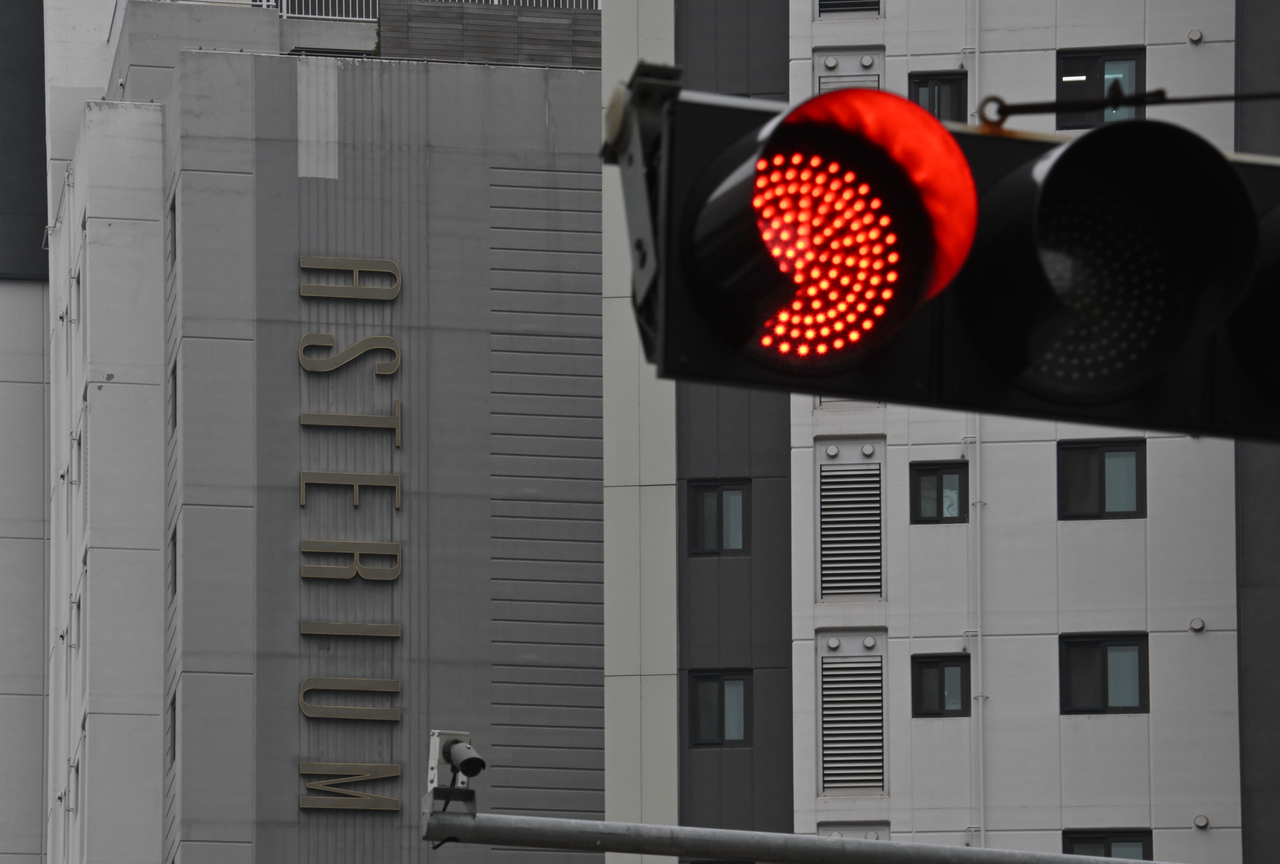
On Thursday, the Ministry of Land, Infrastructure and Transport clarified that the deadline for imposing the reconstruction excess profit recapture levy is within five years of the completion approval. The revised Reconstruction Profit Recapture Act, which took effect in March 2024, includes a supplementary provision allowing levies to be determined and imposed within five months of the law's effective date for sites completed before the revision. A key legal question had been whether the starting point for calculating the levy deadline could be reset for those pre-revision sites.
The ministry reviewed whether different levy deadlines could apply to sites completed before and after the revision. It concluded that levies must be imposed within five years from the date five months after completion approval — in effect closing off any further extension of the deadline.
Under that ruling, the 108-unit Banpo Centreville Asterium complex is expected to receive its levy notice by Dec. 30. The complex was completed in July 2021, and Seocho-gu notified the reconstruction association on Nov. 9 of a preliminary levy of 17.9 billion won. Based on 80 association members, that works out to an average of around 220 million won per person. Seocho-gu will accept objections for 50 days before making a final determination on whether to impose the levy and in what amount.
Other complexes face their own approaching deadlines. Ujangsan Sup I'Park, completed in December 2022, must be assessed by May 2028; Dogok World Meridian Rosheim by January 2029; Bangbae Centreville in the Forest by November 2029. The deadline for Hillstate e-Pyeonhansesang Munjeong in Songpa-gu runs to January 2030.
Supply of 20,000 Seoul units at risk as associations push back against levy
The more pressing concern involves sites that have not yet been completed. As the scale and timing of reconstruction excess profit recapture levies become clearer, worries about deteriorating project viability are growing. Association members are already shouldering heavier cost-sharing burdens due to rising construction and financing costs, and adding the recapture levy on top could sap the momentum needed to push projects forward.
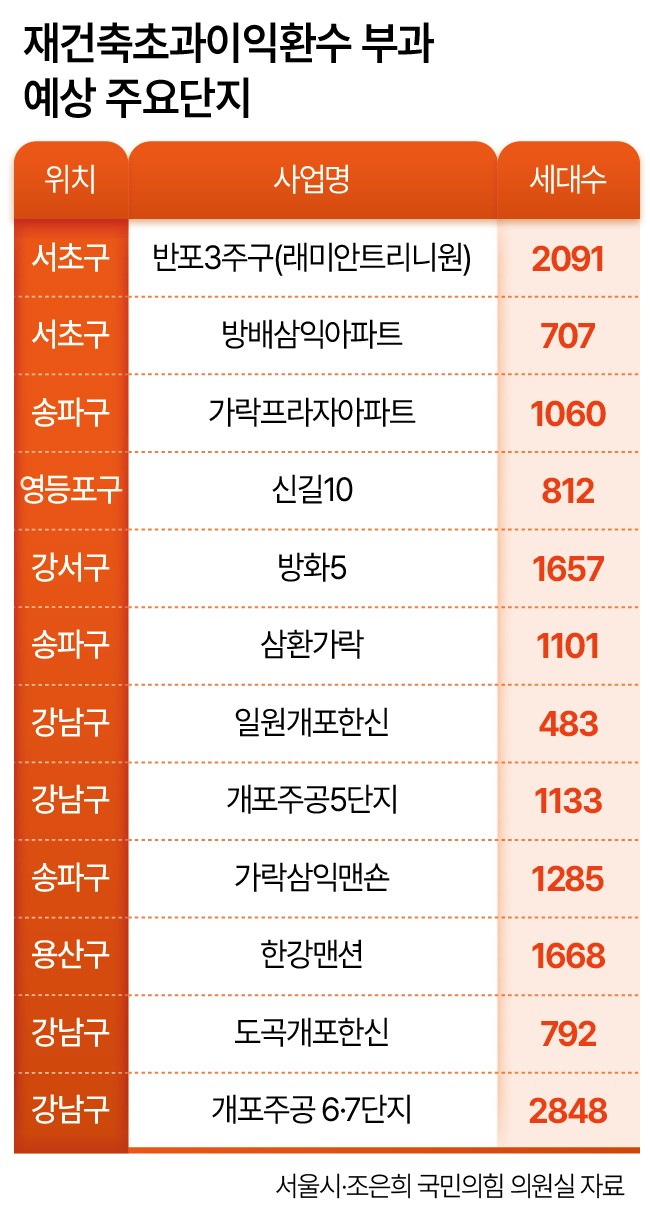
Of the 46 sites on the Seoul Metropolitan Government's list, 32 have yet to receive completion approval. Together, they account for a projected supply of 21,927 units. If the levy becomes an additional variable complicating project progress, the supply schedules for those homes could face serious disruption.
The roughly 22,000 units include some of the most significant projects across Seoul. In Gangnam-gu, sites such as Ilwon-Gaepo Hanshin, Gaepo Jugong 5th, Dogok-Gaepo Hanshin and Gaepo Jugong 6th and 7th complexes are among the key projects expected to address the urgent housing shortage in the Gangnam area. In Seocho-gu, Bangbae Samik Apartments, and in Songpa-gu, Garak Samik Mansion, Samhwan Garak and Garak Plaza are also on the list.
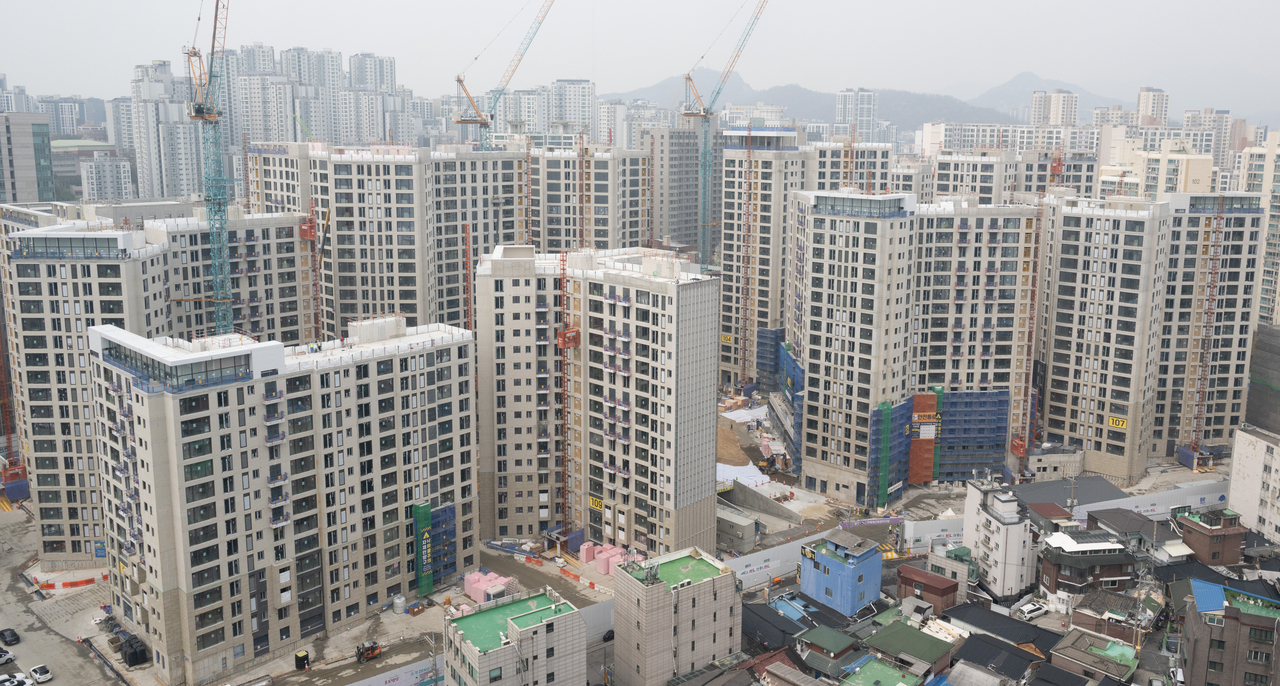
Additional sites where the levy could hamper housing supply include Duam Villa and Oryu-dong Hyundai Row Houses in Guro-gu, Sinsaeng Veterans Housing in Gangdong-gu, Yuwon Jeil 1st and Singil Zone 10 in Yeongdeungpo-gu, Jegi Zone 1 in Dongdaemun-gu, Hongjae Zone 3 in Seodaemun-gu, and Han River Samik Apartments and Han River Mansion in Yongsan-gu.
Because a substantial share of Seoul's housing supply comes through urban renewal projects such as reconstruction and redevelopment, there are concerns that if the recapture levy erodes project viability and triggers supply delays, it could weigh on the city's medium- to long-term housing pipeline.
A reconstruction association head in Seocho-gu criticized the move, saying the current government's stated policy had been to push housing supply aggressively. "Reconstruction is an essential urban renewal project for improving deteriorated and substandard residential environments, restoring urban functions and delivering quality housing," the association head said. "Pressing ahead with the recapture levy right now runs directly counter to the government's own policy direction."
The government, however, maintains that the levy's impact on supply will be limited, since it targets only excess profits that have actually been realized. A Ministry of Land, Infrastructure and Transport official said during the legal review of levy deadlines for completed sites that "the reconstruction excess profit recapture system is designed to claw back profits only when actual excess gains have been made through reconstruction," adding that "its direct connection to project viability is not significant."
hss@heraldcorp.com