Daily average volume in November falls to 239 million shares, lowest since May 2014
Volume plunges 78% from March peak of 1.11 billion shares; daily turnover drops to 18 trillion won range
Kospi slides from 9,000 to 5,000 as investors grow cautious after sharp correction
Foreign investors net-sell 25.98 trillion won in October for second straight month of 'sell Korea'
Analysts warn index decline hard to offset if foreign selling spreads across all sectors
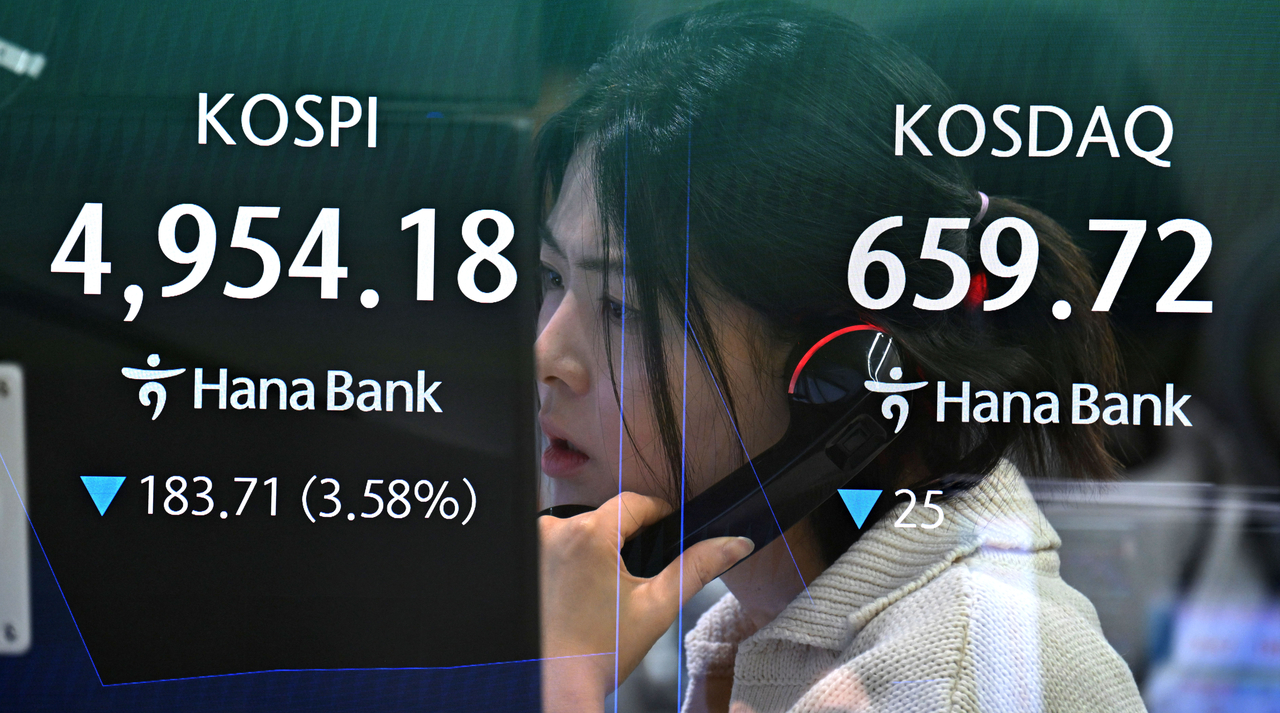
Trading activity on the South Korean stock market shows little sign of recovering. The Kospi briefly surged past the 9,000 mark this year, drawing intense investor enthusiasm, but as the index has since retreated to around 5,000, the daily average trading volume has fallen to its lowest level in roughly 12 years.
Analysts say the market's supply-demand foundation has weakened significantly, as large-scale selling by foreign investors has been compounded by a pullback in participation from retail investors. Securities analysts acknowledge that the sharp decline in share prices has made domestic stocks more attractive on a valuation basis, but say a sustained rebound will require a recovery in foreign investor inflows and a revival of overall trading activity.
According to Korea Exchange data as of Friday, the daily average trading volume on the Kospi this month stood at approximately 239 million shares. That is the lowest level since May 2014, when the figure was around 226 million shares — a gap of 12 years and six months.
The contraction looks even starker compared with bull-market conditions earlier this year. In March, the daily average Kospi volume reached 1.11 billion shares. That figure has since plunged roughly 78% in just eight months.
Volume peaked in March and began declining steadily, falling to around 700 million shares in May and approximately 500 million in June. The downward trend has continued, with the daily average recently dropping to just above 200 million shares.
A similar pattern has emerged in trading value. The daily average Kospi turnover this month came to approximately 18.49 trillion won ($13.9 billion), the lowest since December last year, when it stood at 14.42 trillion won.
During the Kospi's strong run in May and June, daily average turnover reached 50.22 trillion won and 50.35 trillion won, respectively — meaning turnover has since fallen by more than 60%.
The simultaneous drop in both volume and turnover signals a broad pullback in buying and selling activity across the market.
The Kospi surpassed the 9,000 mark in June, reaching an all-time high, before reversing course and hovering around the 5,000 level in recent weeks. Investors who entered the market during the sharp rally have grown more cautious after navigating a steep correction, analysts say.
Foreign investor outflows in particular have added to the market's supply-demand strain. According to the Financial Supervisory Service's "Foreign Securities Investment Trends for October 2026," released Friday, foreign investors net-sold 25.98 trillion won worth of listed domestic shares last month. That followed net selling of 19.12 trillion won in September, marking two consecutive months of net outflows.
By market, foreign investors net-sold 25.02 trillion won on the Kospi and 963 billion won on the Kosdaq. US investors alone accounted for net selling of 13.9 trillion won.
The combination of heavy foreign net selling and falling share prices has sharply reduced the value of foreign holdings. As of the end of October, foreign investors held 1,899 trillion won in listed shares, down 396.9 trillion won from the previous month.
The selling trend has shown little sign of easing into November. The Kospi closed up 1.39% at 5,137.89 on Thursday, rising for a second consecutive session, but foreign investors net-sold 403.5 billion won on the Kospi that day, extending their selling streak to five consecutive trading sessions.
Retail investors also net-sold 65.5 billion won. Institutional investors posted net purchases of 19.4 billion won, but that was insufficient to absorb the selling pressure from foreign and retail investors combined.
With foreign selling continuing Friday, the Kospi broke back below the 5,000 mark. Korea Exchange data showed the index opened down 209.38 points, or 4.08%, at 4,928.51 and has struggled to recover, hovering in the 4,000 range.
Foreign investors are leading the decline again Friday, net-selling 97 billion won, while institutional investors are also net-selling 115 billion won. Retail investors are net-buying 181 billion won. Anthropic's market debut — the largest fundraise in the AI company's history — has not been enough to dispel doubts about AI-related investments or revive dampened investor sentiment.
Anthropic opened on NASDAQ at $111.50 on Thursday (local time), 34.3% above its IPO price of $83, but closed at $97.17 as profit-taking selling flooded in. That still represented a 17.1% gain over the IPO price, but a 12.9% drop from the opening price.
Anthropic's listing may in fact create supply-demand headwinds. There are concerns that the mega-IPO could draw investor funds away from existing AI-related stocks, weakening their demand. Overnight on Wall Street, NASDAQ fell 2.25% and the Philadelphia Semiconductor Index dropped 2.41%. Nvidia fell 3.30% and AMD slid 7.72%, with major AI chipmakers broadly declining.
Corporate buybacks are barely filling the supply-demand gap left by heavy foreign selling. Large listed companies including SK hynix have been conducting buybacks as part of shareholder return policies, and the "other corporations" investor category tracked by Korea Exchange — which includes buybacks by listed companies — has been propping up the market.
The "other corporations" category covers stock transactions by general companies as well as buybacks by listed firms. From Nov. 6 through Thursday, this category posted net purchases exceeding 400 billion won on every trading session on the Kospi. Large chipmakers' buybacks have been absorbing a significant portion of the selling pressure.
Corporate buybacks operate within predetermined amounts and timeframes, however, making them an imperfect substitute for voluntary buying by foreign and retail investors. The greater the market's reliance on buybacks, the more vulnerable it becomes to a renewed supply-demand squeeze if those programs are scaled back.
Securities analysts say that even if the Kospi attempts a rebound on the back of its valuation appeal, a sustained rally will be difficult without a return of foreign capital and a revival of retail investor participation.
"If foreign investors, who net-sold around 400 billion won on the Kospi, expand their selling of Samsung Electronics and SK hynix, the index is likely to break below 5,000 again," said Yang Hyeon-gyeong, a researcher at iM Securities. "The key question is whether the foreign selling concentrated in semiconductors spreads to other large-cap stocks."
"If a decline in large-cap semiconductor stocks widens the index's losses, foreign investors may reduce their overall Kospi exposure and extend selling pressure to other sectors," Yang added. "If foreign selling spreads across sectors, it will be difficult to offset the index's decline."
th5@heraldcorp.com