Gold down 32% from January all-time high on US rate-hike outlook
Goldman Sachs cuts next-year target to $4,650 per ounce
Central bank buying, gold ETF holdings hit record highs
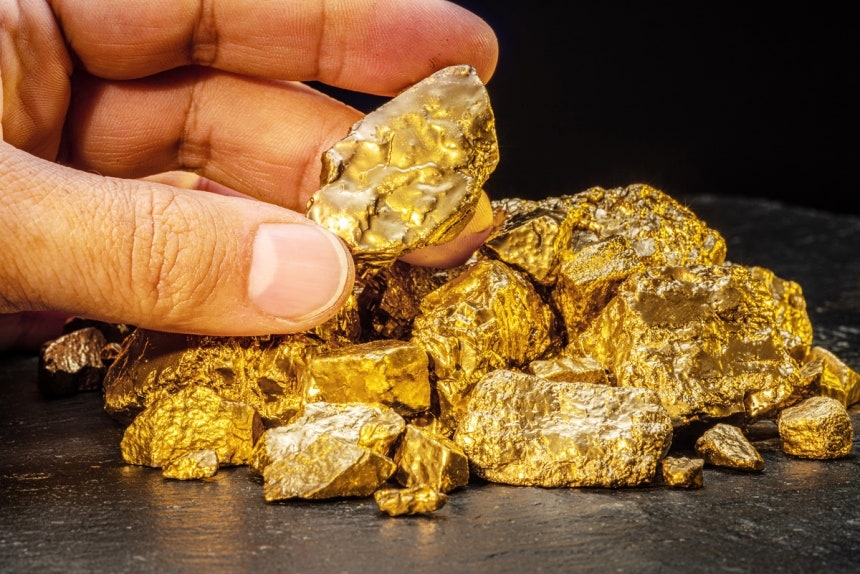
Gold fell below $3,700 an ounce Thursday (local time) as expectations of further US interest rate hikes weighed on the precious metal — just one day after prices broke below the $3,800 level. Goldman Sachs said it could take about two years for gold to reclaim its all-time high.
December gold futures on the New York Commodities Exchange (COMEX) settled at $3,631.90 per ounce Thursday, down 2.94% from the previous session, according to Investing.com. That marked the lowest level since mid-September last year and a decline of more than 32% from the all-time high of $5,354 per ounce set Jan. 29.
Expectations of additional Federal Reserve rate hikes drove the selloff. US consumer prices in October came in above market forecasts, and minutes from the October Federal Open Market Committee (FOMC) meeting released Wednesday showed that a majority of participants supported further increases. A "big step" hike of 50 basis points (1 bp = 0.01 percentage point) was also discussed.
According to CME FedWatch, the probability of a 25 bp hike at the December FOMC meeting climbed to around 96%. "Markets are pricing in the possibility of continued tightening into 2027, and a stronger dollar combined with rising real interest rates is reducing the investment appeal of non-yielding assets," said Park Seong-je, a researcher at Shinhan Securities.
Gold fell even as the US-Iran war that broke out in February weighed on sentiment. Surging oil prices stoked inflation fears, prolonging the tightening cycle among major central banks, and as real interest rates rose, the appeal of non-yielding gold diminished. "The Middle East geopolitical uncertainty index surged in March and has stayed elevated, yet it failed to lift gold prices," said Ha Geon-hyeong, also a researcher at Shinhan Securities. "What determined the price direction was real interest rates, not geopolitics."
Swiss financial group UBS attributed part of the decline to a selloff in US technology stocks. As market volatility increased following the US midterm elections, investors reduced their technology holdings and sold gold to raise cash, UBS said.
Analysts at home and abroad expect interest rates to remain the key driver of gold prices next year. "The first half of next year will be a period in which interest rates cap the upside for prices," said Kim Gwang-rae, a researcher at Samsung Futures. "Once rate hikes end and rates begin to fall in the second half, gold will be the first to rebound."
Goldman Sachs cut its gold price target for next year to $4,650 per ounce from $4,800. The bank projected that gold could reach $5,600 per ounce by end-2028 if the Fed begins cutting rates, implying it would take roughly two years to recover the all-time high set in January.
NH Investment & Securities and Shinhan Securities set their gold price outlooks for next year at $3,500–$5,000 and $3,800–$5,000 per ounce, respectively. "If growth-driven rate cuts push real interest rates lower, the upper end opens up to $4,000–$6,000," Ha said. "But if real interest rates rise further alongside a stronger dollar and position unwinding, the range falls to $3,500–$4,500."
Analysts recommend buying gold in tranches for long-term risk diversification, citing sustained medium- to long-term demand from global central bank purchases and inflows into gold ETFs.
Global central banks bought a net 321.2 tons of gold in the third quarter, up 42% from the same period last year and the highest since the fourth quarter of 2024. Cumulative purchases this year reached 675 tons, up 6% year on year. The Bank of Korea also added to its gold ETF holdings: its third-quarter securities holdings report showed it held 956,869 shares of the SPDR Gold Trust (GLD) at end-September, up 40.8% from the end of the second quarter. The valuation rose from $250.41 million to $364.41 million.
Retail investors also moved to buy the dip as gold prices fell. Global gold ETFs swung from a net outflow of 47 tons in the second quarter to a net inflow of 211 tons in the third quarter. Physical holdings at the end of the third quarter stood at 4,256 tons, an all-time high.
"We focus on re-entry into a medium- to long-term bull cycle rather than excessive tightening fears," said Hwang Byeong-jin, a researcher at NH Investment & Securities. "We recommend increasing gold exposure through a 'buy on short-term price dips' strategy through the first quarter of 2027, when inflation vigilance is likely to persist."

moon@heraldcorp.com