Study finds 25% higher risk of dementia progression in mild cognitive impairment patients who took glucosamine
Knee pain relief falls below clinically meaningful threshold; no functional improvement found
Separate research links supplement to lower cardiovascular risk, but experts urge caution
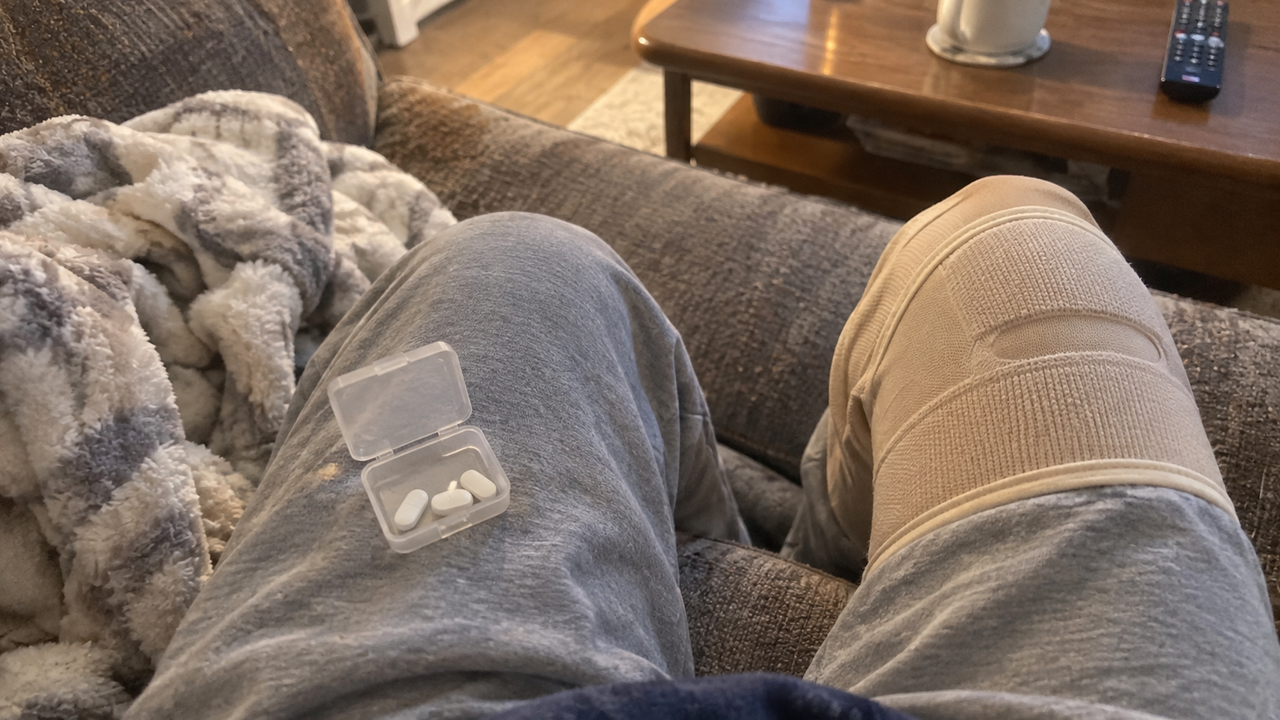
"My knees ache, so I make sure to take my glucosamine every day."
Glucosamine is one of the most popular joint supplements on the market. Middle-aged and older adults reach for it in the hope that the compound — a building block of cartilage — will support their joints. South Korea's Ministry of Food and Drug Safety recognizes its functional claim, acknowledging that taking 1.5 to 2 grams a day "may help support joint and cartilage health."
This year, however, a string of overseas studies has cast doubt on the supplement. Researchers have warned it may pose risks to the brain — not the joints — and that its actual effect on the knees may be far smaller than widely believed.

Glucosamine and dementia risk
A research team at the University of Florida published findings on the relationship between glucosamine and Alzheimer's disease in the international journal Nature Metabolism last June.
The team used AI to analyze patient records from University of Florida hospitals covering 2012 to 2024. The study focused on patients with mild cognitive impairment — the stage just before dementia — and those already diagnosed with Alzheimer's disease or other forms of dementia. About 8 percent of patients were taking glucosamine, including 2,750 with mild cognitive impairment and 1,896 with dementia.
After adjusting for age, sex and other factors, patients with mild cognitive impairment who took glucosamine were 25 percent more likely to progress to dementia. Among those already diagnosed with dementia, glucosamine users faced a 25 percent higher risk of death.
Ramon Sun, the University of Florida professor who led the research, warned in a press release that "there are about 7 million Alzheimer's disease patients in the United States, and a significant number of them may be actively taking common supplements that could be worsening the progression of their disease."

The research team identified sugar as the mechanism behind glucosamine's potential harm. The body attaches sugar molecules to proteins to help them fold correctly and function in the right locations. In the brains of Alzheimer's patients, however, this process was found to be excessively active. Once glucosamine crosses the blood-brain barrier, it can serve as a substitute for ordinary sugar in that process.
When the team gave glucosamine to mice engineered to develop Alzheimer's disease, the attachment of sugar to proteins inside brain cells increased sharply, and the mice showed greater memory impairment in recognizing other mice. Conversely, when the process was suppressed with a drug, memory improved. Brain tissue from actual Alzheimer's patients also showed far more sugar attached to proteins than in healthy individuals.
The research team stressed, however, that the findings do not constitute proof that glucosamine drives dementia progression. Co-author Matthew Gentry, a University of Florida professor, said the results represent "an association, not evidence of causation, but it now raises an important clinical question that deserves much closer attention."
The team added that clinical trials in humans would be needed to determine whether glucosamine actually worsens dementia.

Knee benefits fall short of the bar
So does glucosamine at least reliably help the knees?
A research team from the Pennington Biomedical Research Center in the United States and Fudan University in China, among others, published findings in August in the international journal Frontiers in Nutrition. The team conducted an umbrella review, re-analyzing 19 systematic reviews and meta-analyses of studies in which knee osteoarthritis patients were given glucosamine.
People who took glucosamine reported slightly less knee pain than those who took a placebo. The reduction, however, barely reached — or fell below — the minimum threshold at which patients would actually perceive an improvement. Scores measuring pain by other methods, as well as scores for everyday functions such as walking and climbing stairs, showed no difference from placebo.

The research team concluded that glucosamine's effects are "at best minimal or modest." Because glucosamine is a supplement that most consumers pay for out of pocket, the team advised weighing even modest benefits against the cost.
Clinical guidelines are divided on the issue. The European Society for Clinical and Economic Aspects of Osteoporosis and Osteoarthritis recommends prescription-grade glucosamine sulfate for knee osteoarthritis, while the Osteoarthritis Research Society International and the American College of Rheumatology advise against its use.
A potential upside for the heart?
Some research does suggest glucosamine may offer health benefits.
A joint research team from Huazhong University of Science and Technology in China and Tulane University in the United States published findings in the British Medical Journal in 2019, based on roughly seven years of follow-up data on 466,039 British adults. The study found that people who habitually took glucosamine had a 15 percent lower risk of developing cardiovascular disease.
That was an observational study tracking users and non-users over time, meaning the lower risk could reflect the fact that glucosamine users tend to take better care of their health overall. As with the University of Florida study linking glucosamine to higher dementia risk, it is difficult to attribute the result to glucosamine itself.
The University of Florida research team said that while glucosamine use in people with dementia warrants scrutiny, it is not yet at the stage where the supplement should be ruled out entirely.
References
DOI: 10.1038/s42255-026-01538-4
Hawkinson TR, Liu Z, Ribas RA, et al. Hyperglycosylation is a metabolic driver of Alzheimer's disease. Nat Metab. 2026;8(6):1410.
DOI: 10.3389/fnut.2026.1806413
Li Y, Wang R, Xu J, Shen Y, Hu G, Lu S. Glucosamine for knee osteoarthritis: an umbrella review. Front Nutr. 2026;13:1806413.
DOI: 10.1136/bmj.l1628
Ma H, Li X, Sun D, et al. Association of habitual glucosamine use with risk of cardiovascular disease: prospective study in UK Biobank. BMJ. 2019;365:l1628.
dbsdn1110@heraldcorp.com