Heavy, low-priced cement makes factory location critical
Samcheok and Donghae rely on ports; Danyang and Jecheon on rail
Factories built during industrialization still running after 60-plus years
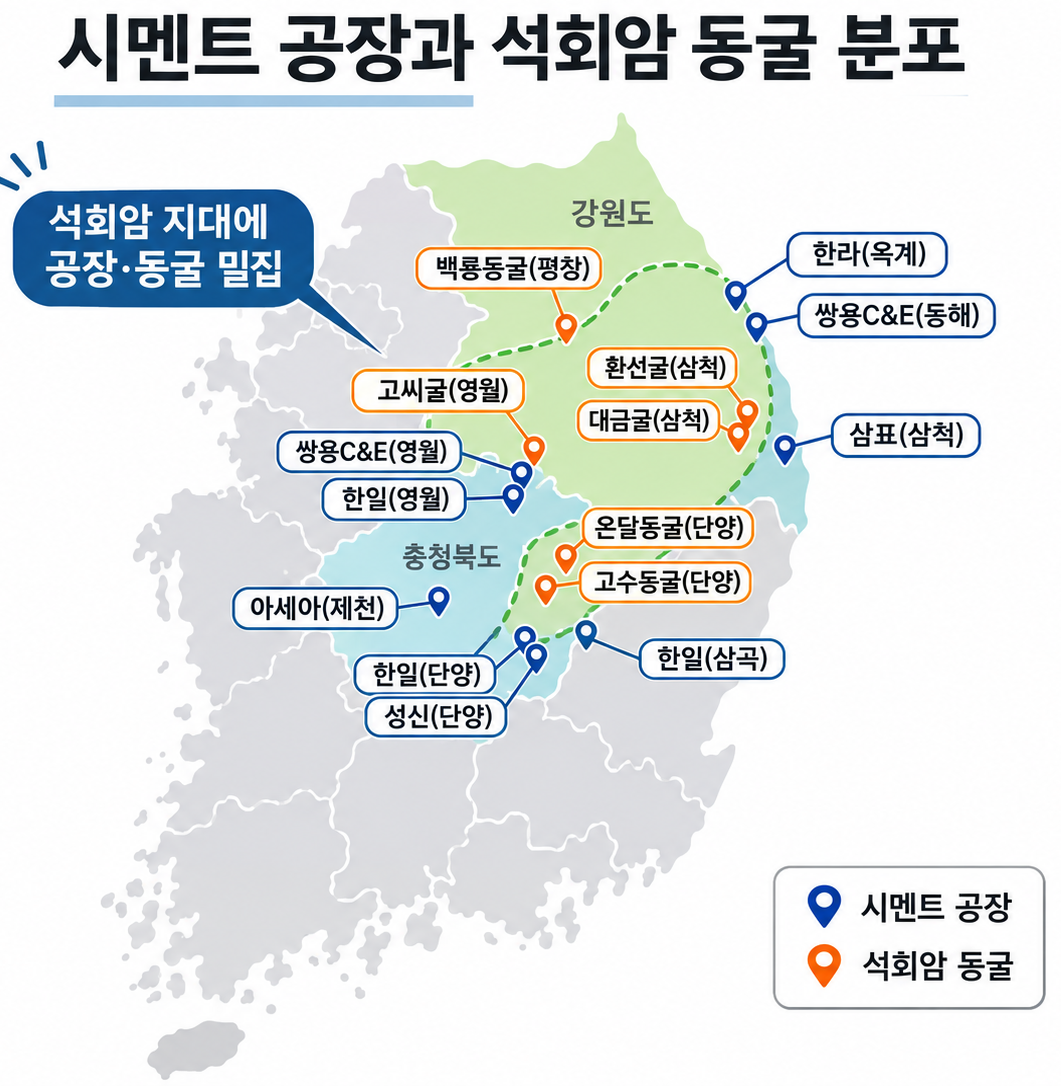
North Chungcheong Province's Danyang is home to Gosu Cave, one of the country's most celebrated tourist attractions. Just 5 to 6 kilometers away as the crow flies sit two cement factories — Hanil Cement and Sungshin Cement. Cement makers are also clustered in North Chungcheong's Jecheon and in Gangwon Province's Yeongwol and Samcheok. The proximity of Gosu Cave and those factories is no coincidence: the entire area sits on a limestone belt.
A limestone cave can only form where the bedrock is limestone. Over vast stretches of time, groundwater dissolves the rock, stalactites grow, and large caverns take shape. Cement factories, meanwhile, choose limestone-rich sites because that is where their primary raw material is easiest to obtain. The result is that South Korea's most famous cave destinations tend to have cement plants right next door.
According to the Korea Cement Association, Sampyo Cement operates a factory in Gangwon Province's Samcheok, while KGM C&E runs plants in Gangwon's Donghae and Yeongwol. Hanil Cement's main factory is in North Chungcheong's Danyang, Asia Cement's is in North Chungcheong's Jecheon, and Sungshin Cement's flagship plant is also in Danyang. Hanil Hyundai Cement, a Hanil Cement affiliate, operates production facilities in Gangwon's Yeongwol and North Chungcheong's Danyang. Halla Cement's factory is in Okgye, Gangneung, Gangwon Province. South Korea's major cement production facilities are thus concentrated in northern North Chungcheong Province and southern Gangwon Province.
The single most important factor in choosing a cement factory site is access to limestone. Producing one ton of cement requires roughly 1.3 tons of limestone. Because limestone is heavy and bulky, hauling it over long distances adds significant cost. A producer that must ship both raw materials and finished goods over long distances simply cannot compete. That is why cement factories are built next to limestone quarries.
The quality of the limestone also matters. Raw material with high calcium carbonate content and few impurities is best for cement manufacturing, and the precise blend of ingredients varies depending on the levels of calcium, magnesium and other components. Limestone quality is a key determinant of cement quality, and a stable supply of high-grade stone helps keep production costs down and product quality consistent.
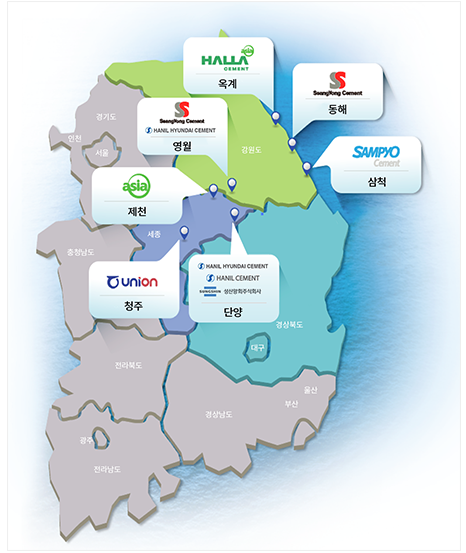
Transportation is the other decisive factor in plant location. Most cement factories sit alongside limestone quarries, but they differ in how they move their finished product. Inland plants in Danyang and Jecheon rely on rail and road. Coastal plants in Samcheok and Donghae, by contrast, can use seaports. The Samcheok plant — which has both a limestone quarry and a harbor nearby — is the prime example.
Sampyo Cement cites the Samcheok plant's proximity to a limestone quarry and a port as its key competitive advantages in its annual business report. Limestone is sourced from the nearby quarry, while the bituminous coal needed for cement production is brought in through the port. Finished cement can then be shipped by vessel to distribution hubs in Incheon, Busan and other cities nationwide. The short distance between quarry and port gives the plant an edge in both raw-material procurement and product dispatch. KGM C&E similarly operates a maritime distribution network centered on its Donghae plant and the adjacent port.
In the inland Danyang-Jecheon area, rail accounts for a large share of cement transport. Finished cement is loaded onto bulk freight cars and sent to distribution depots in the Greater Seoul area and elsewhere, where it is transferred to bulk cement trailers, known as BCTs, for delivery to ready-mix concrete plants. Some factories also use BCTs for direct delivery. Cement transport is divided into road, rail and sea, and companies combine all three depending on distance and volume.
Logistics costs matter so much because cement is cheap relative to its weight. Sampyo Cement's average domestic selling price for Portland cement in the first nine months of this year was 95,813 won ($72) per ton. Assuming a BCT carries 25 to 28 tons, the sale value of a single load comes to roughly 2.4 million to 2.68 million won. Even a full 25-ton load generates less than 2.5 million won in revenue — out of which the company must still cover transport and production costs. That is why cement makers are so sensitive to haul distances and logistics expenses.
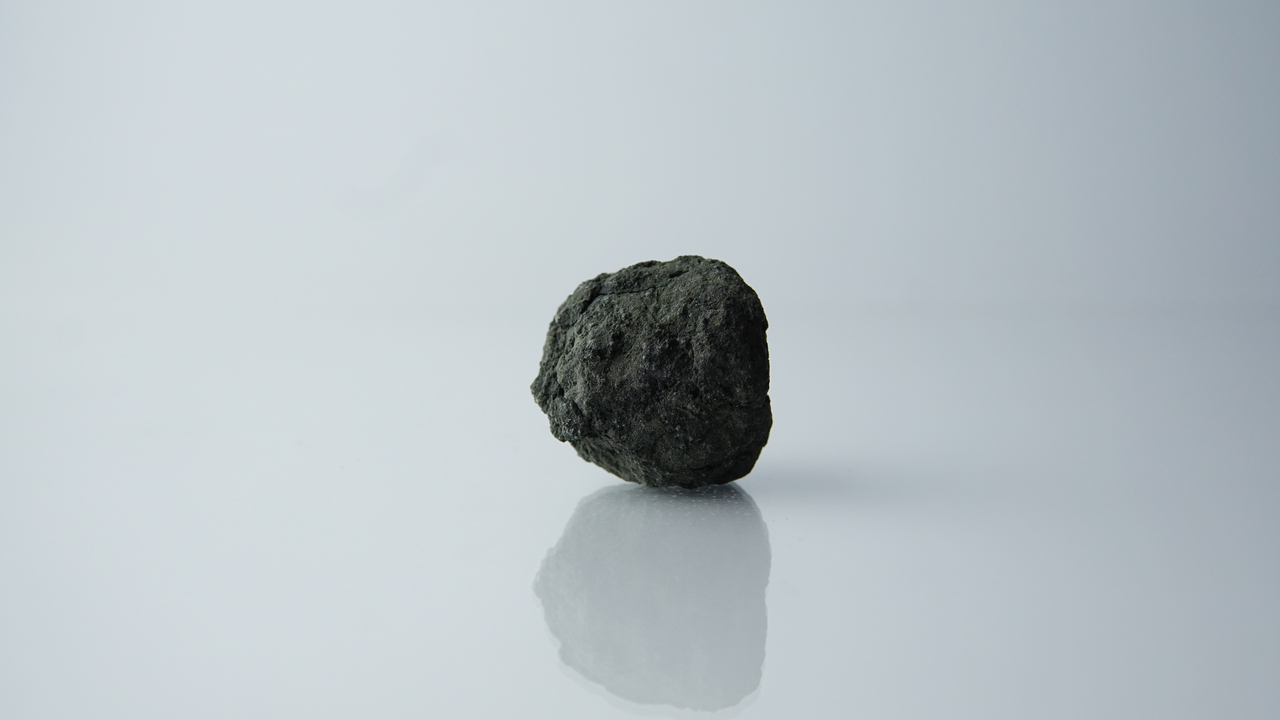
The abundance of limestone around Danyang, Jecheon and Yeongwol comes down to the region's geology. Limestone layers formed in Paleozoic-era seas are widely distributed across this area. Calcium carbonate that accumulated on the ancient seabed hardened into rock under immense pressure over hundreds of millions of years, and subsequent tectonic shifts produced the mountainous terrain seen today.
What makes the area particularly striking is that its famous tourist sites and its cement factories share the same geological origins. Gosu Cave in Danyang is the clearest example. Designated a natural monument in 1976, the cave formed as limestone dissolved in groundwater over millennia, leaving stalactites hanging from the ceiling and stalagmites rising from the floor. Danyang is also home to several other limestone caves — Cheondong Cave, Ondal Cave and Nodong Cave among them — all shaped by the soluble nature of limestone.
Elsewhere in the same limestone belt, that same rock is quarried as the raw material for cement. One type of stone becomes a tourist attraction; another becomes an industrial input. The coexistence of limestone caves and cement factories in Danyang and southern Gangwon Province is no accident.
South Korea began systematic surveys of limestone deposits in this region in the early 1960s. The existence and use of limestone had been known before that, and geological surveys for mining development were also conducted during the Japanese colonial period. The first comprehensive mapping of limestone resources — their distribution and reserves — was the 1962 Taebaek Mountain District Underground Resources Survey. A copy of the survey report held by the Korea Institute of Geoscience and Mineral Resources documents the distribution, grade and estimated reserves of limestone deposits across the area.
South Korea's cement industry predates those surveys. The oldest cement production facility in what is now South Korea is the Samcheok plant in Gangwon Province, which broke ground in 1937 during the Japanese colonial period and was completed in 1942. It was also the only cement factory left in the South at the time of liberation. The Mungyeong plant of Daehan Yanghoe followed in 1957, and factory construction accelerated through the 1960s as the government's economic development plans got underway.
Hanil Cement's Danyang plant was completed in June 1964. According to the National Museum of Korean Contemporary History, its annual production capacity at the time was 400,000 tons. That figure grew to 1 million tons by 1969, 2.1 million tons by 1976, and 7.1 million tons by 1996, driven by surging demand for cement in road, bridge and factory construction. The Saemaul Undong, or New Village Movement, of the 1970s also consumed enormous quantities of cement as rural roads and housing were upgraded across the country.
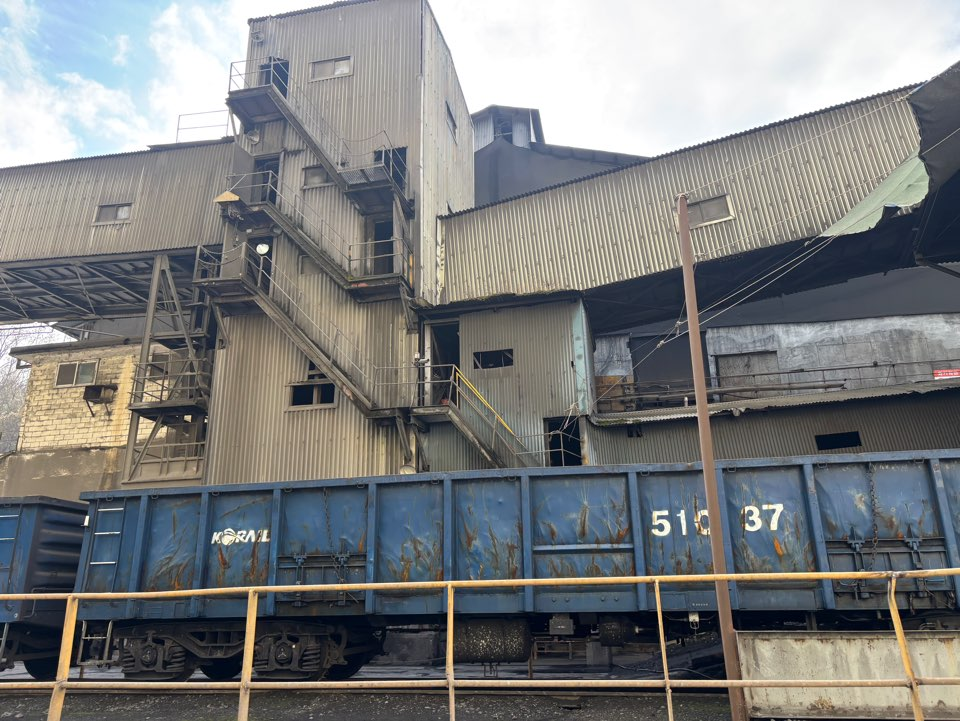
The cement manufacturing process begins with quarrying limestone, crushing it and mixing it with clay and other materials. The mixture is ground into a fine powder and fed into a large rotary kiln, where temperatures reach around 1,450 degrees Celsius. The intense heat triggers chemical reactions that produce lumps called clinker. Once cooled, the clinker is mixed with gypsum and ground into powder — and cement is the result.
The process demands enormous amounts of energy: fuel to heat the limestone to extreme temperatures, and electricity to run the grinding equipment. Carbon dioxide is also released as the calcium carbonate in the limestone breaks down under heat — separate from the greenhouse gases produced by burning bituminous coal and other fuels. That is why the cement industry is classified as one of the hardest sectors to decarbonize.
The large-scale production facilities built up over decades have seen their utilization rates fall sharply in recent years as the construction sector has slumped. Sampyo Cement's cement production capacity for the first nine months of this year stood at roughly 8.19 million tons, but actual output was only about 4.16 million tons — a utilization rate of just 50.8 percent. Hanil Cement's utilization rate for cement and slag powder production facilities was similarly limited to 57.3 percent.
Earnings have deteriorated as well. An analysis of quarterly reports from South Korea's five major cement companies shows their combined operating profit for the third quarter of this year fell 51.8 percent year-on-year to 59.8 billion won. Combined sales slipped 2.3 percent to 1.41 trillion won. Falling cement demand pushed down factory utilization rates, while intensifying price competition among producers further squeezed profitability.
hong@heraldcorp.com