A 73-square-meter unit at Gaepo Jugong 7 is listed at 2.7 billion won, down 1.05 billion won from its record high
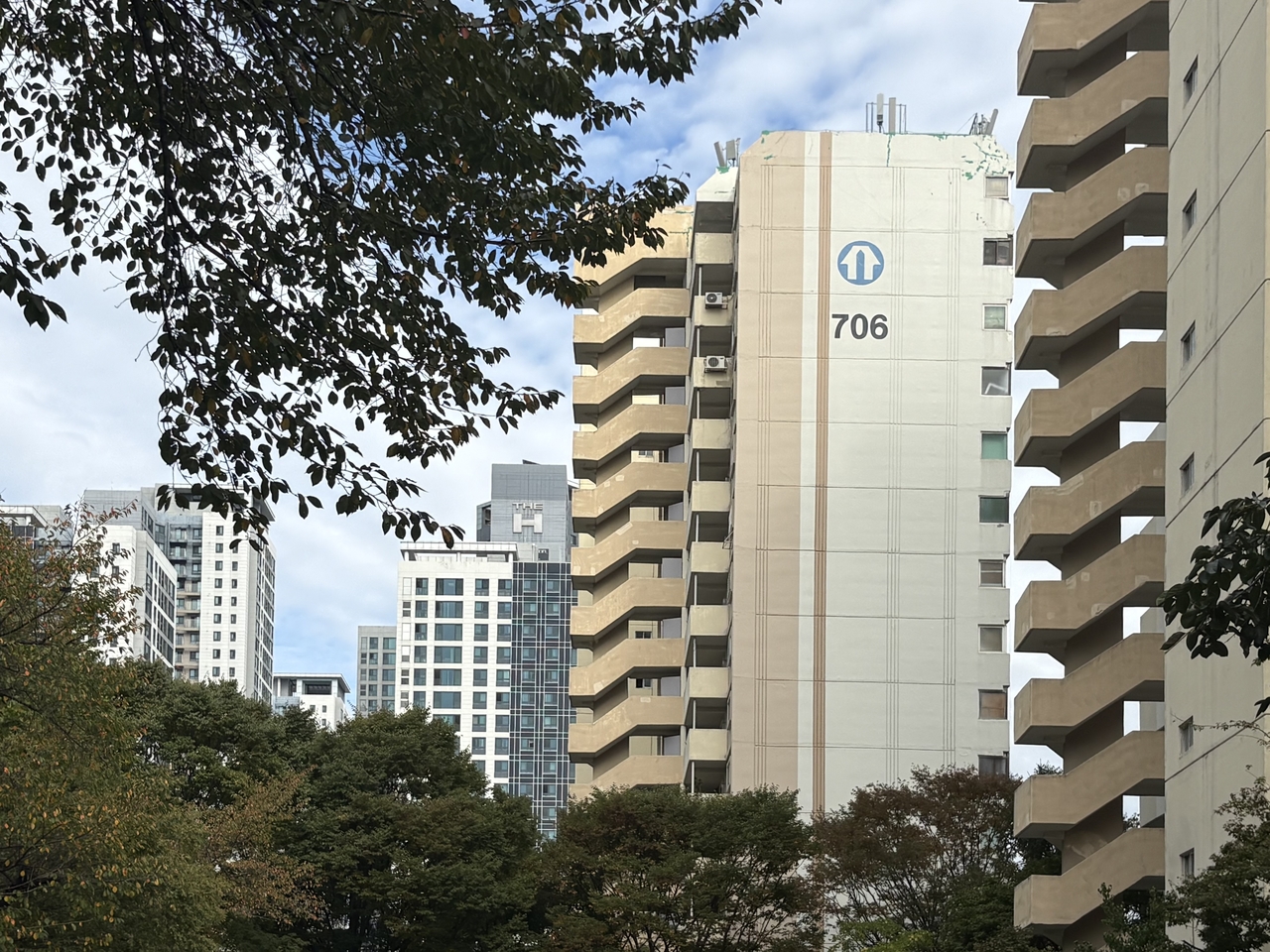
Signs of a price correction are emerging in the reconstruction apartment market in Gaepo-dong, Gangnam-gu, as distressed listings multiply across Seoul's Gangnam area. The trend is being driven by growing anxiety over the government's reconstruction excess profit recapture levy, which is expected to be imposed in earnest. Asking prices are sliding, with units that had settled firmly in the 3 billion won ($2.25 million) range last year now appearing on the market in the 2 billion won range.
According to real estate agencies in Gangnam-gu, asking prices for 60-square-meter units at Gaepo Jugong Complex 6 start at 2.85 billion won. That is 170 million won below the most recent transaction price for the same floor area — 3.02 billion won recorded in October on the third floor. Compared with the complex's record high of 3.37 billion won set in January on the second floor, the asking price has fallen 420 million won. The last time a unit of that size traded in the 2 billion won range was 18 months ago, in May last year, when a seventh-floor unit changed hands for 2.68 billion won.
The listing entitles the holder to a 59-square-meter unit after reconstruction and comes with a relocation loan of 600 million won that the buyer must assume. It is being offered at the same price as a 53-square-meter unit in the same complex. Sellers are cutting prices as tightening tax measures targeting high-end Gangnam apartments compound the burden of the reconstruction excess profit recapture levy.
"Prices surged sharply last year, but this year a string of developments — tighter lending rules, the designation of regulated zones and discussions over tax reform — has spread a wait-and-see mood among buyers across Gangnam," a licensed real estate agent near Gaepo-dong said. "As reconstruction relocation draws closer, older union members worried about additional contribution costs and the excess-profit levy are also starting to put their units up for sale."
A similar pattern is playing out at Gaepo Jugong Complex 7. A 73-square-meter unit — which entitles the holder to a 59-square-meter apartment after reconstruction — has been listed at 2.7 billion won. That is 400 million won below the most recent transaction price of 3.1 billion won recorded in September on the seventh floor, and 1.05 billion won below the complex's record high of 3.75 billion won set in April on the fifth floor.
Market observers say the price declines also reflect growing clarity around when the reconstruction excess profit recapture levy will be imposed. Gaepo Jugong complexes 6 and 7, which are slated to be redeveloped into a combined residential complex of 2,698 units, recently received approval for their management and disposal plan, accelerating the project's progress. Relocation is scheduled to begin next February, with construction set to break ground in 2028.
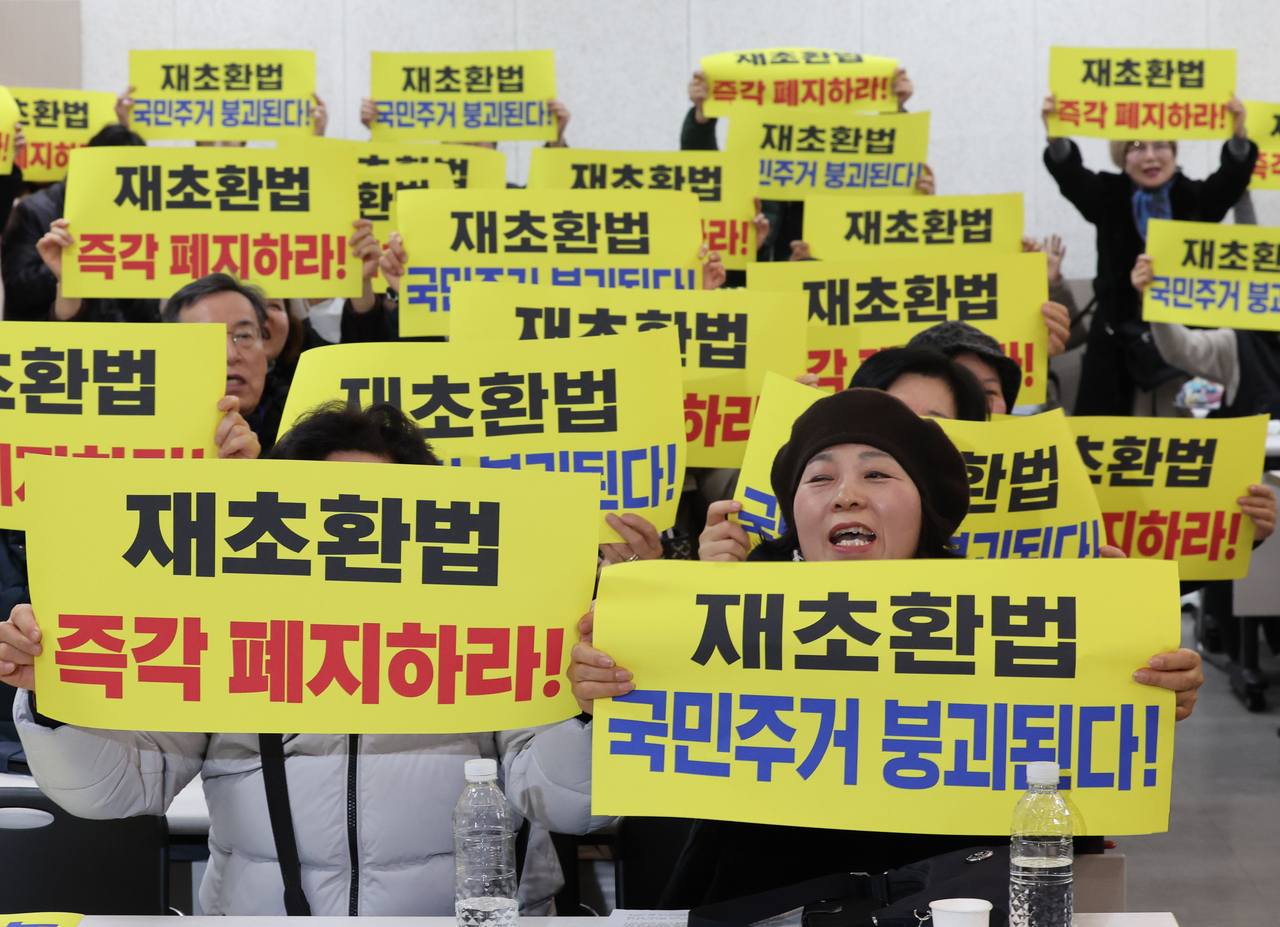
The Ministry of Land, Infrastructure and Transport has set the deadline for imposing the reconstruction excess profit recapture levy at within five years of receiving final completion approval, with the clock starting after five months have elapsed. As a result, Gaepo Jugong complexes 6 and 7 are widely regarded as prime candidates for the levy. The faster the project advances, the more likely the recapture burden becomes a reality.
Among reconstruction union members in Gangnam, there is growing criticism that the levy is an excessive burden. They argue it is unreasonable to impose charges on profits that have not yet been realized, and that the levy, stacked on top of existing real estate taxes, amounts to double taxation in effect.
At Eunma Apartment in Daechi-dong, Gangnam-gu, a union member holding an exclusive-use 84-square-meter unit who wishes to receive the same floor area after reconstruction would need to pay an additional contribution of about 430 million won. Adding the average per-person reconstruction excess profit recapture levy of 463.34 million won notified by Gangnam-gu, the combined burden reaches roughly 900 million won. The figure has prompted some union members to say, half in jest, that they would be better off simply buying a newly built apartment.
"Now that the levy deadline has been clarified, project uncertainty will ease — but the risk from levies will vary by complex, and price differentiation will continue," said Ham Young-jin, head of the real estate research lab at Woori Bank.
hss@heraldcorp.com