Full bench rules Dec. 3 martial law unconstitutional and unlawful
Han Duck-soo acquittal on pre-declaration Cabinet meeting count sends case back to Seoul High Court
Yoon faces charges carrying only death penalty or life imprisonment
'Intent to subvert constitutional order' set to become key test in remaining trials
Police, serious-crimes agency weigh special investigation unit — with lessons from flawed special prosecutor
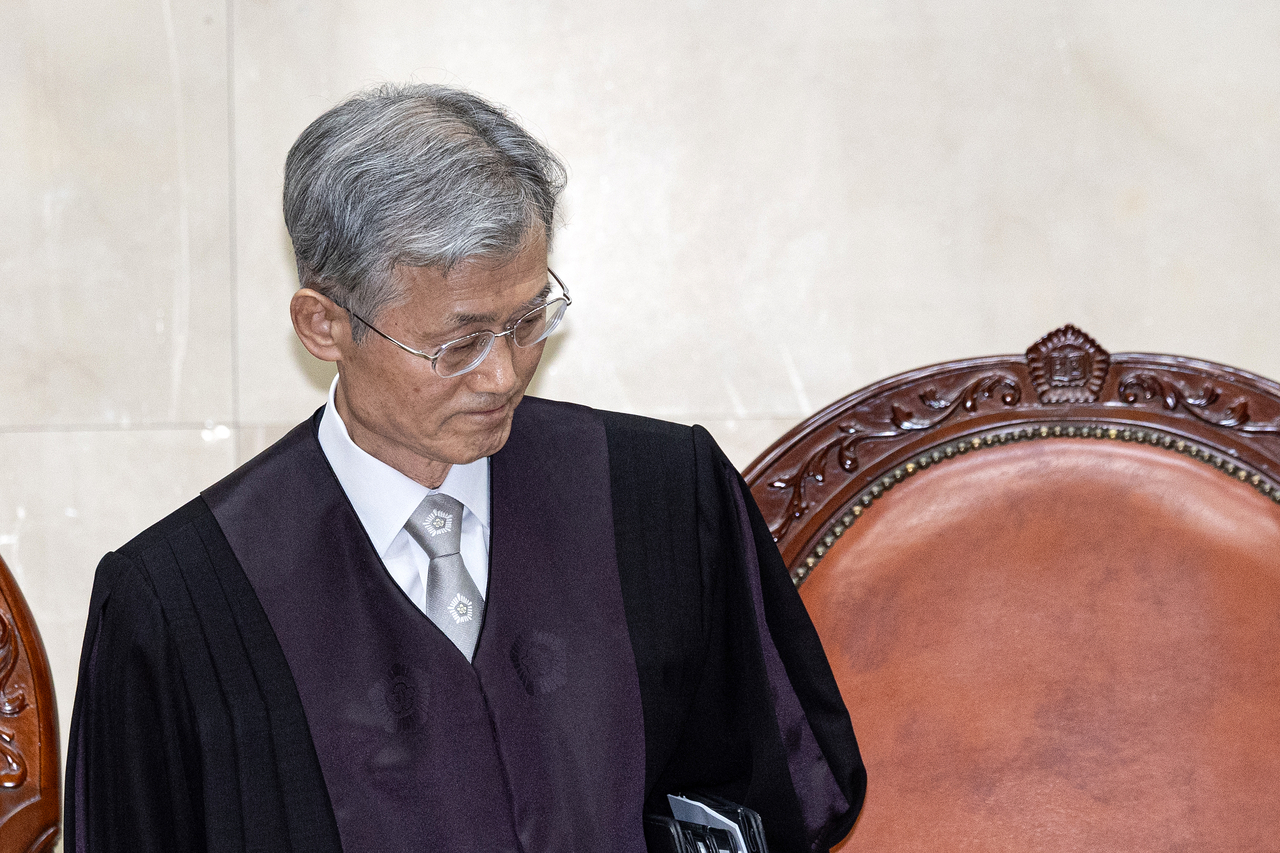
The Supreme Court, ruling on former Prime Minister Han Duck-soo's insurrection charges, determined that the Dec. 3 emergency martial law declaration was an unconstitutional and unlawful act of insurrection. The court nonetheless sent the case back to the Seoul High Court, finding it difficult to conclude that Han had harbored intent to subvert the constitutional order in connection with efforts to create the appearance that a Cabinet meeting had been convened before the declaration. That finding on intent is expected to shape future investigations by special investigation units.
According to legal sources, the Supreme Court's full bench — with Justice Oh Kyung-mi as the presiding judge — on Thursday overturned the lower court's 15-year prison sentence against Han, who was indicted on charges of participating in insurrection in an important role, fabricating official documents, using fabricated official documents and perjury, and remanded the case to the Seoul High Court. The court also extended Han's detention period, which had been set to expire.
The court made clear that the Dec. 3, 2024, emergency martial law declaration was itself unconstitutional and unlawful, finding that it violated the constitutional order and infringed on the fundamental rights of the people. No national emergency existed at the time, nor was there any situation in which the functions of the executive or judiciary were significantly impaired — yet martial law was declared with the intent to mobilize the military and police to seize control of the National Assembly, media organizations and other institutions.
The court held that to establish liability under the charge of participating in insurrection in an important role, prosecutors must prove the defendant acted with intent to subvert the constitutional order — defined as aiming to abolish the functions of the constitution or laws through means other than those prescribed by the constitution or laws, or to overthrow or paralyze state institutions established under the constitution through coercion.
The court found that intent to subvert the constitutional order was present in actions taken after the martial law declaration — including efforts to obtain signatures from Cabinet ministers on related documents to create an appearance of procedural legitimacy, and discussions between Han and former Interior and Safety Minister Lee Sang-min on plans to seal off the National Assembly and other key institutions and on how to implement orders to cut power and water to media outlets.
However, the court found it difficult to conclude that the same intent existed in Han's actions before the declaration — specifically, his recommendation to then-President Yoon Suk Yeol that a Cabinet meeting be held and his checking on the arrival of Cabinet members to formally fill the quorum and create the appearance that a Cabinet deliberation had taken place. On that basis, the court remanded the case to the Seoul High Court.
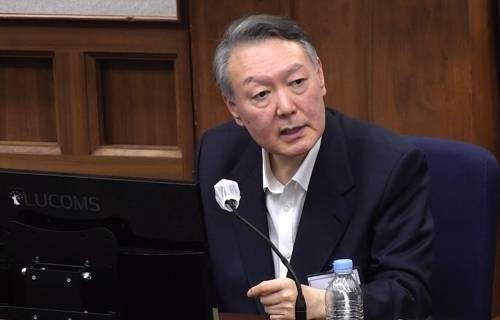
With the Supreme Court formally designating the Dec. 3 emergency martial law as insurrection, the ruling is expected to reverberate through the cases of all defendants charged with insurrection-related offenses. Legal observers say former President Yoon will find it difficult to avoid at minimum a life sentence: the statutory penalties for the charge of leading an insurrection — the charge applied to Yoon — are limited to death, life imprisonment and life detention.
There is also growing expectation that former Interior and Safety Minister Lee and former Justice Minister Park Sung-jae, along with other Cabinet members, will be unable to avoid a guilty verdict on charges of participating in insurrection in an important role. The Supreme Court specifically found that intent to subvert the constitutional order was present in Han's discussions with Lee about how to implement orders to cut power and water to media outlets. Lee's own case — in which he is charged with issuing those orders — is currently before the Supreme Court's full bench.
Park was indicted on charges of participating in insurrection in an important role for ordering the head of the Immigration and Foreign Policy Bureau to have the departure-ban team report to work and stand by as a preemptive measure to detain politicians before the official proclamation was issued. He also directed the Correctional Service to review and secure detention capacity at correctional facilities in the greater Seoul area. The lower court found that Park had been aware that the martial law declaration was made for an unconstitutional and unlawful purpose.
Analysts say, however, that proving the same charge against other military and police personnel may prove considerably more difficult. Even in Han's case, the Supreme Court held that establishing insurrection liability required a finding of intent to subvert the constitutional order — and concluded that such intent could not be inferred from the pre-declaration Cabinet meeting arrangements.
In August, a Seoul Central District Court panel acquitted Ko Dong-hee, a former planning chief at the Defense Intelligence Command with the rank of colonel, who had been indicted on charges of participating in insurrection in an important role. Ko was charged with, among other things, entering the National Election Commission during the martial law period and removing servers. The court found it unlikely that Ko had been aware that the commission's functions would be suspended, and therefore declined to find intent to subvert the constitutional order.
On Oct. 30, another Seoul Central District Court panel acquitted Ku Sam-hoe, a former Army 2nd Armored Brigade commander with the rank of brigadier general, who was charged with participating in insurrection in an important role for allegedly meeting with former Defense Intelligence Command chief No Sang-won — the so-called "hamburger meeting" — and discussing the formation of a "Second Investigation Unit." The court found that the defendants held only nominal titles within the unit and that intent to subvert the constitutional order could not be established.
The judiciary has, in effect, established intent to subvert the constitutional order as the threshold test for the charge of participating in insurrection in an important role. Commanders found to have harbored that intent have been convicted — among them former Defense Counterintelligence Command chief Yeo In-hyeong, former Capital Defense Command chief Lee Jin-woo and former Defense Intelligence Command chief Moon Sang-ho. Defendants who were deployed to the scene but were found to lack that intent have been acquitted.
The intent standard is also expected to govern cases brought by the second comprehensive special prosecutor's office, led by Special Prosecutor Kwon Chang-young, which indicted a large number of military figures — including former Joint Chiefs of Staff Chairman Kim Myung-su and former Ground Operations Command chief Kang Ho-pil — on charges of participating in insurrection in an important role. The special prosecutor's office concluded its investigation in August and is now in the trial phase, but has drawn repeated rebukes from the bench over deficiencies in its indictments.
Against that backdrop, attention is turning to a separate insurrection special investigation unit being discussed by the Korean National Police Agency and the Serious Crimes Investigation Agency, both under the Ministry of Interior and Safety. Special Prosecutor Kwon had raised the need for such a unit at a final briefing on investigation results. President Lee Jae Myung subsequently reviewed the possibility of establishing one, and the police and the agency are now in talks on its composition.
Legal observers say that for the planned unit — in which the police and the agency are each expected to appoint a co-director — to succeed, investigators must weigh the judiciary's standard of intent to subvert the constitutional order rather than press for results at any cost. The lesson from the comprehensive special prosecutor's office, which has faced criticism over its indictments from the outset, is that the unit must apply a rigorous standard from the start.
Among the cases currently cited as potential targets for the new unit are the "No Sang-won notebook" — a diary kept by former Defense Intelligence Command chief No that is said to contain evidence of martial law preparations and is considered a smoking gun — and the "Samcheong-dong safe house meeting" allegedly involving former presidential civil affairs secretary Kim Ju-hyun and others. The Democratic Party of Korea and other ruling-camp figures have also called for Chief Justice Jo Hee-dae to be investigated on insurrection charges.
bell@heraldcorp.com