A millennium of cheating: from tiny notes to AI-powered devices
AI-powered cheating devices have set off a national uproar, but exam fraud is nothing new. Even in ancient times, people sought to game high-stakes tests that could transform their fortunes. From glancing at a neighbor's answer sheet to scribbling formulas on scraps of paper, from walkie-talkies to mobile phones and now AI, cheating has evolved steadily over more than a millennium, riding each wave of new technology.
Cheating on the imperial exam: miniature answer sheets hidden in clothing

The history of exam cheating spans East and West alike. China's imperial examination system began during the Sui Dynasty and ran for more than 1,300 years until its abolition in 1905. A fiercely competitive state exam for selecting government officials, it required candidates to memorize entire classical texts, and failure meant losing one's chance at advancement.
That pressure gave rise to extraordinarily inventive cheating. During the Ming and Qing dynasties, candidates smuggled miniature copies of the Four Books and Five Classics — written in tiny script — hidden inside their clothing or the soles of their shoes. Some carried cloth scraps no larger than a palm, densely covered in characters. Inspectors searched candidates' clothes and belongings before they entered the examination hall and even broke open food to check for hidden materials, yet they could not stamp out cheating entirely.
More sophisticated schemes also emerged. Some candidates bribed examiners or embedded coded phrases in their answer sheets to signal the graders. Fraud had moved beyond copying a neighbor's work to corrupting the officials running the exam itself.
Joseon's civil service examinations were no exception. In 1699, a major scandal revealed that 15 of the 33 candidates who had passed the exam had done so through fraud, including cases in which the names attached to answer sheets were switched to manipulate results — methods not unlike today's proxy test-taking and answer-sheet swapping.
The 1990s college entrance era: bought admissions and organized proxy schemes
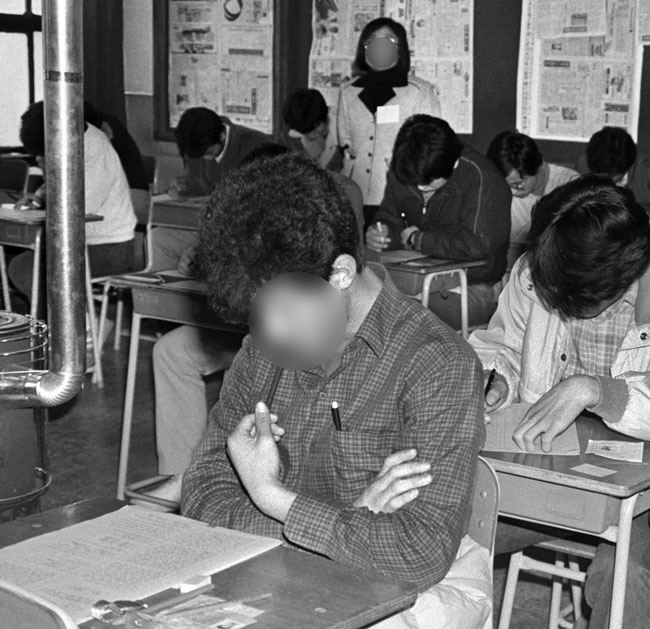
Proxy test-taking has a long history in South Korea's college admissions as well. A cheating scandal uncovered in 1993 showed just how organized such schemes could become.
The Seoul Metropolitan Police Agency detected three proxy test-taking cases in the late-round admissions exams at Hanyang University and Duksung Women's University. The scheme involved active high school teachers, admissions brokers, university students hired as stand-ins, and parents. Teachers and brokers recruited parents of underqualified applicants and connected them with high-achieving university students willing to sit the exam in their place. The stand-ins were promised 5 million to 7 million won per exam. In some cases, parents were asked to pay 30 million to 150 million won for arranging the proxy.
The investigation widened further. Additional proxy cases were confirmed at Hanyang University and Kookmin University, and investigators raised the possibility that the fraud dated back to the mid-1980s. Yonhap reported at the time that the number of students who had gained admission through proxy test-taking likely exceeded 100. The operation amounted to a full-fledged admissions fraud network — recruiting stand-ins, enlisting parents and securing university placements.
How mobile phones transformed cheating: from solo acts to organized conspiracies
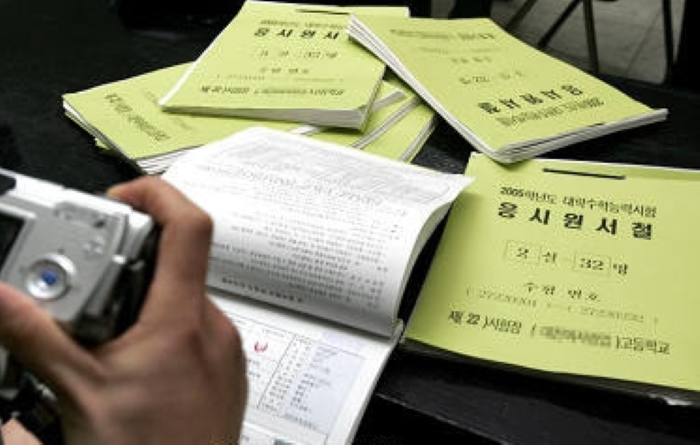
As mobile phones became widespread in the 2000s, cheating methods changed with them. Where candidates had once hidden notes or peeked at a neighbor's paper, mobile phones opened a channel for passing answers to and from people outside the exam hall.
During the 2004 College Scholastic Ability Test, a group of students in Gwangju was caught systematically exchanging answers via text message. High-scoring students solved questions and relayed the answers through intermediaries, who forwarded them to other candidates. Multiple people inside and outside the exam hall each played a designated role.
According to data released by the Ministry of Education in 2005, 472 students had their scores invalidated for cheating across the 2002 through 2005 CSAT administrations. Of those, 412 — about 87 percent — were linked to mobile phone text messaging. The phone had become more than a communication tool; it had become an instrument for undermining exam integrity. Restrictions on electronic devices in exam halls and penalties for violations were subsequently tightened.
Proxy test-taking surfaced again in the 2019 CSAT. An Air Force soldier was found in 2020 to have sat the exam at a Seoul test center on behalf of a superior. The case drew particular concern because the stand-in had passed the identity verification check at the entrance — exposing the limits of the traditional method of matching a candidate's face against the photo on the admission card.
Now AI solves the questions: smart glasses and micro-cameras enter the exam hall
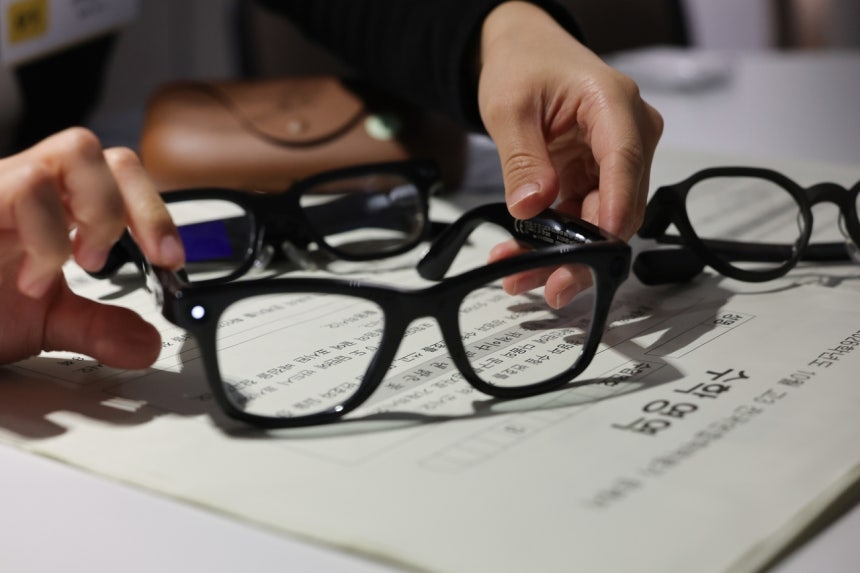
In the 2020s, generative AI has emerged as a new variable in exam fraud. Cases have been confirmed in national licensing exams in which candidates photographed questions with a smartphone, fed them to an AI tool and used the responses during the test.
In a recent case, the top scorer on the licensed tax accountant exam confessed to photographing questions with a miniature camera and submitting them to a generative AI via smartphone to obtain answers. Allegations of cheating arose after the candidate posted unusually high scores on both the first and second rounds of the exam, and the person acknowledged the conduct.
In a national licensing exam administered by the Human Resources Development Service of Korea, a candidate sitting the Korean cuisine cook certification test was caught in August 2024 photographing a computer screen with a mobile phone and submitting the images to an AI app. Cheating using ChatGPT, Gemini and similar tools was subsequently confirmed in several other licensing exams, including those for water resources development engineer, overhead crane operator and gas technician. By October 2026, at least eight confirmed cases of AI-assisted cheating had been recorded in the agency's exams.
Smart glasses have now entered the picture as well. Cameras built into the frames capture exam questions, and AI-generated answers are delivered via a display or audio. In October 2026, candidates wearing AI smart glasses were caught at essay exams at Yonsei University and the University of Seoul. The Yonsei applicant was reported to have switched from ordinary glasses to AI glasses during the exam. The University of Seoul halted that candidate's test and barred the person from sitting its entrance exams for three years.
Similar incidents have occurred in schools. A Ministry of Education survey of 5,679 middle and high schools nationwide confirmed four cases of AI glasses cheating during midterm and final exams in 2026. In some instances, proctoring teachers grew suspicious after noticing candidates repeatedly touching their frames or seeing light reflected off the lenses.
123@heraldcorp.com