Solo show 'Stems and Nodes' opens at Kukje Gallery
About 40 paintings, drawings and sculptures on view
Starting from 'urban gravity' — 'an exhibition about connection'
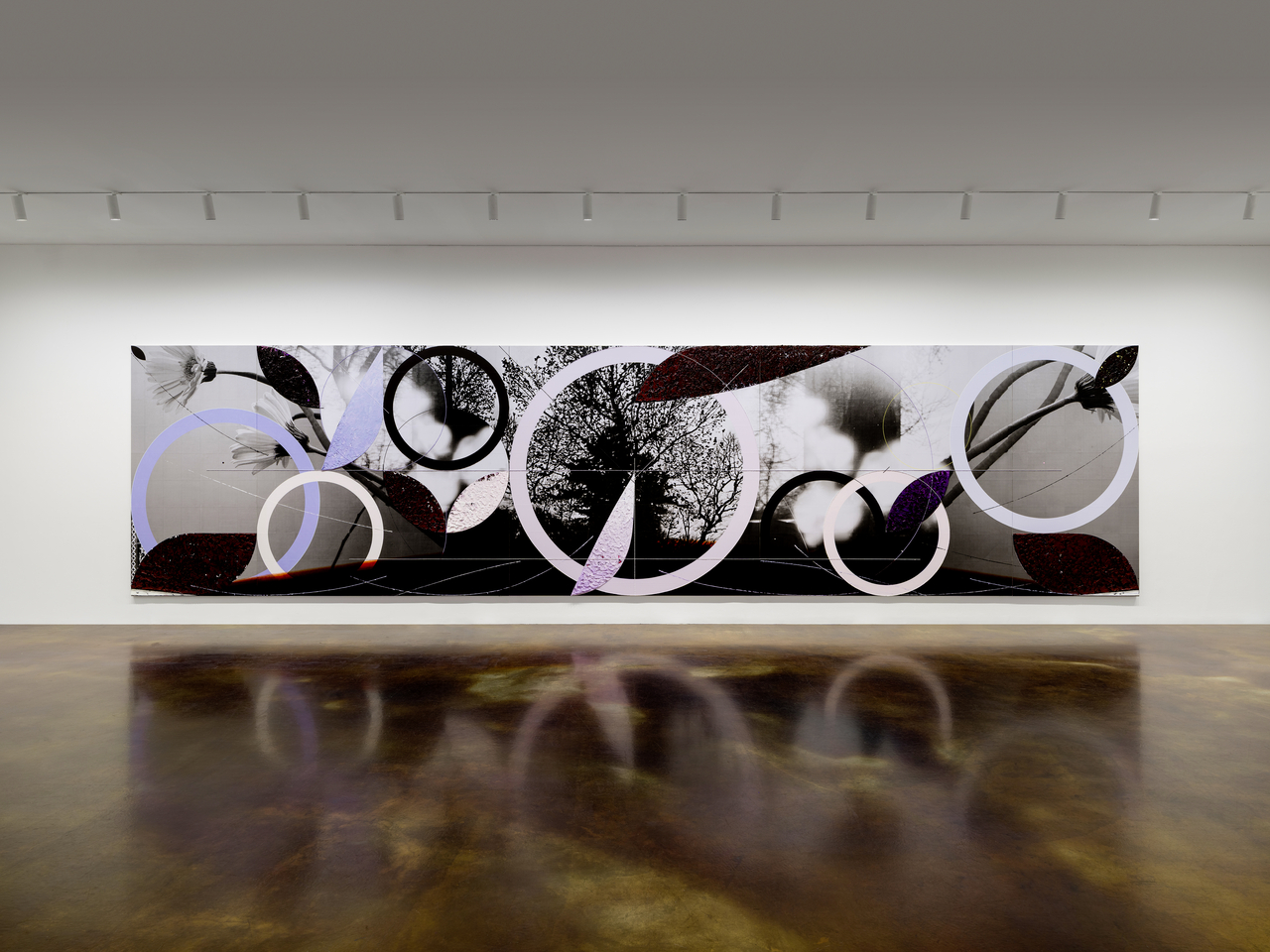
A towering snow-capped mountain appears in the middle of Seoul's Myeong-dong. Geometric shapes in yellow, pink and green are layered over a black-and-white image of sheer rocky peaks. The mountain in the painting is not a scene captured in nature — it is an image Lee found on a construction hoarding put up by a sportswear store undergoing renovation in Myeong-dong.
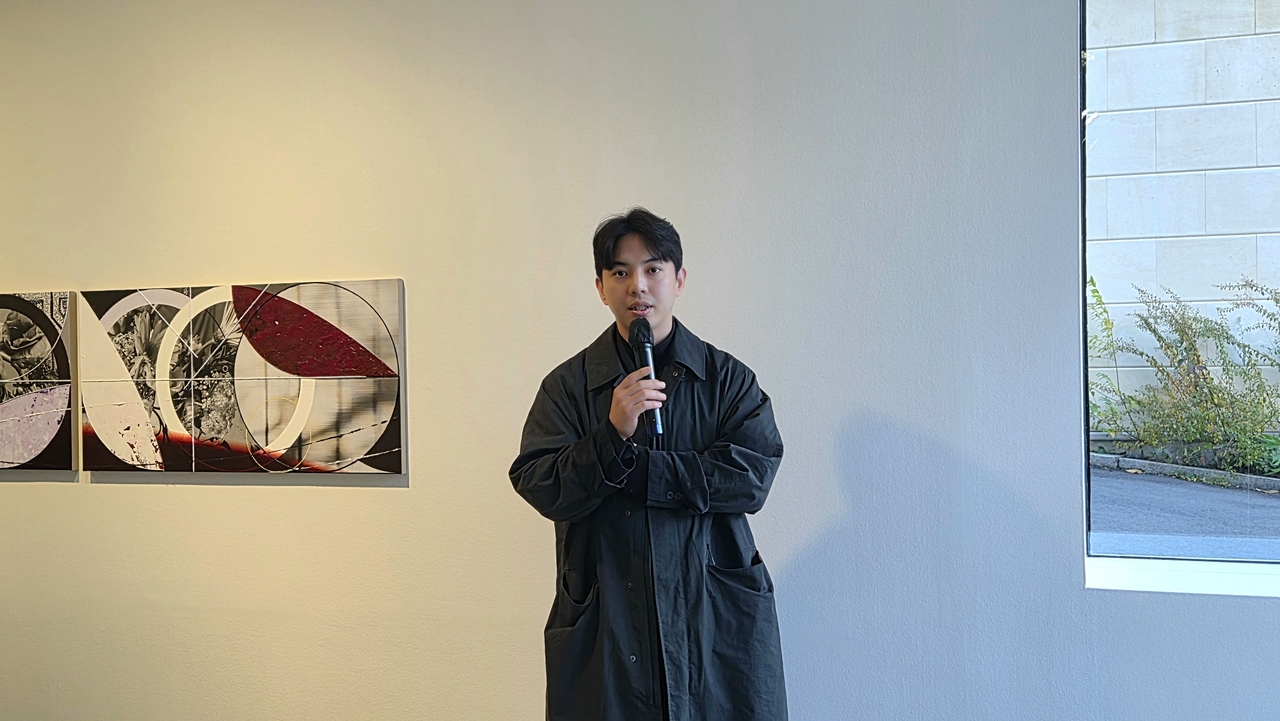
Lee Hee-jun, 38, who has built new painterly spaces by connecting scenes encountered in daily life, opened his solo exhibition "Stems and Nodes" at Kukje Gallery in Jongno-gu, Seoul, on Thursday. The show presents about 40 works, including new paintings, drawings and sculptures.
Speaking at the gallery, Lee said of the work titled "Myeongdong": "You can't actually see mountains like that in Korea, but I was able to find an image of a snowy peak on a construction hoarding in Myeong-dong. It made me realize that you can encounter all kinds of natural imagery even in the middle of a city, and I started asking questions about how we consume it."
The exhibition takes "urban gravity" as its starting point. After taking part in a residency program at the Delfina Foundation in London last year, Lee spent time in both London and Seoul and became drawn to the way people, capital, history and culture are constantly pulled toward the center of a metropolis.
What caught his eye most, however, was not the center but the edges. The forested road through Taereung that he passed every day on his commute from Seongbuk-gu in Seoul to his studio in Guri, Gyeonggi Province, offered a new source of inspiration. Driving along a road flanked on both sides by woodland, he experienced the sensation of leaving the city's gravitational pull and crossing a threshold — a feeling that overlapped with the parkscapes he had found in London.
"The experience of heading from home to my studio in Jongno felt completely different from heading outward, away from the city's gravity," Lee said. "I found myself wondering what exactly defines a boundary — between countries, between cities."
The exhibition title, "Stems and Nodes," grew from that experience. If stems are the passages connecting different places, nodes are the intersections where new stories branch off. Lee likened his practice of linking images from different times and spaces — and generating new relationships between them — to the structure of a plant.
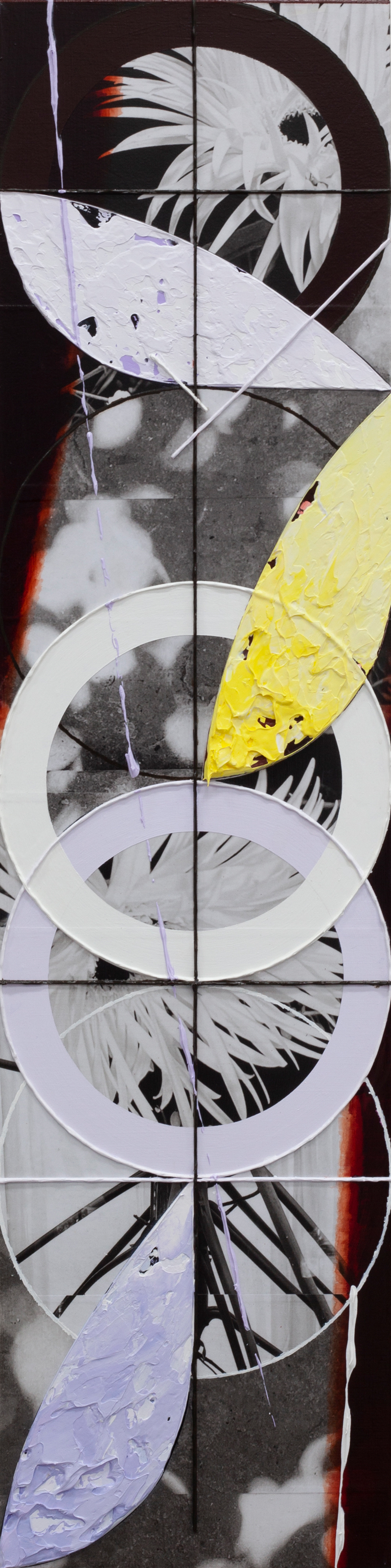
That shift is also reflected in the shape of the canvases. Where Lee previously worked mainly with square formats, this exhibition introduces compositions that expand both horizontally and vertically.
"Julgi No. 1–3," three canvases joined vertically, evokes a plant stem growing upward. Across the surface, landscapes of late spring, early summer, autumn and winter flow into one another, layering different seasons in a single image.
The large-scale painting "Julgi and Madi" connects images gathered from the Taereung forest road and from locations across London and Korea. The accumulation of different landscapes is also visible in the thick impasto applied across the surface. "I built up the paint imagining fallen leaves piling up one layer at a time," Lee said.
Lee's process begins with photographs taken in daily life, printed in black and white on A4 sheets of paper. He attaches these to the canvas, then applies paint over them and adds new forms — a practice that fuses photography and painting.
"Converting the photographs to black and white opened up more space for painterly intervention," Lee said. "Because they're in black and white, there's more room for imagination, and I felt I could extract my own sensations and express them through painting."
Viewed from a distance, the works read as seamless connected images, but up close the black-and-white photographs are pasted with slight misalignments — a device Lee has inserted deliberately.
"Images have become so sharp lately that we often get fooled by them or simply believe them," he said. "I wanted viewers to feel, through the misaligned arrangement, that what they're looking at is an image. An image is an illusion, and the misalignment is a last safeguard — a way of asking what kind of imagination we can draw from that illusion."
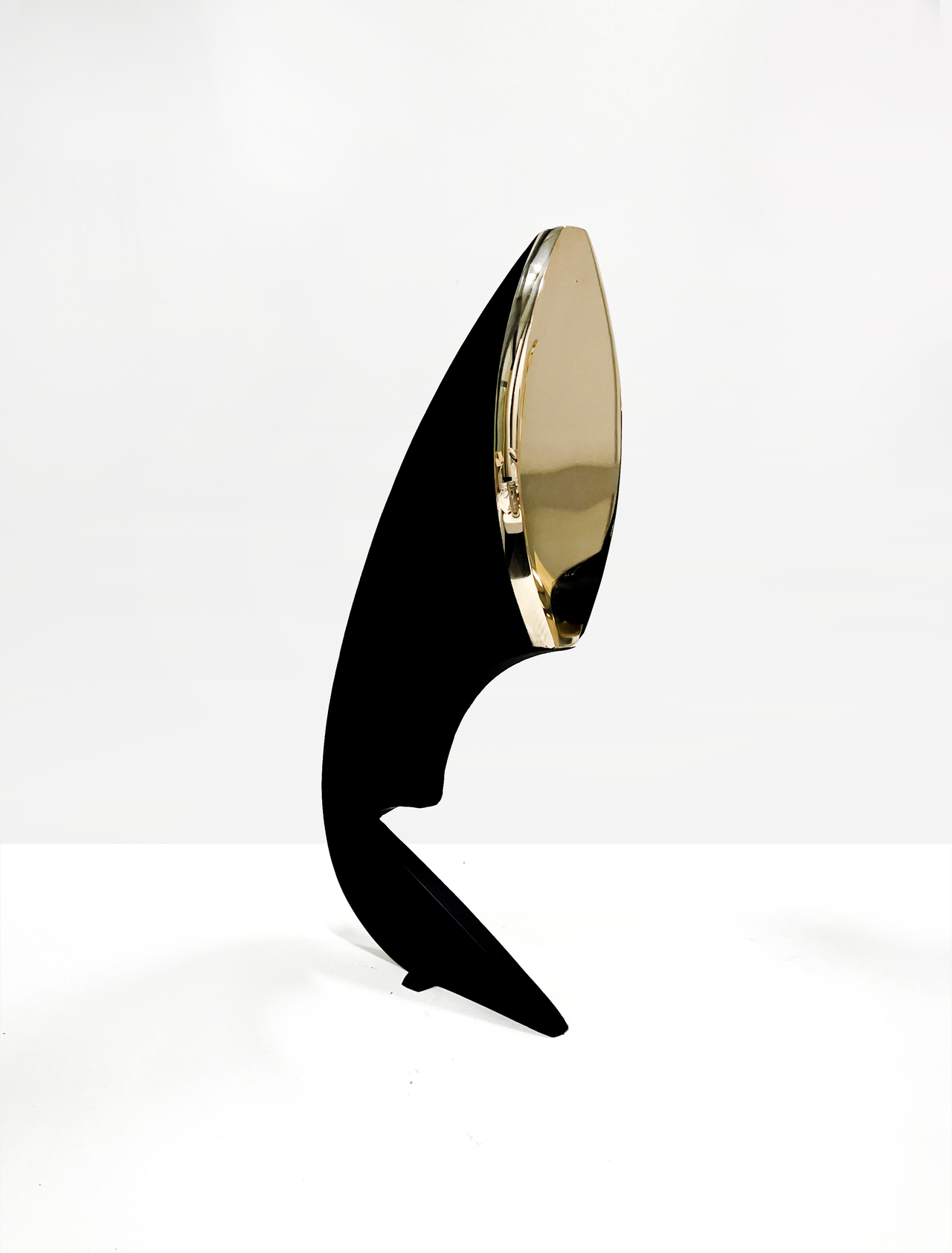
The exhibition also marks Lee's first foray into bronze sculpture. The small works feature surfaces that alternate between gleaming metal and light-absorbing matte black, and were inspired by the small creatures — pigeons, red squirrels — he has encountered on walks.
Lee identified "connection" as the thread running through the entire show. City and nature, past and present, Seoul and London, photography and painting — different entities meet and generate new stories.
"This exhibition is about how we can be connected, how we can meet."
Following Lee's gaze, the viewer comes to discover that places far apart and memories from different times are ultimately joined along a single stem.
The exhibition runs through Jan. 31.
pink@heraldcorp.com