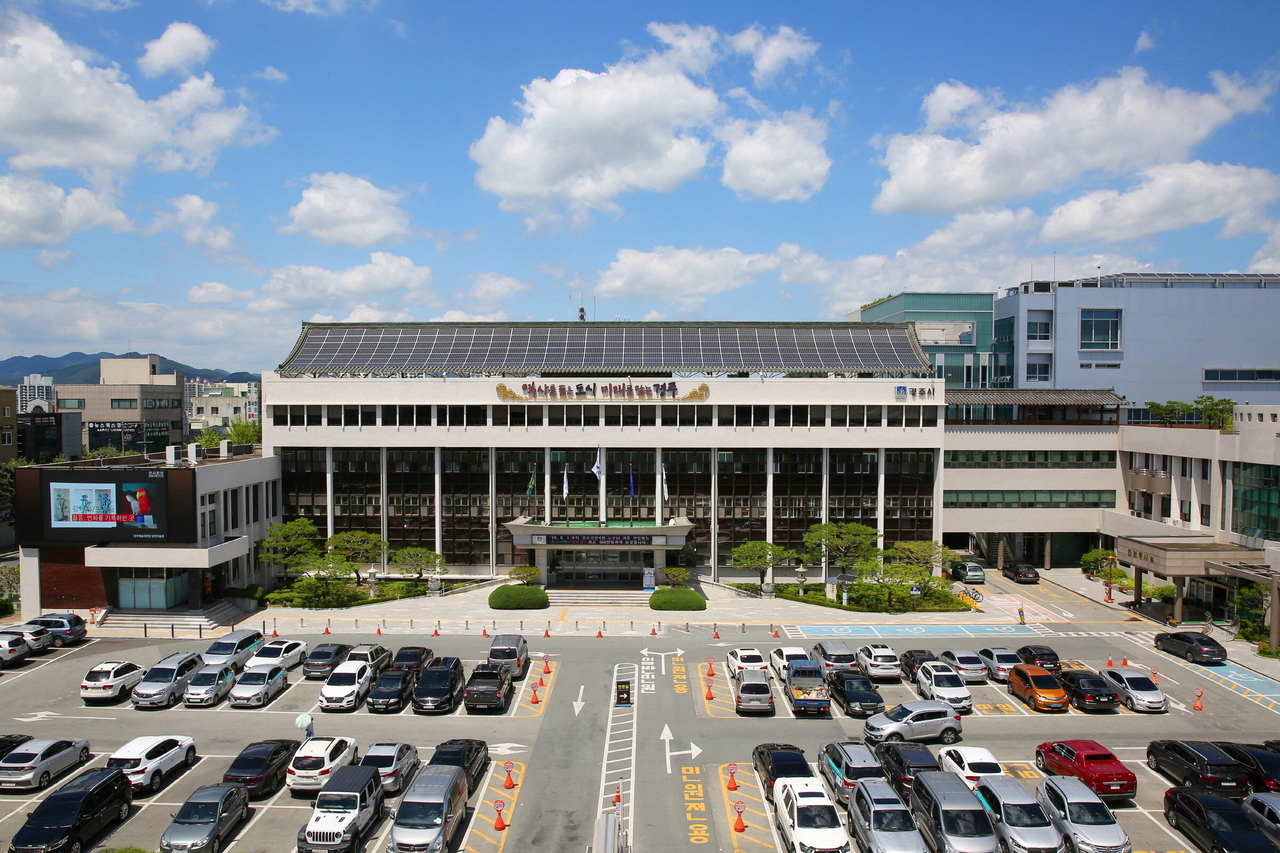
Gyeongju in North Gyeongsang Province has drawn up a 2027 budget proposal of 2.22 trillion won ($1.67 billion), the largest in the city's history.
The city announced Sunday that it had submitted the draft budget to the city council, representing a 120 billion won increase, or 5.7 percent, over this year's budget.
Of the total, 1.89 trillion won is allocated to the general account and 330 billion won to special accounts.
The budget focuses on expanding everyday infrastructure, supporting the local economy and strengthening welfare services.
Major projects include 15 billion won for the construction of a multipurpose cultural library, 6 billion won to build a public parking lot near the intercity bus terminal and 4 billion won for the reconstruction of Gyeongju Bridge.
About 22 billion won has been set aside for the local economy, including 16 billion won to support the issuance of Gyeongju Pay — a local currency — along with funding for interest subsidies on small and medium-sized enterprise operating loans and special loan guarantees for small business owners.
On the welfare side, the budget allocates 208.1 billion won for basic pensions and 25 billion won for senior employment programs. Support for youth housing loan interest subsidies has also been expanded to 1.5 billion won.
To secure future growth engines, the city plans to invest about 7 billion won in fostering the future mobility industry and 6.4 billion won to establish a small modular reactor manufacturing support center, as part of broader investment in strengthening the nuclear power industry base.
Budgets have also been set aside for post-APEC projects and 40 major campaign pledge initiatives.
"We focused on expanding everyday infrastructure and easing the economic burden on residents and small business owners," Gyeongju Mayor Ju Nak-young said. "We will inject new vitality into the local economy through the transition to the future mobility industry and the expansion of the nuclear power industry base."
kbj7653@heraldcorp.com