"Time to say goodbye."
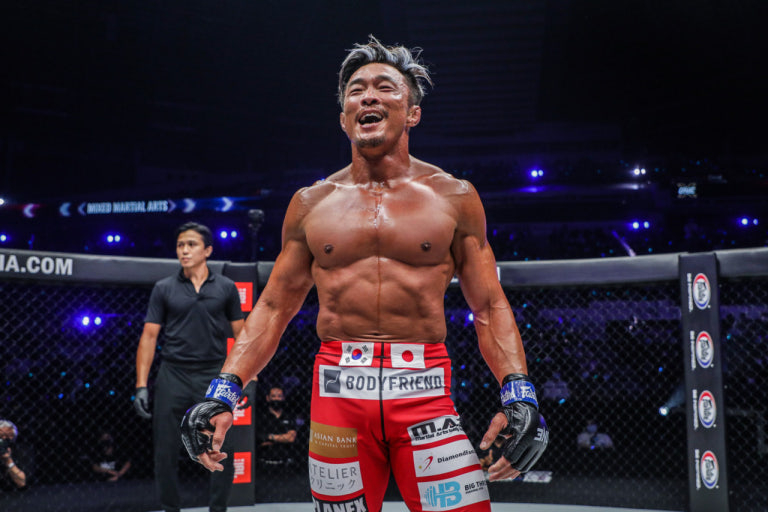
The words filled Gocheok Sky Dome in Seoul as Choo Sung-hoon made his final walk to the cage. It was the last stage for a fighter who had spent 22 years in combat sports. Victory was not his to claim. But the final three rounds, fought before more than 21,000 fans, offered a moment to reflect on what the name Choo Sung-hoon has meant to the history of martial arts.
Choo, 51, faced American Chris Leben, 46, on Saturday at Black Combat 17: Vantablack at Gocheok Sky Dome. Contested at a catchweight of 89 kilograms, the bout went the distance and ended in a split decision loss for Choo — 1-2 (28-29, 29-28, 28-29). He had hoped to avenge a defeat to Leben 16 years earlier in the UFC but fell short. The bout marked his retirement, closing a career record of 16 wins and 8 losses, with 2 no-contests.
From judo gold medalist to MMA fighter
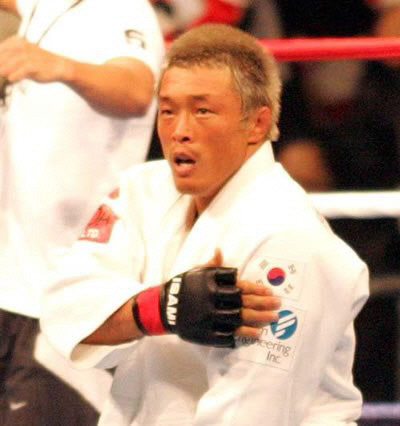
Born in Osaka, Japan, in 1975, Choo is a fourth-generation Korean Japanese. He began practicing judo at age three, following in the footsteps of his father, who was a judo athlete. In 1998, he moved to South Korea and competed under the Korean flag, winning a gold medal at the 2001 Asian Judo Championships.
That same year he returned to Japan and naturalized as a Japanese citizen, going on to represent Japan at the 2002 Asian Games in Busan. He claimed gold in the men's 81-kilogram judo event, defeating South Korea's Ahn Dong-jin in the final. The arc of his story — learning judo in Korea, then winning a championship for Japan on Korean soil — became one of the defining symbols of his life.
Having reached the pinnacle of judo, Choo transitioned to MMA in 2004. He made his debut on Dec. 31 of that year at the K-1 Dynamite!! event at Osaka Dome in Japan, facing former boxing world champion Francois Botha. He won by armbar submission in the first round.
The grip strength and takedown technique he had honed in judo became powerful weapons in MMA, and he expanded his game by adding striking. In 2006, he won the K-1 Heroes light heavyweight tournament, defeating Melvin Manhoef in the final. The following year, he knocked out Denis Kang by punches at a Korean event, leaving a strong impression on domestic fight fans.
Into the UFC: facing the world's best
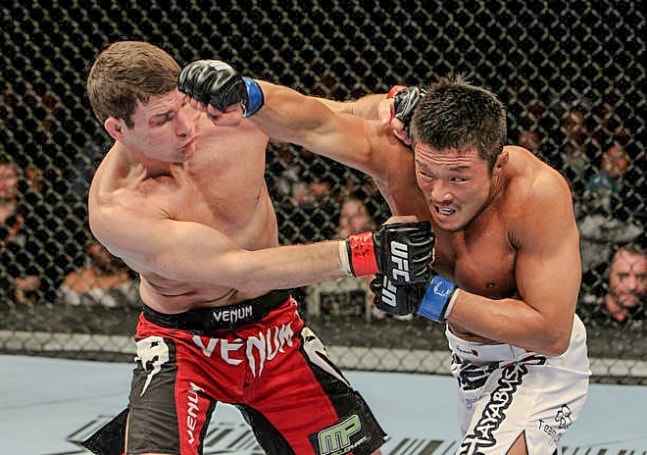
In 2009, Choo joined the UFC, the world's largest MMA organization. He opened with a decision win over Alan Belcher and went on to face elite competition including Chris Leben, Michael Bisping and Vitor Belfort.
His UFC record of 2 wins and 5 losses did not reflect a dominant run, but he consistently appeared on main cards at major events. His bout with Bisping headlined a UFC main event. He made his mark with a style that refused to be confined to his judo background, embracing striking exchanges rather than relying solely on grappling.
A loss to Chris Leben at UFC 116 in July 2010 remained one of the most lingering regrets of his career. With 20 seconds left in the fight, Choo was caught in a triangle choke and submitted. That defeat was the reason Leben was chosen as his retirement opponent — Choo wanted one last chance to settle the score from 16 years earlier.
In November 2015, Choo lost a decision to Alberto Mina at UFC Fight Night 79 in Seoul. The bout was both his final UFC appearance and the last UFC fight held on Korean soil.
Still fighting into his late 40s
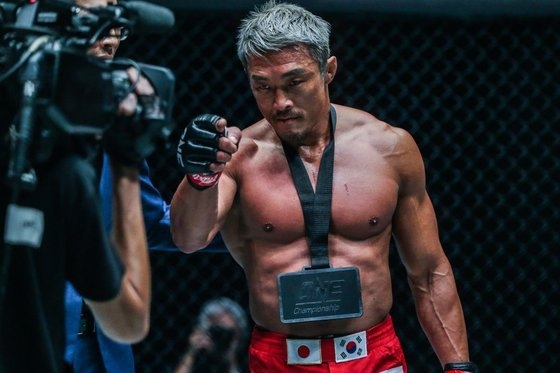
After leaving the UFC, Choo kept competing. He signed with One Championship in 2019, returning to MMA after a three-year, seven-month absence. He lost a decision to Agilan Thani at an event in Shanghai, China, that June, but stepping back into the cage in his mid-40s drew attention in itself.
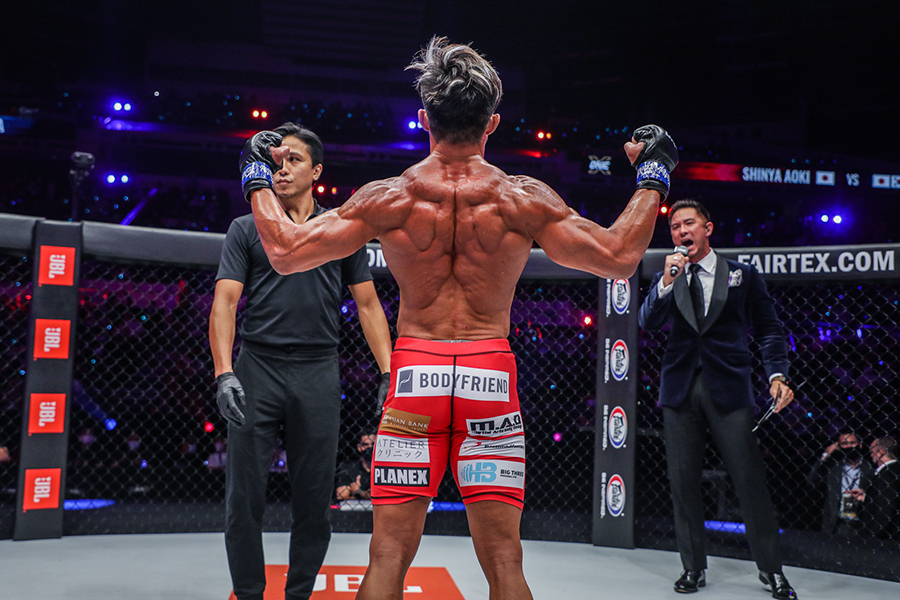
In March 2022, he faced Japanese veteran Shinya Aoki and won by TKO in the second round — at 46 years old. Around that time, he spoke of dreaming of becoming a champion in his 50s. In 2024, he also competed in a kickboxing bout under One Championship, broadening his competitive scope beyond MMA.
His contract with One Championship ended in May 2025, but he did not announce his retirement. Instead, he went looking for a new stage. In May 2026, he said he was seeking an opponent for a retirement bout, and a rematch with Chris Leben was eventually arranged.
A fighter to the end — and his purse goes to the next generation
Ahead of his retirement bout, Choo paused his television work and traveled to Thailand to focus on training. To the general public he is widely known as "Sarang's dad" from the family reality program "Superman Returns," but he always considered himself a fighter first — which is why he kept returning to the cage even after achieving broad popularity through television.
The final bout sold out all 21,177 seats at Gocheok Sky Dome. Choo entered wearing a judo uniform bearing the South Korean and Japanese flags on each arm, walking out alongside his mother, Ryu Eun-hwa. His wife, Yano Shiho, and daughter Choo Sa-rang watched from the stands.
The result was a decision loss. But after the fight, Choo said, "I won't be fighting anymore, so my mother does not need to worry." He also announced that he would donate his entire fight purse to younger fighters who will compete in the future.
From judo gold medalist to veteran of K-1, the UFC and One Championship — a 22-year journey. Choo Sung-hoon did not win his final fight, but he ended his career on his own terms.
123@heraldcorp.com