Last-minute rule changes before the exam deepened confusion at test sites
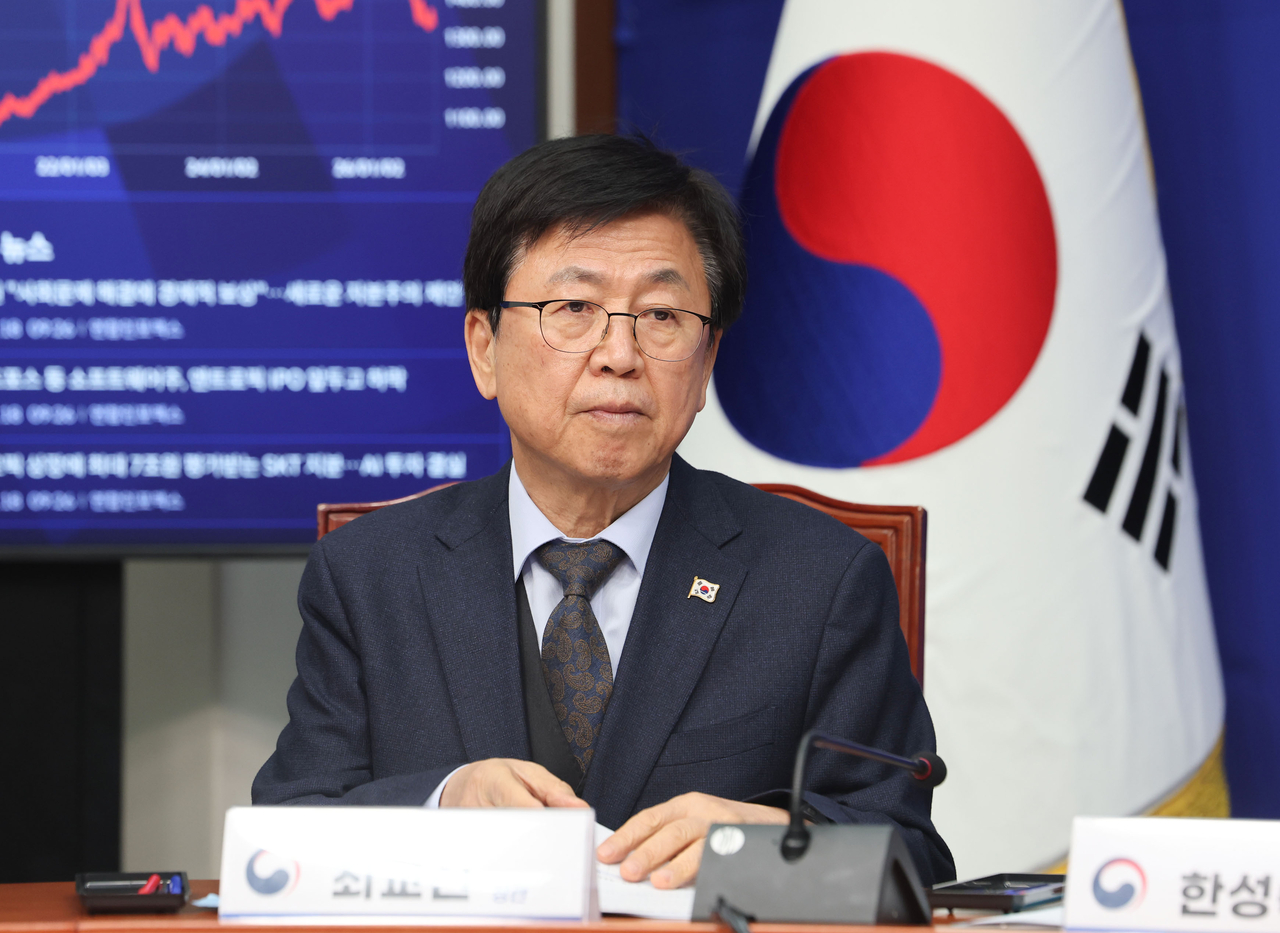
Education Minister Choi Kyo-jin submitted a resignation Sunday, taking responsibility for the confusion that erupted over anti-cheating measures during preparations for the 2027 college entrance exam, known as the suneung.
The move came amid mounting criticism that the ministry had repeatedly revised its guidelines on preventing AI-assisted cheating just days before the exam, throwing test-takers and schools into disarray.
"Now that the exam is over, I feel a deep sense of responsibility and hereby tender my resignation," Choi said in a statement released through the ministry's spokesperson office.
"In the course of preparing for the exam, various changes arose just before the test date, causing inconvenience to examinees and the public," Choi said.
Choi added that the exam had concluded without major incident, thanks to the cooperation of the president, the prime minister, other government ministries, examinees, parents, proctors and the public. "However, as the minister in charge, I do not believe I am free from criticism or the perception that we failed to prepare adequately in advance," Choi said.
The suneung was held Thursday, but concerns over AI-assisted cheating had been building for days, and the government's response kept shifting in the final stretch, sowing confusion.
The ministry had initially focused on preventing cheating through smart glasses. But after a top scorer on a tax accountant licensing exam admitted Nov. 15 to using a miniature camera and AI to cheat, the ministry scrambled to draw up additional measures covering other high-tech devices — drawing sharp criticism for its belated response.
It was not until Monday — two days before the exam — that the government announced it would deploy about 8,400 additional personnel, including roughly 1,800 dedicated smart-device monitors and about 6,600 corridor proctors, and would place stickers over every button on examinees' clothing.
On Wednesday, the day before the exam, the ministry reversed earlier rules and banned examinees from bringing personal items that had previously been permitted — including ballpoint pens, correction tape, erasers and mechanical pencil refills — allowing only black pencils. Newly mobilized proctors were rushed through emergency video training sessions, adding to the turmoil at schools.
Teachers' organizations pushed back hard, accusing the government of failing to prepare adequate anti-cheating measures in advance and then dumping the burden on classroom teachers by drafting them as last-minute proctors. The Korean Federation of Teachers' Associations demanded Choi's immediate resignation, saying, "If you pull proctors together in a hurry today, train them tomorrow and deploy them the day after, do you really think they'll have the expertise to detect sophisticated AI cheating?"
Pressure on Choi to step down intensified even after the exam ended, as the People Power Party and a group calling itself the "examinees' alliance," made up of current high school seniors, called on Choi to resign.
Remarks Choi made at the National Assembly had also fueled public calls for a departure. At a plenary session of the Assembly's Education Committee on Monday — three days before the exam — People Power Party lawmaker Park Jeong-hun asked whether Choi was confident that 100 percent of AI cheating could be detected. Choi replied, "I don't think I can manage that" — adding, "I'm at a certain age."
yg@heraldcorp.com