Breakdown in negotiations would trigger open-ended walkout, raising fears of rush-hour disruptions
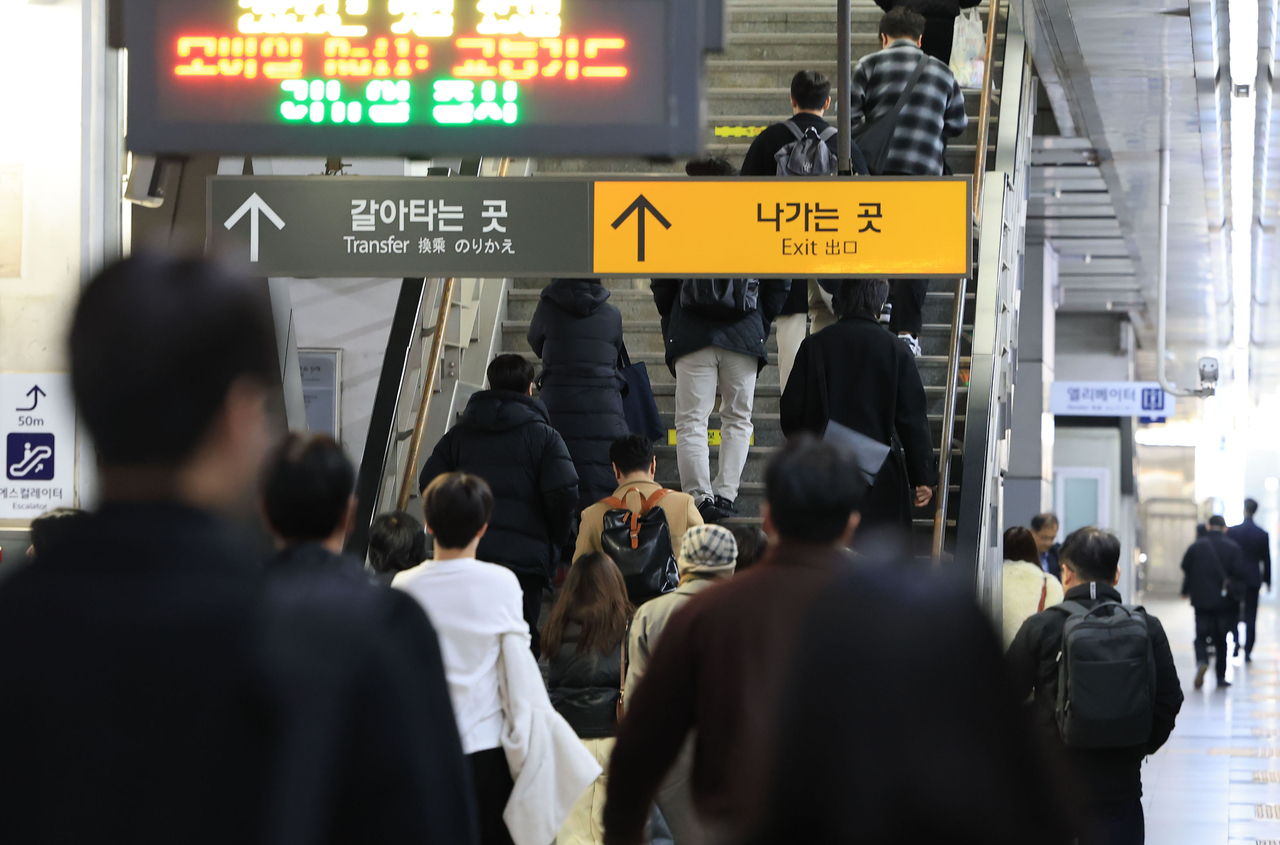
The unions representing workers on Seoul's major subway lines have announced an indefinite general strike set to begin Wednesday, with labor and management scheduled to hold a final round of negotiations Tuesday — one day before the planned walkout.
According to Seoul Metro, labor and management will hold formal wage and collective bargaining talks with all three unions starting at 10 a.m. Tuesday at the company's headquarters. The Transport Workers' Union (Union No. 1) goes first at 10 a.m., followed by the Olbareun Union (Union No. 2) at 11 a.m. and the Integrated Union (Union No. 3) at 1:30 p.m., with each union negotiating separately.
The central sticking points are frontline staffing levels and the Seoul Metropolitan Government's plan to cut the workforce. The unions are demanding a 3.5 percent pay raise in line with government guidelines, the full withdrawal of a plan to reduce the company's headcount by 2,212 between 2021 and 2026, and the hiring of 1,313 workers to fill current vacancies before the end of this year.
The unions are also calling for national government funding to cover public-service costs and a mandatory two-person work system at operational sites, arguing that chronic understaffing poses a direct threat to subway safety.
According to figures compiled by Union No. 1, the company was short 311 workers against its authorized headcount as of last month, with an additional 443 on extended leave for reasons including parental, bereavement and military service.
The Seoul Metropolitan Government, however, has pushed ahead with workforce reductions, citing the company's fiscal burden and the need for management efficiency. Between 2021 and 2023, the headcount was cut by 684.
How far the Seoul Metropolitan Government is willing to accommodate the unions' demands is seen as the pivotal variable in the negotiations.
While Seoul Metro is the formal party at the bargaining table, approval authority over staffing levels and hiring rests with the city government.
Seoul Metro said it is consulting with the city on the unions' demands and is expected to convey the city's position at Tuesday's final talks.
Labor and management held three rounds of formal negotiations in June, July and September this year but failed to narrow their differences, declaring a breakdown in September. They subsequently applied to the Seoul Regional Labor Relations Commission for mediation in October, but two sessions also ended without agreement and the process was suspended.
Following the breakdown, the unions completed the procedural steps required to strike — including a vote on industrial action and a formal declaration of a labor dispute. Unions No. 1 and No. 2 launched a work-to-rule campaign Friday.
Workers under the campaign are strictly adhering to safety regulations and refusing additional inspections and off-hours duties. Trains are currently running normally, though some delays are possible.
If Tuesday's talks collapse, all three unions plan to launch an indefinite general strike Wednesday. With only essential staff on duty, train frequency is expected to drop sharply, and congestion during morning and evening rush hours appears unavoidable.
Seoul Metro said it has activated an emergency response center and plans to coordinate with its control center to encourage on-time operations and make real-time adjustments to train intervals.
Last year, labor and management reached a last-minute deal in the early hours of Dec. 12 — the day a strike had been scheduled to begin — averting the walkout entirely. Attention is now focused on whether a similar eleventh-hour agreement can be reached this time.
yg@heraldcorp.com