Asteroid 2026 QQ8 captured by Earth's gravity, poses no collision risk
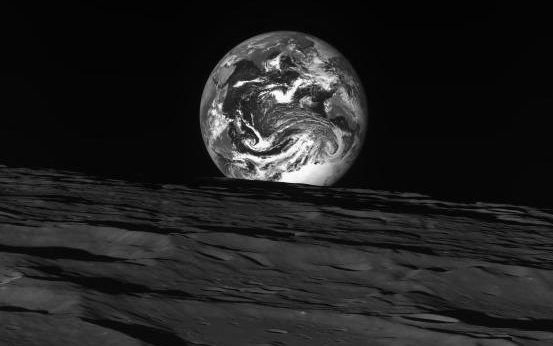
Earth has temporarily gained a tiny "second moon," CNN reported Saturday (local time).
According to the Minor Planet Center (MPC) under the International Astronomical Union, a roughly 2-meter-wide asteroid designated 2026 QQ8 was captured by Earth's gravity in April.
The asteroid is expected to remain in Earth's vicinity until early December before escaping its gravitational pull and returning to an orbit around the sun.
Hungarian astronomer Krisztián Sárneczky first discovered 2026 QQ8 in August.
It initially appeared to be an ordinary asteroid, but precise orbital calculations confirmed it was circling Earth.
Analysts have determined there is no risk of 2026 QQ8 colliding with Earth.
Even if it were to enter the atmosphere, its small size means it would almost certainly burn up before reaching the surface.
Experts say it is not unusual for Earth to temporarily capture small asteroids in this way.
"At any given time, there's likely to be one around," MPC Director Matthew Payne said. "They tend to stick around for a few weeks or a few months."
In the past, asteroid 2006 RH120 lingered near Earth for about a year, and 2020 CD3 remained for roughly three years.
Astronomers believe most space objects observed near Earth originate from the asteroid belt between Mars and Jupiter.
Objects from the asteroid belt can have their orbits altered by gravitational forces, bringing them close to Earth, where they may be temporarily captured if their speed is low enough.
Astronomers have identified about 40,000 objects in Earth's vicinity to date.
About 1.5 million objects have been confirmed across the solar system as a whole.
123@heraldcorp.com