Fiscal adviser Ryu Deok-hyeon says AI revolution an 'irreversible change'
Future response fund should prioritize investment over debt repayment, he says
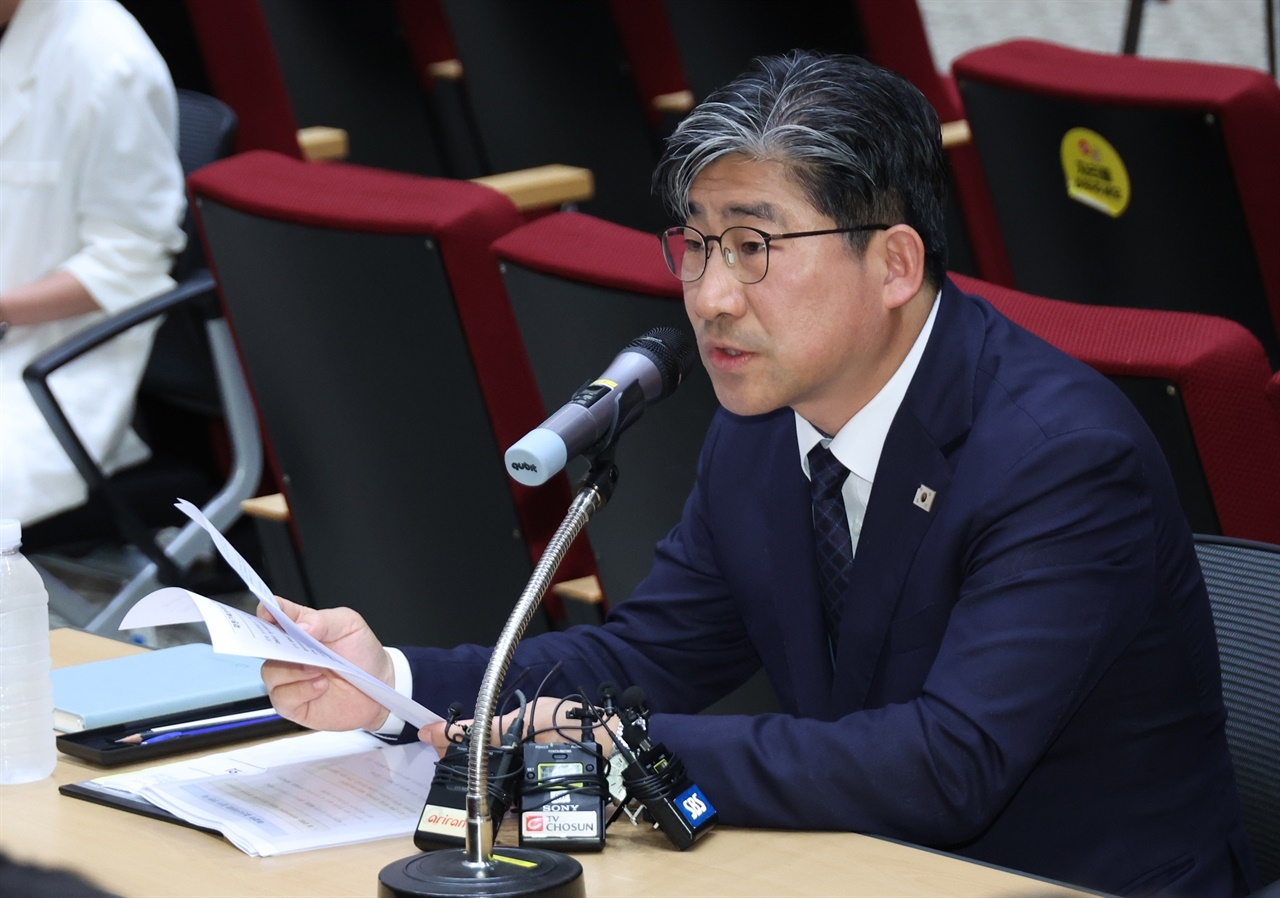
Ryu Deok-hyeon, the Cheong Wa Dae fiscal planning adviser, said Monday that the recent volatility in financial markets warrants close attention but that he does not take a pessimistic view.
Appearing on MBC Radio's "Kim Jong-bae's Focus" that day, Ryu was asked about uncertainty surrounding Nvidia and conditions in the semiconductor industry. "I think the current stock market or exogenous shocks may be temporary," he said.
He said the AI revolution "clearly represents an irreversible change," adding: "Haven't our semiconductor chip companies already booked their production capacity through next year and beyond?"
Ryu also cited the semiconductor supercycle of 2017, which lasted two to three years, and struck a cautious tone on whether the current uncertainty could translate into a structural shift across the broader industry.
He also projected that the tax revenue boost from the semiconductor boom would continue for now. "The corporate tax and overall tax revenue forecasts for next year are not far off," he said.
He went on to say that next year's national tax revenue would reach around 580 trillion won ($436 billion), with corporate tax accounting for more than 200 trillion won — roughly half of which would come from the semiconductor sector. "This reflects a fairly robust picture of our economy," he said.
Ryu said that while the situation differs from stock market or semiconductor conditions, growing uncertainty about the future underscores the need for a 162 trillion won future response fund.
On the future response fund, which opposition parties have criticized as a government slush fund, Ryu said investing in future growth engines should take priority over paying down national debt.
"Our bond and financial markets are more stable than those of other advanced economies," he said, adding that South Korea's debt level and fiscal sustainability have been assessed as posing no problem.
He doubled down, saying that "right now, it is more important to reverse the decline in potential growth and adequately reflect future fiscal needs than to repay national debt and further strengthen fiscal soundness."
On the fund's sustainability, Ryu said about 104 trillion won of next year's budget would be managed as surplus funds. "We can manage it to earn at least the government bond yield and reinvest the returns as a funding source," he said.
He rebuffed criticism that the fund includes welfare-oriented projects, saying "growth that does not address distribution and welfare issues is not sustainable in the long run."
He also doubled down on the need for the fund, saying investment in the future "does not mean only capital investment — it also includes investment in people, youth, education and regions."
sang@heraldcorp.com