Kang Dong-won posts message on court intranet criticizing the Democratic Party of Korea's push to impeach Chief Justice Jo Hee-dae, calling it 'in effect an impeachment of the Supreme Court itself'

Kang Dong-won, chair of the National Judges' Representative Council and a senior judge at the Seoul Family Court, criticized the Democratic Party of Korea's push to impeach Chief Justice Jo Hee-dae following the Supreme Court en banc ruling on former Prime Minister Han Duck-soo, calling it "something that has gone too far." Kang also warned that if the impeachment motion ultimately passes, judges "must respond with action."
Kang posted a message Sunday on Courtnet, the court's internal network, under the title "Regret over the infringement of judicial independence," writing that "there are many things we can do" and that "we must not stand by in silence."
In the post, Kang opened by saying he was "troubled by the degree to which some in the political sphere have recently been infringing on judicial independence" and that he was "confused about how much longer we must endure."
Kang wrote that, as everyone was aware, the Supreme Court on Thursday had issued an en banc ruling declaring that the Dec. 3 emergency martial law was clearly an unconstitutional and unlawful act of insurrection, while remanding part of the case involving former Prime Minister Han on the grounds that prosecutors had failed to meet their burden of proof.
Kang said the Democratic Party had made it party policy to pursue the impeachment of the chief justice, calling the en banc ruling a "historic act of betrayal," simply because it disagreed with part of the decision. He said the party had initially stated it would use the ruling as grounds for impeachment, but when public opinion pushed back on the grounds that a ruling cannot constitute a basis for impeachment, the party shifted to an "ambiguous position" — saying it would pursue the impeachment of the chief justice in the wake of the ruling while not including the ruling itself among the specific grounds for impeachment.
"We do not support everything the chief justice has done," Kang wrote. "But pursuing an impeachment motion against the chief justice on the basis of this ruling is something that has gone too far. If judges are impeached every time a ruling is unpopular, judicial independence will collapse."
Kang said the move was "an act that destroys democracy and the separation of powers," and went on to say that if a precedent were set of using a ruling's conclusion as grounds for impeachment — "no matter what justification is offered" — judges might begin gauging the political reaction before writing their decisions.
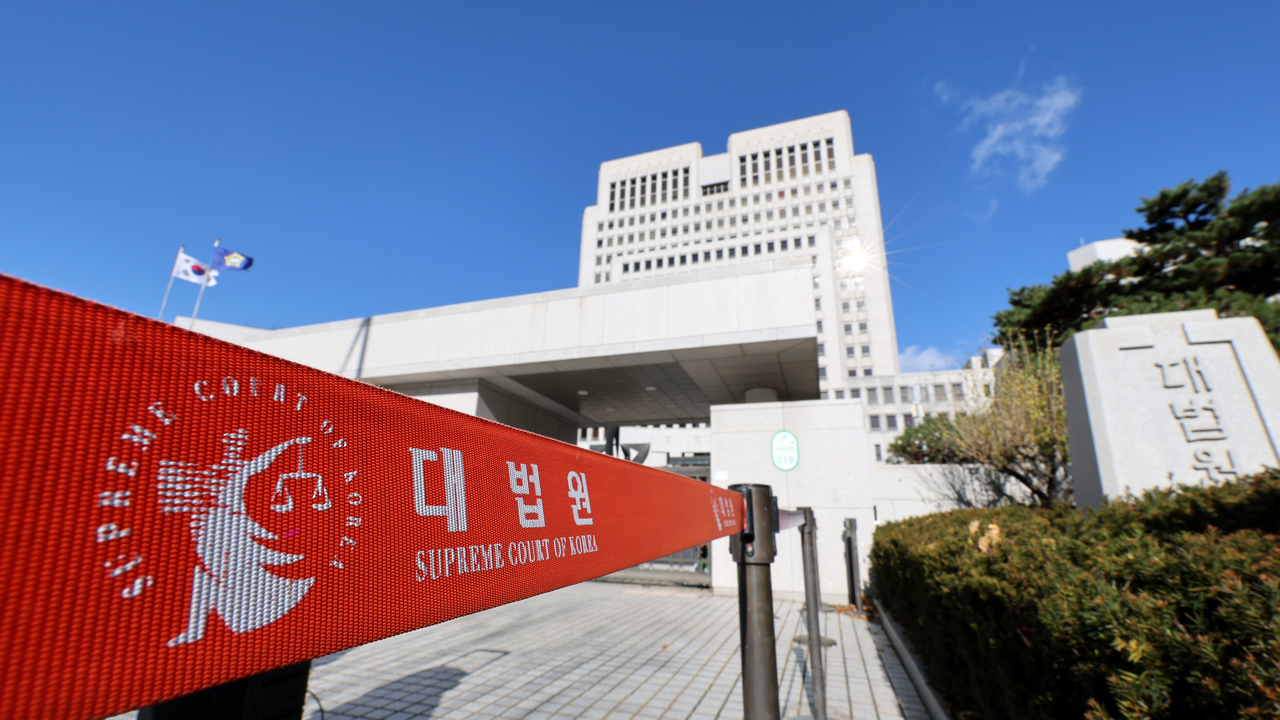
Kang said the problem at hand was "not a matter of one chief justice." Because en banc rulings are reached by the unanimous agreement of all Supreme Court justices, he argued, pursuing the impeachment of the chief justice on the basis of such a ruling was "in effect an impeachment of the Supreme Court itself" and amounted to "placing undue pressure on the entire judiciary, including lower courts."
Kang said criticism of a ruling was "entirely possible, and indeed necessary," but that "criticism and impeachment are entirely different matters." He said the party surely knew the odds of the Constitutional Court upholding an impeachment of the chief justice were "less than 0.01 percent," and asked why it was pressing ahead regardless.
"It cannot be that we worked through the night day after day, sometimes collapsing on the job and being rushed to the emergency room, giving our youth to this work, only to witness a court like this today and leave our junior colleagues a powerless judiciary," Kang said. "Our courts are now having their independence threatened from outside. I believe we must defend judicial independence in the face of this crisis."
Kang said that while the National Judges' Representative Council was scheduled to hold a meeting in a week, "the situation we face may not be resolved by a feeble declaration," and went on to say: "If the impeachment motion is ultimately passed, should we not respond with action? There are many things we can do. I do not think we should stand by in silence."
The National Judges' Representative Council is set to hold its regular meeting on Nov. 30. The meeting had originally been scheduled for Dec. 7 but was moved up a week. Under the Supreme Court regulations governing the council, regular meetings are held on the second Monday of April and the first Monday of December each year, though the date may be changed when necessary. The chair may also convene an extraordinary session when deemed necessary.
dandy@heraldcorp.com