Hanho Industries runs machining factory at 80–90% automation with 16 daytime workers
Around 15 billion won in new investment; unmanned armored vehicle, robot drive systems in development
'Contracts still missing in many deals — Fair Trade Commission must fix unfair terms'
Hanho Industries, an auto parts manufacturer based in North Gyeongsang Province, operates a 17,160-square-meter machining factory with just 16 daytime workers — made possible by automating most of its production processes. The machining factory runs at an automation rate of 80 to 90 percent, while the forging factory stands at 50 to 60 percent. The company, which makes gears for automotive transmissions, invested heavily in automation to cut labor costs and stay competitive on price against Chinese rivals.
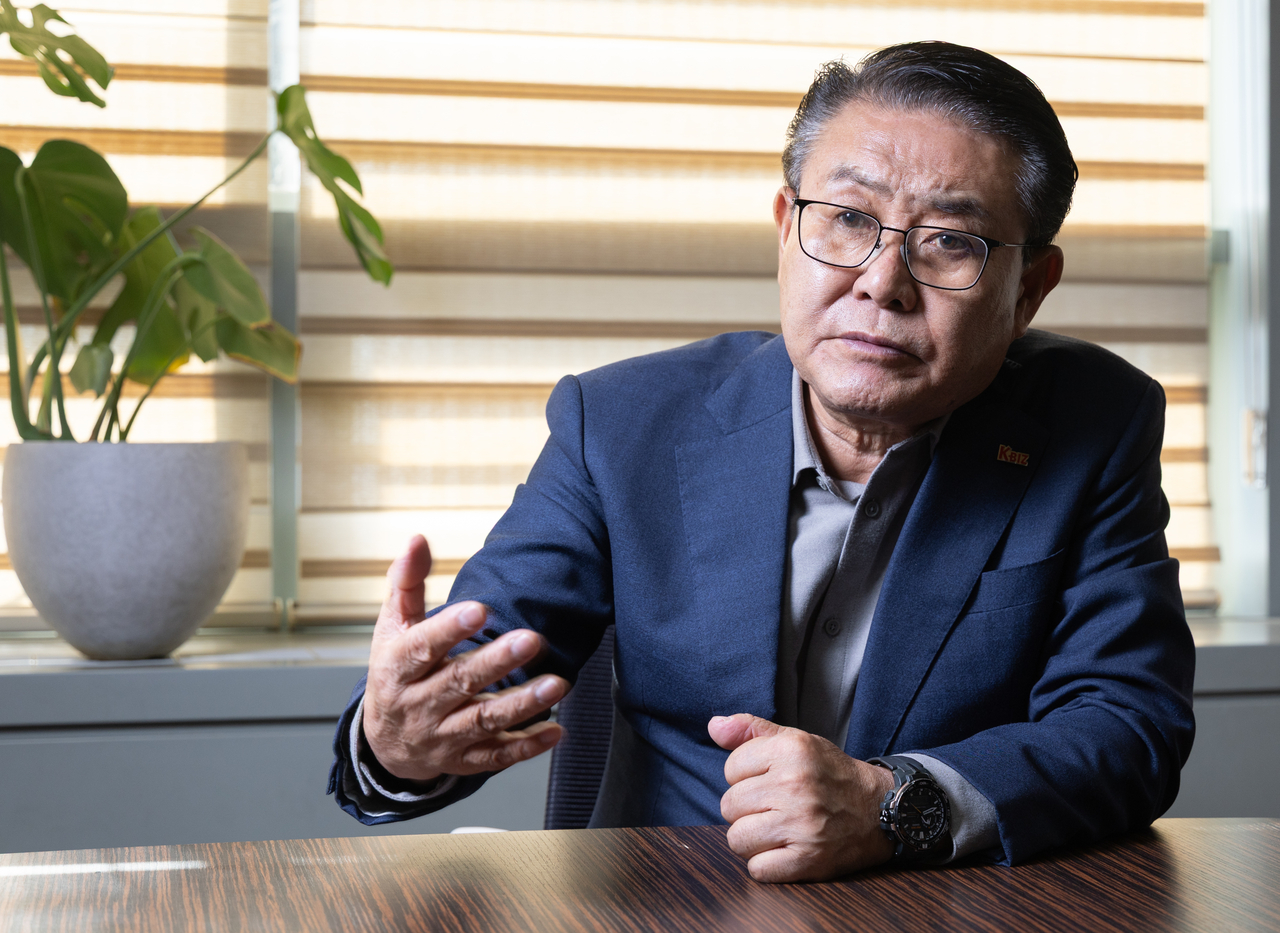
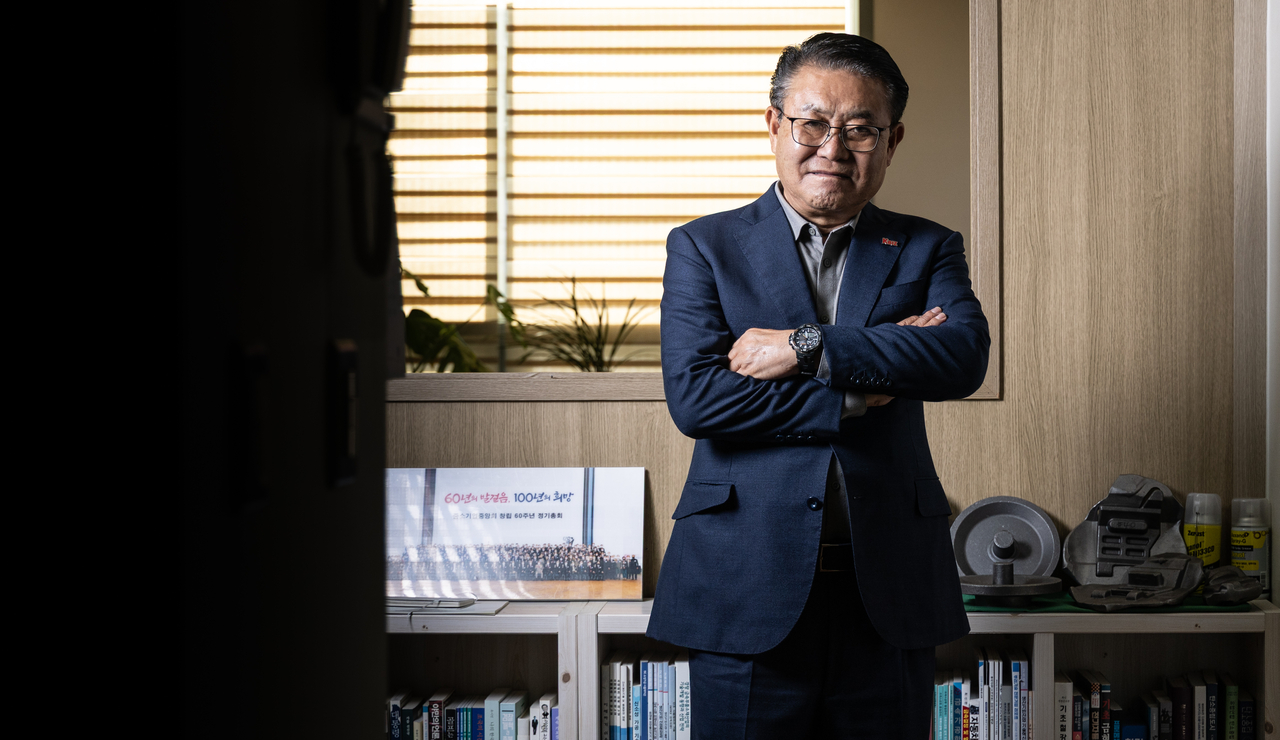
"A single factory of this size runs with 16 people during the day," Kang Dong-han, chief executive of Hanho Industries, said in a recent interview. "The depreciation burden was heavy in the early stages of automation investment, but we are now reaping the benefits of what we put in." Kang said Chinese manufacturers have raised their technical capabilities significantly, making it increasingly difficult for domestic producers to survive on price competition alone.
Hanho Industries specializes in forging gears for automotive transmissions and similar components. Its competitive edge lies in a combined process that pairs hot forging — shaping metal at high temperatures — with cold forging at room temperature. Its flagship product is the parking gear, the component that locks a vehicle in place when parked. Kang said the company supplies roughly 50 percent of the global parking gear market.
Beyond auto parts, Hanho Industries has been directing its energy toward electrification drive systems. About 60 percent of the company's sales currently come from components for internal combustion engine vehicles, with the remainder from hybrid and electric vehicle products. As the shift to electric vehicles accelerates, demand for conventional engine and transmission parts is bound to fall, and the company is preparing new business lines accordingly.
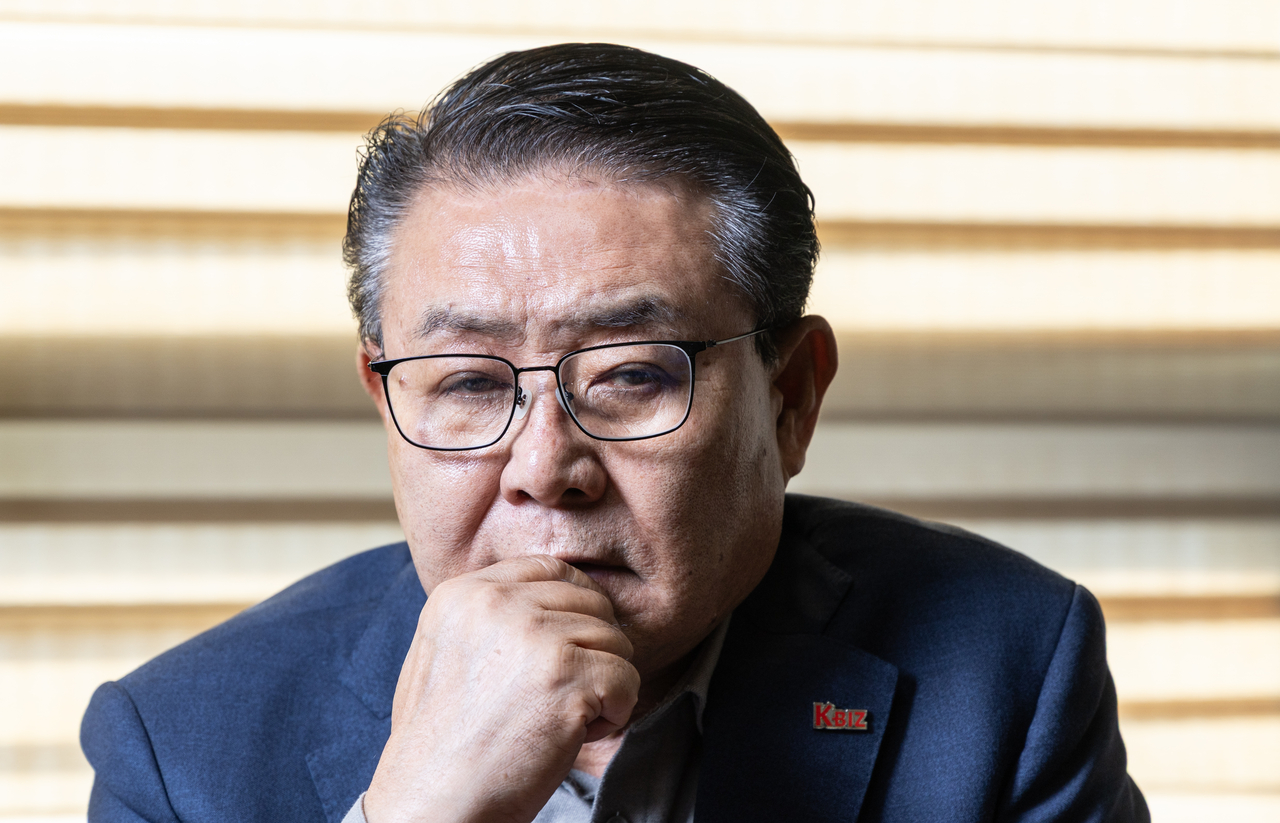
"When the shift to electric vehicles is complete, engine parts will disappear and the number of transmission components will drop sharply," Kang said. "For now, however, the transition to hybrids is moving faster than the shift to full electrics, so existing parts volumes have not fallen dramatically." He added that forging and machining alone will not be enough to survive going forward. "We need to become a company that can handle everything from design and machining to assembly and control," he said.
To that end, Hanho Industries this year secured a new site of about 21,450 square meters and added a 4,950-square-meter factory extension. Kang said the total investment in land acquisition, construction and initial equipment installation amounts to around 15 billion won ($11.2 million). The new facility will house production equipment for new business lines including reducers and actuators, with full operation expected to begin around February next year.
The company is also pursuing development work in the defense sector. Kang said Hanho Industries is participating in the development of a drive system — combining a reducer, motor, control unit and actuator — for use in unmanned armored vehicles.
"We want to extend the technology we have built up through auto parts manufacturing into industrial robots, logistics robots and defense," Kang said. "New business preparations are currently about 15 to 20 percent of the way toward our overall goal. We are building out the production lines and advancing the related technology development."
Alongside technology development, the company is also strengthening its in-house design capabilities. About three years ago, Hanho Industries established a dedicated design subsidiary. The move was aimed at shifting away from a model in which the company simply manufactured products to blueprints provided by automakers and other clients, toward one in which it co-designs and co-develops products with customers. Kang said the company is currently engaged in joint development projects with overseas clients, including firms in the United States.

Despite the new investment, the business environment this year has been far from easy. Kang identified electricity costs as the single biggest operational burden facing manufacturers, saying that even when power bills rise, suppliers find it nearly impossible to pass those increases on to their clients. The structural imbalance in bargaining power between large ordering companies and small suppliers makes it especially difficult for small and medium-sized enterprises to push for price increases, he said.
"A system called the supply price linkage scheme was introduced, but because it is based on contracts between a dominant party and a subordinate one, it often does not work properly on the ground," Kang said. "Simply asking the client to raise the supply price because electricity costs have gone up is not easy in itself."
Kang also said the practice of conducting business without proper written contracts remains a serious problem. "A significant number of transactions between domestic companies take place without proper contracts," he said. "When problems arise during a transaction, the absence of clear terms on supply conditions or price adjustments puts small and medium-sized enterprises at a disadvantage."
Kang called on the Korea Fair Trade Commission to take a more active role in ensuring the fairness of standard contract terms. Using financial transaction agreements between banks and businesses as an example, he said that even when contract terms are written to favor financial institutions, small and medium-sized enterprises have little ability to scrutinize or revise them.
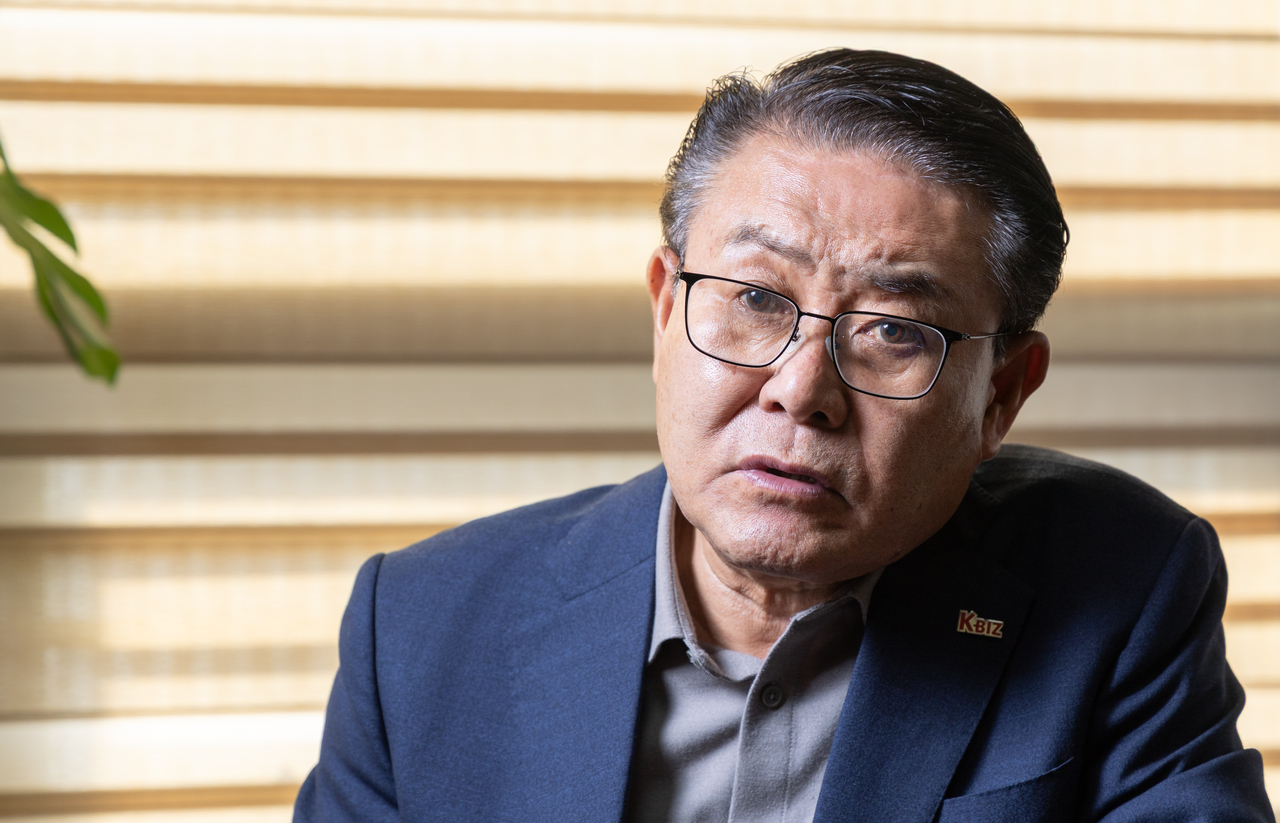
"The standard terms used in transactions between banks and businesses are in effect written around the bank's interests," Kang said. "Rather than stepping in only after problems have occurred, the Fair Trade Commission should examine the contract terms themselves to prevent small and medium-sized enterprises from signing on to unfavorable conditions."
Kang also expressed frustration with the government's support policies for foundational industries — the manufacturing sectors, such as forging, casting and heat treatment, that underpin the broader industrial supply chain. Having spent years involved in industry associations and participated in the process of shaping government policy, he said that while laws, budgets and regional support centers have been put in place, the extent to which individual small manufacturers have actually changed on the factory floor deserves separate scrutiny.
"The purpose of supporting foundational industries should not be to expand the organizations and build the buildings of support agencies — it should be to change the production technology and conditions of individual companies," Kang said. "We need to examine how much policy has actually translated into productivity gains on real factory floors."
"With Chinese companies growing so rapidly, we cannot count on conventional forging and machining technology alone to secure our future," Kang said. "Our goal is to build a company that can handle design and control on top of the technology we already have."
hong@heraldcorp.com