Company holds follow-up meetings with multiple global drugmakers after signing NDAs
Aims to present results from more than 10 clinical trials at conferences in first half of next year
Interview with GI Innovation CEO Jang Myung-ho
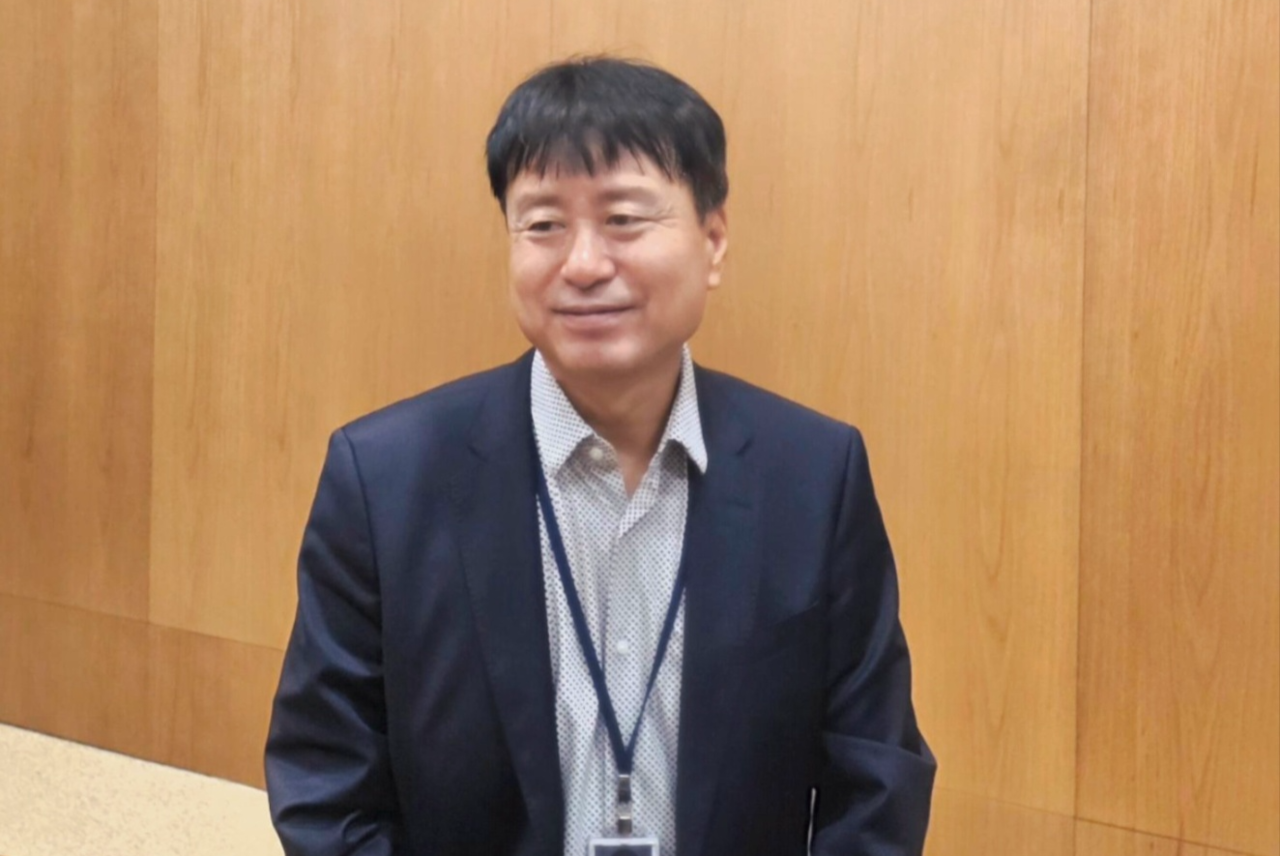
GI Innovation deepened discussions on technology transfers and strategic partnerships with global pharmaceutical companies at the 2026 Jefferies Global Healthcare Conference, Europe's largest healthcare investment event.
The company held follow-up meetings with global drugmakers it had been in talks with, while also conducting one-on-one meetings on new pipeline candidates with global pharmaceutical companies and institutional investors.
The Herald Business sat down with CEO Jang Myung-ho, who returned from the conference last week, to hear about the company's global business development efforts. The following is the full interview.
— What were the main outcomes of this year's Jefferies Global Healthcare Conference?
GI-214, our pulmonary arterial hypertension pipeline first formally introduced to global pharmaceutical companies at Bio USA in June, has drawn strong interest since its debut. Since then, we have signed confidential disclosure agreements with multiple global drugmakers and have been conducting technical reviews and follow-up discussions. At this Jefferies conference, we met directly with several major global pharmaceutical companies we have been in close dialogue with and held in-depth discussions on concrete commercialization possibilities.
For GI-730, our next-generation triple-fusion immuno-oncology drug candidate, we held intensive meetings with overseas institutional investors to explore global technology transfer and commercialization possibilities through a NewCo structure. In preclinical comparative studies, GI-730 demonstrated superior antitumor activity compared to fufitamig, which Bristol Myers Squibb and BioNTech are co-developing. Building on those results, the company recently entered GLP toxicology studies in monkeys, accelerating its development.
GI-101A, our immuno-oncology drug candidate, began a Phase 2 trial in bladder cancer in May, and more than half of the target 60 patients have already been enrolled. Additional positive efficacy data confirmed recently has further strengthened our confidence in the clinical results. We are focused on advancing concrete discussions and delivering tangible deal outcomes.
— What is driving global pharmaceutical companies' interest in the GI-214 pipeline?
GI-214 is a differentiated drug candidate capable of overcoming the limitations of existing treatments in a therapeutic area where the mechanism of action and market potential have already been validated.
Winrevair, launched by MSD in 2024, was approved for pulmonary arterial hypertension (Group 1 PAH) — a relatively smaller patient population within the broader pulmonary hypertension category — and recorded sales of approximately 1.94 trillion won ($1.45 billion) in 2025. Through the third quarter of this year, cumulative sales have reached approximately 2.43 trillion won, already surpassing last year's full-year figure and establishing Winrevair as MSD's new blockbuster drug.
However, risks of side effects such as bleeding remain, and the drug's efficacy and safety have not been sufficiently demonstrated in Group 2 pulmonary hypertension, which is estimated to have roughly 10 times more patients than Group 1 PAH. In response, a number of global pharmaceutical companies are actively searching for next-generation pipeline candidates to capture that larger market.
GI-214 is designed to preserve the core mechanism of action of existing treatments while reducing the risk of side effects. Over the past four years, we have built a dense patent portfolio to raise barriers to entry that competitors cannot easily circumvent. We also aim to address the safety concerns of existing treatments and expand the therapeutic scope to cover Group 2 pulmonary hypertension. The combination of a validated mechanism and market, a strong patent portfolio, and differentiation potential is what is attracting the attention of global pharmaceutical companies.
— What is your global technology transfer strategy and what are your goals following the Jefferies conference?
Our most important goal is to translate the discussions we have been having with global pharmaceutical companies into tangible technology transfer outcomes.
Ultimately, what determines a major global deal is clinical data. The company aims to present results from more than 10 clinical trials at academic conferences in the first half of next year alone. The most critical data will be the interim results from GI-101A's Phase 2 bladder cancer trial and the final results from GI-102's Phase 2a liver cancer trial, both of which we expect to secure by the end of this year. Next year, we also anticipate obtaining early data from the global Phase 1b/2 trial combining GI-102 with Johnson & Johnson's pasritamig, as well as early first-line melanoma data.
We will work to deliver results as quickly as possible from the technology transfer discussions currently under way with global pharmaceutical companies. On top of that, at the JP Morgan Healthcare Conference in January next year, we will actively pursue early-stage technology transfers for our follow-on preclinical pipeline candidates, with the aim of generating tangible outcomes that enhance shareholder value.
silverpaper@heraldcorp.com