Democratic Party of Korea, holding an absolute majority, moves to impeach Chief Justice Jo Hee-dae
If the motion clears the National Assembly, Jo's powers will be suspended pending a Constitutional Court ruling
Justice Cheon Dae-yeop would serve as acting chief justice during the impeachment trial
Concerns mount over delays to the Yoon Suk Yeol insurrection appeal and judicial appointments
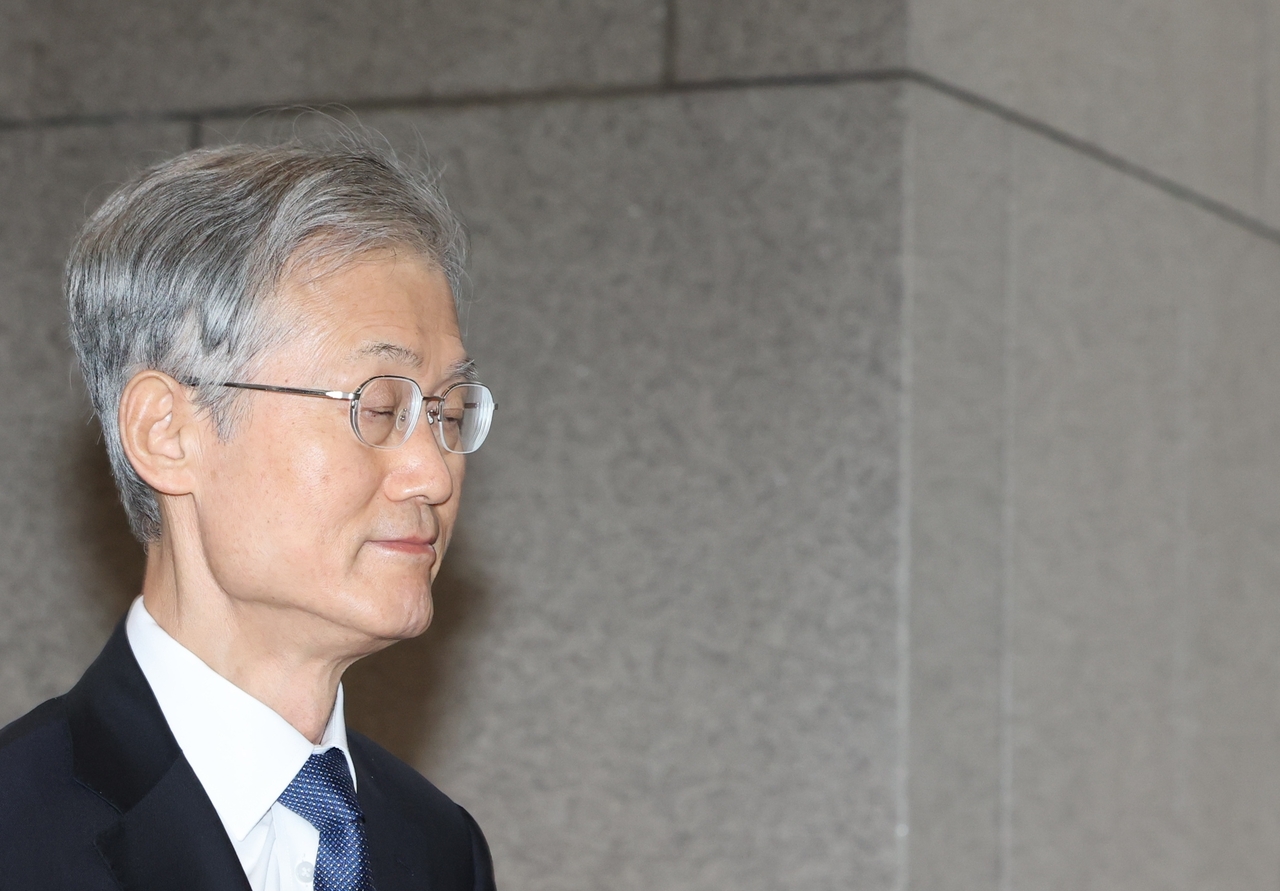
The Democratic Party of Korea's decision to pursue the impeachment of Chief Justice Jo Hee-dae as official party policy has raised the prospect of a sitting chief justice being stripped of duties for the first time in the nation's constitutional history. Legal experts broadly agree that even if the Constitutional Court proceeds with an impeachment trial, the grounds the Democratic Party has cited so far make it unlikely the court would actually remove Jo from office. But regardless of the outcome, the moment an impeachment motion is adopted, Jo's powers are automatically suspended — raising fears that the Supreme Court could be left in a state of near-paralysis, with major cases delayed and judicial appointments thrown into disarray until the Constitutional Court delivers its verdict.
Under Article 65 of the Constitution, an impeachment motion against the chief justice requires the support of at least one-third of all Assembly members to be introduced and a majority of all members to pass. The Democratic Party holds a majority of seats on its own, meaning it can push the motion through a plenary session without support from any other party.
Once the motion passes and the formal impeachment resolution is delivered to the Constitutional Court and to Jo personally, Jo's authority is suspended until the court rules on the case. In that event, Justice Cheon Dae-yeop, the most senior associate justice, would assume the role of acting chief justice. The Court Organization Act specifies who takes over when the chief justice cannot perform duties, but does not define the scope of authority an acting chief justice may exercise.
With the Democratic Party having adopted the impeachment push as official policy, the motion's passage now appears increasingly likely. The central concern is that the chief justice presides over the Grand Bench — the Supreme Court's full-panel sitting — and oversees judicial administration. A suspension of Jo's duties would therefore deal an unavoidable blow to the court's operations.
The most immediate impact would fall on Grand Bench hearings and rulings. Under the Court Organization Act, convening the Grand Bench requires at least 10 of the 14 justices — two-thirds of the full complement. If Jo's duties are suspended, 11 justices would remain. Should one justice recuse from a particular case, the bench would barely meet quorum; if two step aside, it could not be constituted at all. The most recent Grand Bench ruling, delivered Thursday on the appeal of former Prime Minister Han Duck-soo on charges of playing a key role in the insurrection, involved 12 justices — excluding one vacant seat and the chief of the National Court Administration, who does not participate in rulings.
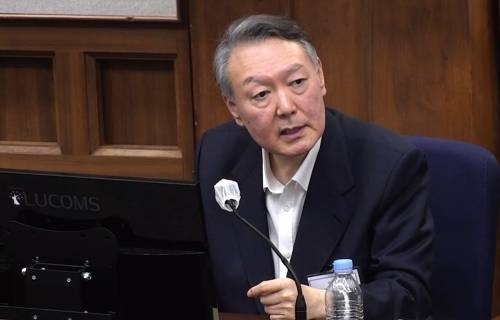
Particular attention centers on the insurrection case against former President Yoon Suk Yeol, whose appellate verdict is expected in January. If the case is appealed to the Supreme Court and referred to the Grand Bench while Jo's suspension remains in effect, individual justices' decisions on recusal could become a critical variable in scheduling. Justice Oh Seok-jun previously recused from hearing and ruling on Yoon's appeal on obstruction-of-arrest charges, citing concerns about the appearance of impartiality. Oh was the first Supreme Court justice appointed under the Yoon administration. Going forward, other justices who have professional or personal ties to Yoon — a former prosecutor general — may similarly step aside from his appeal.
Even in cases where quorum is met, it remains unclear whether an acting chief justice would proceed to deliver a Grand Bench ruling. There is a precedent from 1979, when acting Chief Justice Lee Yeong-seop handed down a Grand Bench verdict. But in the most recent comparable situation — after former Chief Justice Kim Myeong-su retired in 2023 — acting Chief Justice Ahn Cheol-sang resumed Grand Bench deliberations but did not issue any rulings during his acting tenure. Delays to Grand Bench rulings would affect not only cases brought by special prosecutors, but also civil and administrative litigants whose cases cannot be resolved by a smaller panel because existing precedent needs to be overturned.
The absence of a chief justice would also create serious problems for judicial administration. The most pressing issue is the appointment of new Supreme Court justices. The power to recommend candidates for justice appointments is a constitutional authority vested directly in the chief justice, and the prevailing legal view is that an acting chief justice would have difficulty exercising it. The Democratic Party has been examining as a potential impeachment ground Jo's refusal to re-submit a justice candidate at the president's request — yet if the impeachment motion passes, the very authority needed to fill the vacant seat would be suspended, making it even harder to resolve the vacancy.
If the Constitutional Court's impeachment proceedings extend into the regular judicial personnel reshuffle scheduled for early next year, the disruption could ripple down to lower courts across the country. Whether an acting chief justice could carry out the appointment of new presiding judges at courts nationwide is itself a contested question. If the justice vacancy remains unresolved and court-level appointments are also put on hold, the personnel gridlock that begins at the Supreme Court would affect the functioning of courts throughout the country.
Within the judiciary, resistance to the Democratic Party's unilateral push to impeach Jo is growing. Some judges have called for direct action. Kang Dong-won, chair of the National Judges' Representative Council and a senior judge at Seoul Family Court, posted a message Sunday on the judiciary's internal network, Courtnet, under the title "Regret over the violation of judicial independence." "If they ultimately vote to adopt the impeachment motion, should we not also take 'action'?" Kang wrote. "There are various ways we can respond. I do not think we should stand by in silence."
Former presidents of regional bar associations across the country also issued a joint statement Monday expressing concern over the Democratic Party's impeachment push. "Impeachment is a grave constitutional mechanism for holding officials accountable for violations of the Constitution and the law," they said. "The power of impeachment must not be exercised on the basis of political interests, without sufficient review of specific legal violations and objective grounds."
yg@heraldcorp.com