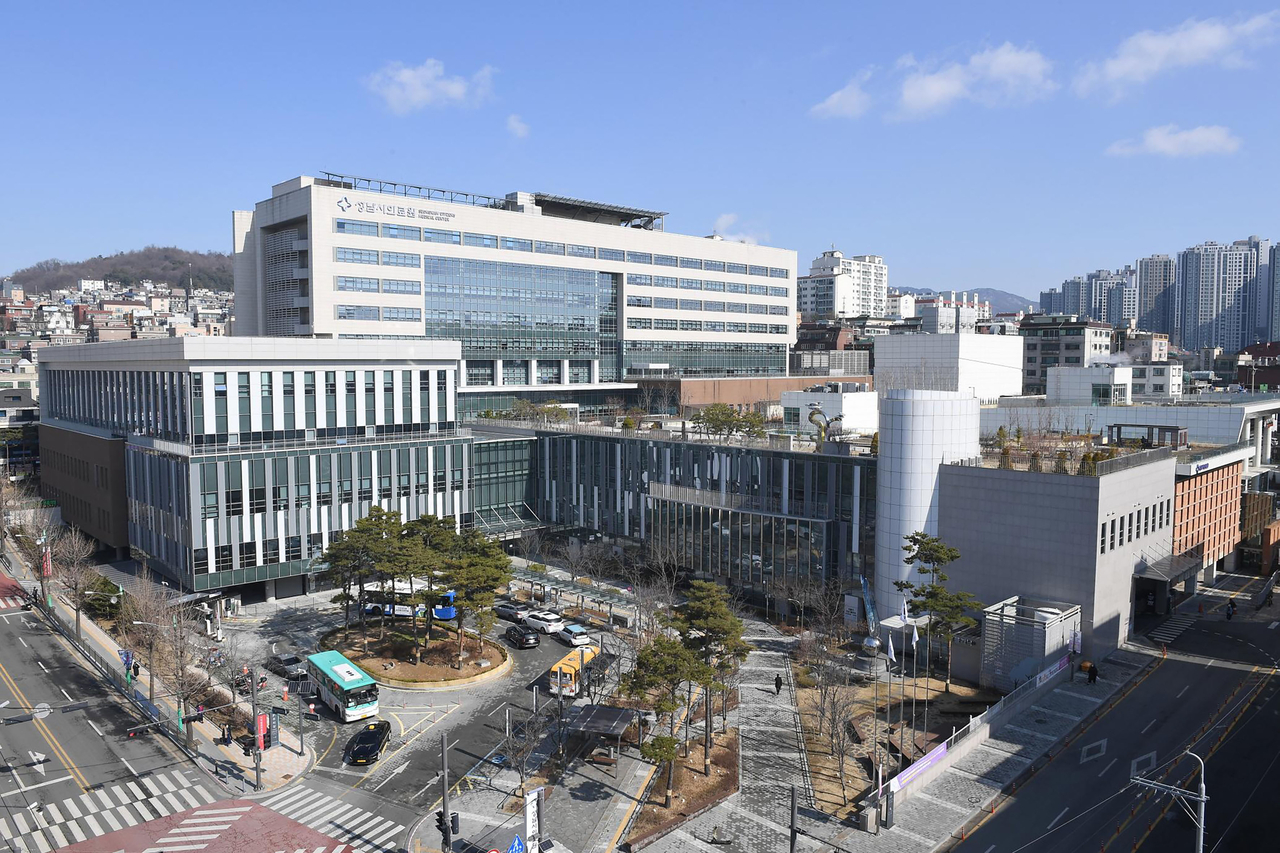
Seongnam City Medical Center — the public hospital whose troubled launch helped propel Lee Jae-myung into politics as Seongnam mayor — remains without a clear path forward. Seongnam Mayor Shin Sang-jin is pushing to hand management to a university hospital, while the Ministry of Health and Welfare has stayed silent.
The city said Monday it visited the Ministry of Health and Welfare on Friday to explain the difficulties caused by the prolonged delay in approving a university hospital management contract and to urge the ministry to provide an official response on the approval process and timeline.
Seongnam first requested ministry approval for the university hospital arrangement on Nov. 28, 2023, and followed up twice — on Feb. 7 and Aug. 21, 2025. In September of that year, the city delivered a letter under the mayor's name and formally requested a meeting with the minister, but has yet to receive any official response, let alone a decision on approval.
The city said the arrangement is essential to securing a stable medical workforce, strengthening capacity for critical and essential care, improving service quality and expanding public health programs.
Although cooperation with Seoul National University Hospital's Bundang branch has helped improve patient volumes, the medical center's finances remain dire. In 2025, medical revenue stood at 44.9 billion won ($33.6 million) against medical costs of 88.4 billion won, producing a medical loss of 43.5 billion won — not enough even to cover staff wages.
Cumulative medical losses since the center opened in 2020 have reached 285.2 billion won, with the city covering the shortfall through grants and subsidies. The center also struggles to recruit specialists in emergency medicine and other fields, as well as interns and residents, and its bed occupancy rate stands at just 32.2 percent of its 509-bed capacity. The high-cost, low-efficiency operating structure has made it increasingly difficult to build a stable care system or expand services.
The city envisions linking the center with a university hospital's specialist staff and clinical and education systems to allow the 509-bed public facility to function as intended. The arrangement is expected to help Seongnam City Medical Center develop as a self-sustaining secondary general hospital and grow into a regional care hub capable of meeting diverse medical needs.
Even after any management transfer, the city said it would require the contracted operator to fulfill public health obligations — including infectious disease response, emergency and essential care, and treatment for vulnerable populations — and would strengthen support for public health programs to ensure the center's public character is firmly maintained.
"Approval for university hospital management can no longer be delayed if we are to normalize Seongnam City Medical Center and protect residents' right to health," Mayor Shin said. "The Ministry of Health and Welfare must state its position clearly on a request that has been pending for years and make a prompt, responsible decision."
fob140@heraldcorp.com