
Former police officer and judge says gap between policy and business reality must be narrowed; The Herald Business, Korea Herald and YK to launch 'Korea Policy Inside' breakfast forum
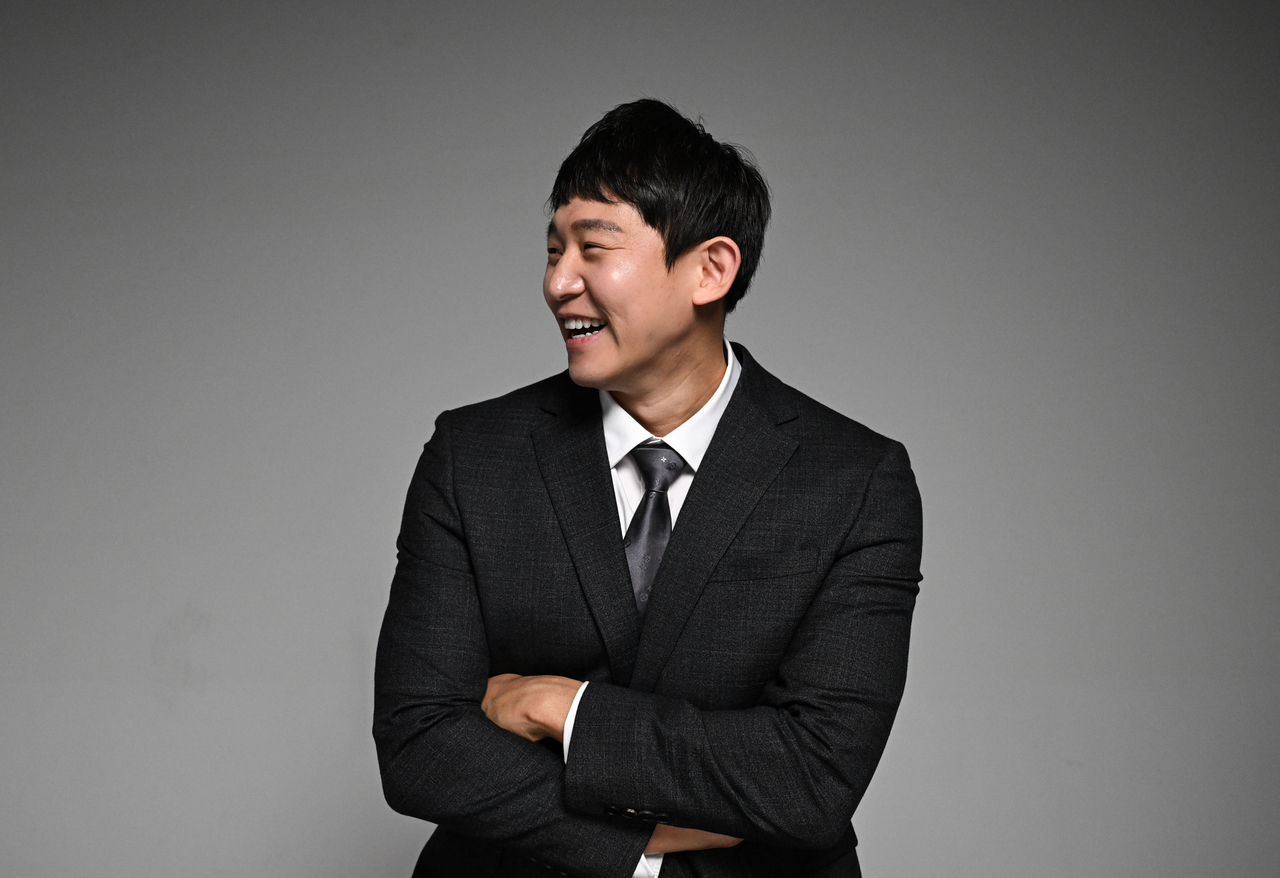
"The most dangerous mindset in corporate management is thinking that legal risks can simply be dealt with after the fact."
Kim Taek-hyung, a partner attorney at law firm YK, said this in an interview with The Herald Business on Tuesday. "Legal counsel is no longer a service companies turn to only after a problem has occurred," Kim said. "It must be a core element built into the strategy-setting process from the very beginning."
Kim has worked across all three pillars of the legal world — law enforcement, the judiciary and private legal practice. After graduating from the Korea National Police University with a degree in law, Kim was working at the Incheon Metropolitan Police Agency when he passed the 50th bar examination in 2008. Kim completed judicial training (40th class) and was appointed as a judge in 2011. Kim went on to handle civil, criminal, family and corporate rehabilitation cases at Suwon District Court, Seoul Eastern District Court, Daejeon District Court and Seoul Central District Court before leaving the bench in February last year to join YK. As an attorney, Kim said the focus lies less in resolving disputes after they erupt and more in preventing risk before problems arise.
"Working as a police officer showed me how directly the law affects people's daily lives," Kim said, reflecting on the career. "Serving as a judge made me feel firsthand that a single legal ruling can determine the fate of an individual or a company." Kim cited fairness and a sense of balance as the principles valued most on the bench, noting that in corporate cases, a single judgment can ripple out to employees and business partners alike. "Law is more than a standard for determining right and wrong," Kim said. "It is the foundation for securing social trust and predictability."
Kim also said the legal challenges companies face today span multiple overlapping domains. "Criminal, civil, administrative, labor and financial issues are all intertwined," Kim said. "It is important to understand a company's situation in its entirety."
He also offered a detailed diagnosis of corporate legal risk. "Corporate decision-making touches on a wide range of legal issues — investment, personnel, contracts, safety, fair trade and more," Kim said. "In particular, the decision-making process of management and the internal control system are directly tied to a company's credibility." Kim added that a company's competitiveness does not come from sales or technology alone. "Sustainable growth is only possible when it is backed by transparent governance, sound decision-making and systematic legal risk management," Kim said.
When asked what is most needed between government and business, Kim pointed to mutual understanding and communication. "If both sides do not fully understand each other's positions and realities, even good policy will struggle to deliver the results it was designed to achieve in practice," Kim said. "Legal professionals can play a role in narrowing the gap between the system and the field, and in finding rational solutions."
That conviction is what led Kim to help drive the "Korea Policy Inside" breakfast forum, a joint initiative by The Herald Business, the Korea Herald and YK. The forum will bring together senior government policy officials, corporate CEOs and specialists from various fields to discuss policy direction and key business issues.
"Changes in economic policy directly affect core corporate decisions such as investment, hiring and business expansion," Kim said. "It would be very meaningful if CEOs could hear the intent and direction of policy straight from the officials responsible for it, and then discuss its implications with experts." Kim said the hope is that the forum will be more than a lecture series. "I want it to be a space for genuine dialogue — where participants come to understand the direction of policy and think together about the future strategies of their companies," Kim said.
Kim also said the process of listening to what companies actually want to know matters more than one-sided policy briefings. "Rather than simply explaining policy, it is important to hear the voices from the field, centered on the questions businesses are genuinely asking," Kim said. "This should not be a one-off event but a platform for ongoing exchange."
YK plans to go beyond legal counsel at the forum, taking on a role in helping companies work through management challenges so that the discussions translate into real-world solutions. "For the national economy to grow, companies must grow — and that requires a fair and predictable institutional environment," Kim said. "I want to contribute to policy that illuminates the future of business, and to law that gives that future a solid foundation."
pooh@heraldcorp.com





