On the ground in Guangzhou — confidence and unease in equal measure
Chinese parts makers rapidly closing gap on price and quality
Government-led market building covers purchase subsidies to highway tolls
Ambitions stretch from steel and chemicals to AI data center power
Korea must broaden hydrogen demand base to stay ahead
"We still have the edge — but if we let our guard down now, China will catch up fast."
The words of Choi Du-ha, executive vice president and head of HTWO Guangzhou, carried equal measures of confidence and wariness when he spoke to a reporter in Guangzhou, Guangdong Province, China, on Wednesday.
When Korean companies first entered the Chinese market, local parts makers lagged behind in technology — and their prices were actually higher than Korean suppliers. Key components were imported from Korea at the time. In just a few years, however, the picture has changed. Chinese parts makers have been rapidly closing the gap not only on price but on quality as well, Choi said.
Industry officials interviewed in Guangzhou were watching the Chinese government's role just as closely as they were tracking the competitive advances of Chinese companies — and more than a few expressed envy at Beijing's willingness to lead market development from the front.
China, which built its electric vehicle and battery industries into global forces, is now looking beyond hydrogen-powered vehicles to explore hydrogen's use in steel, chemicals and power generation — and even as a power source for AI data centers. What began as a technology race between companies is shaping up into a full-scale competition between national industrial ecosystems.
Subsidies at purchase and per kilometer driven — China builds its own market
"In the early stages of an industry, companies cannot grow on their own without the government setting policy and leading the way," said Kim Min-gi, a senior official at HTWO Guangzhou.
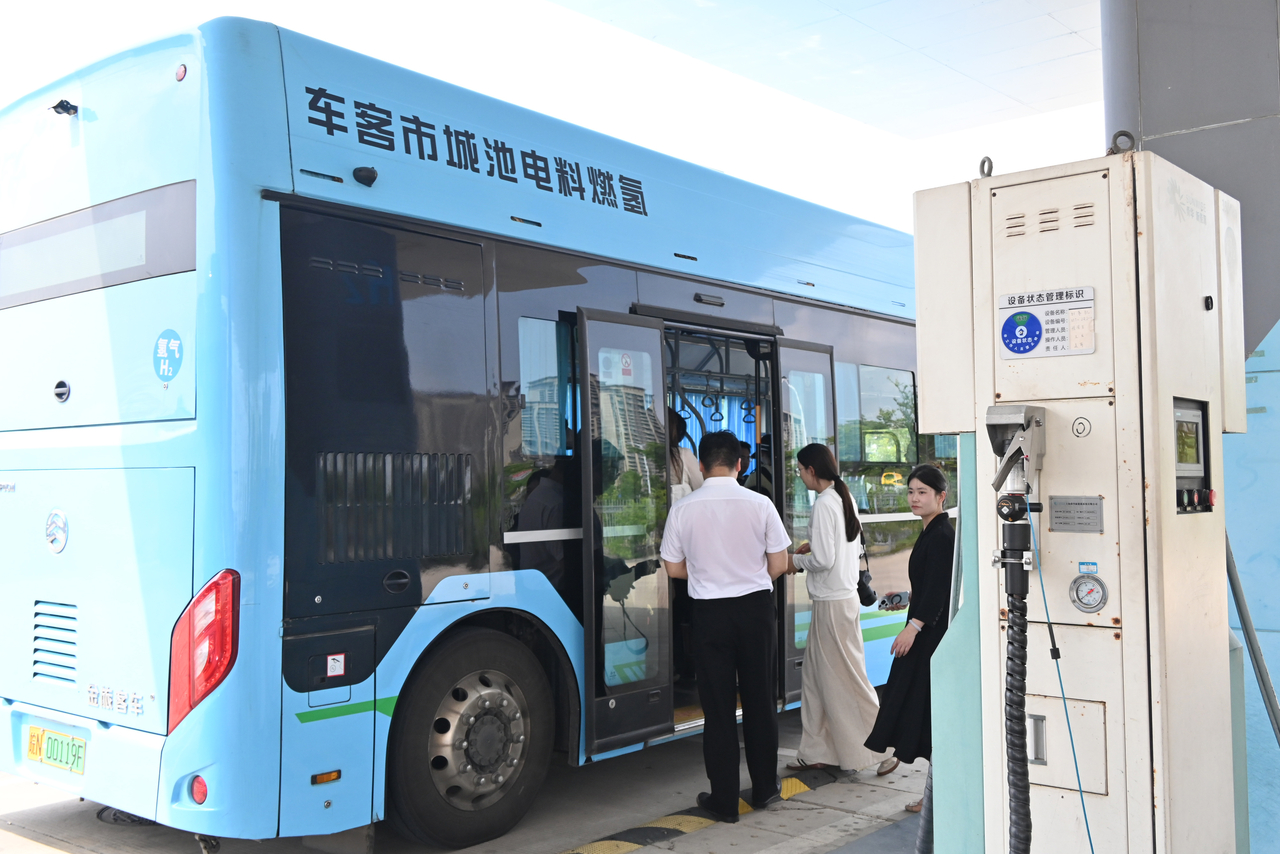
The Chinese government has done exactly that. From 2021 through the end of last year, Beijing concentrated its efforts on nurturing the hydrogen vehicle market through five pilot city clusters centered on Guangdong Province and others. Subsidies are paid not only when a vehicle is purchased but also based on actual kilometers driven. Some regions have gone further, exempting hydrogen commercial vehicles from highway tolls altogether.
China also plans to build a network of "hydrogen highways" — two north-south corridors and four east-west corridors spanning the country — to lay the groundwork for long-distance operation of hydrogen commercial vehicles.
Foreign companies are eligible for the same support. All 1,267 fuel-cell system vehicles that HTWO Guangzhou had deployed through last year received subsidy approval from China's central government. "We were established as a foreign-invested enterprise, but we have received subsidies from the central government without discrimination," Kim said.
As the government has driven market growth, the number of related companies has multiplied rapidly. China now has roughly 350 companies involved in key fuel-cell components and between 60 and 100 fuel-cell system makers.
Beyond hydrogen vehicles to steel and power — 1.6 trillion won in support over four years
China identified hydrogen as a future growth engine in its 15th Five-Year Plan (2026–2030) last March, then unveiled a new hydrogen industry development policy in August. Where previous policy focused on expanding the hydrogen vehicle fleet, the new push targets a broader set of end users — steel, chemicals and power generation among them.
The Chinese government plans to provide up to 1.6 trillion won ($1.19 billion) over the next four years to the five pilot city clusters, allocated according to project performance. It has also set a target of putting 100,000 hydrogen vehicles on the road by 2030 and bringing the average hydrogen price in the pilot clusters down to roughly 5,000 won per kilogram.
"Support is going into the full chain — production, storage, logistics and end use of hydrogen," Choi said. "They are preparing step by step with a long-term vision in mind."
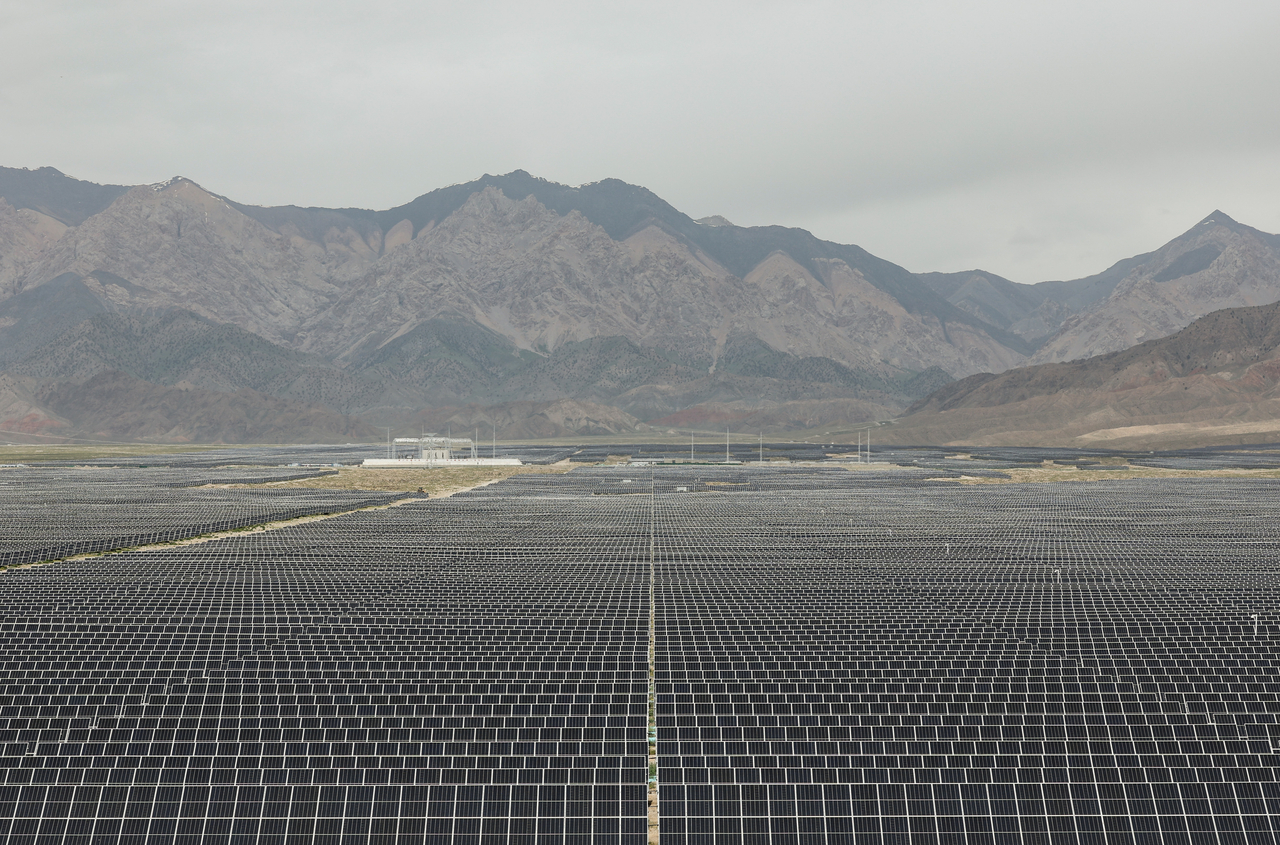
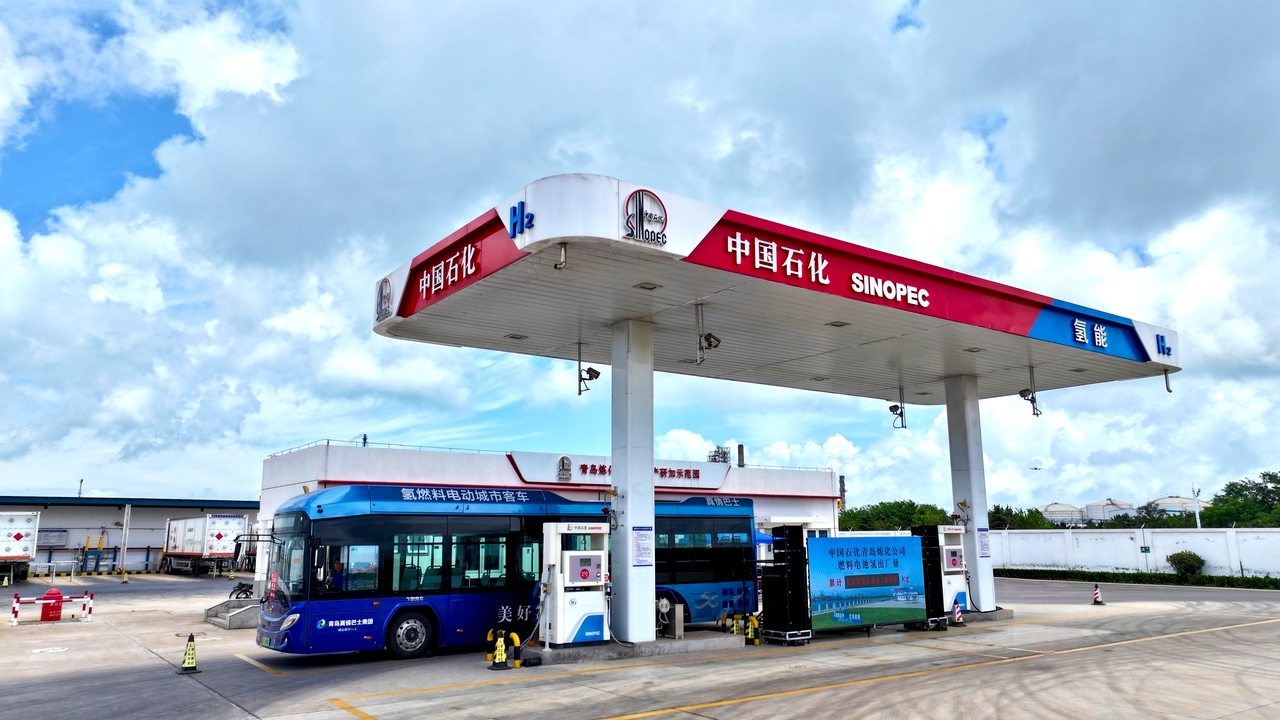
Large-scale infrastructure investment is keeping pace. The plan calls for producing hydrogen from abundant renewable energy in western China and piping it east to the country's industrial heartland. State energy company Sinopec is pursuing construction of a hydrogen pipeline network stretching 1,200 kilometers at a cost of around 1.2 trillion won. Across China, dedicated hydrogen pipelines that are either planned or under construction already exceed 5,500 kilometers.
China is also setting its sights on the AI industry, where electricity demand is surging. Last May, the Chinese government formally incorporated into policy a plan to use hydrogen energy to supply power to AI data centers. The approach involves converting surplus electricity generated by solar and wind power into hydrogen for storage, then converting it back to electricity when needed.
China is pursuing the reverse as well — using AI to improve the economics of hydrogen production. Energy company Envision has been applying AI-based weather forecasting and power optimization technology at a green hydrogen and green ammonia production facility in Chifeng, Inner Mongolia, since July last year. The result is a mutually reinforcing structure: hydrogen supports the AI industry, and AI makes hydrogen more economically viable.
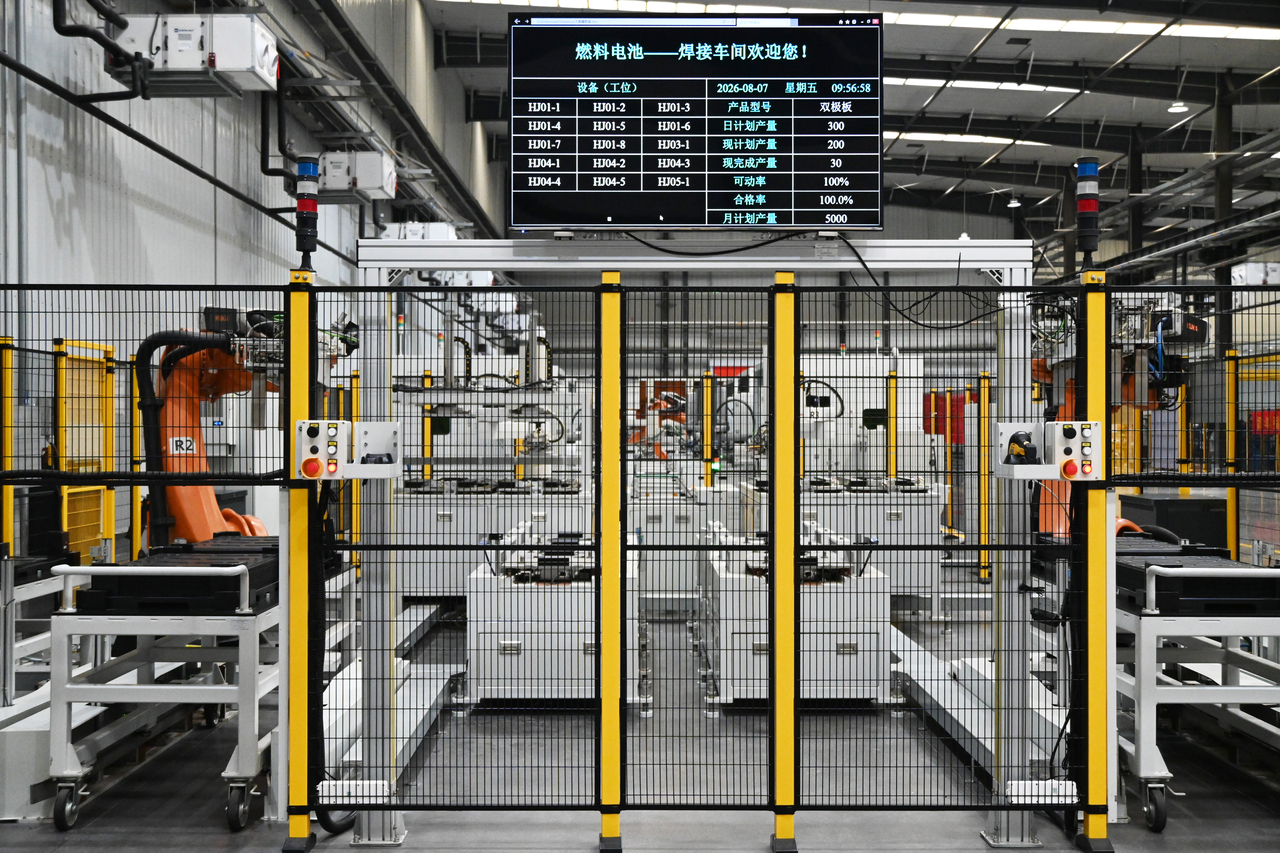
Technology alone is not enough — Korea must widen hydrogen's end-use base
China's expanding hydrogen market represents new business opportunities for Hyundai Motor Group and other Korean companies. However, if Chinese firms leverage government support to achieve mass production and price competitiveness, the competitive landscape — currently favorable to Korea — could shift.
In Korea, moves to use hydrogen as an energy source for the AI industry are gradually picking up pace. A leading example is the AI hydrogen city that Hyundai Motor Group plans to develop at Saemangeum in North Jeolla Province. The concept involves converting locally produced renewable energy into hydrogen for storage, then supplying it to AI data centers and other facilities when power is needed.
"Electricity is an energy form that is quite difficult to store and transport," Choi said. "Hydrogen is much easier to store and move." The idea is that hydrogen can compensate for the intermittency inherent in renewable energy generation.
At a joint policy forum held last August by leading academic societies in energy, electricity and hydrogen, participants called for the active use of hydrogen energy storage systems to ensure stable power supply to semiconductor factories and AI data centers.
"Korea leads in hydrogen technology right now, but if China grows by leveraging its massive domestic market and government support, it is hard to guarantee we will be in the same position a few years from now," an industry official said. "Building the markets and infrastructure where that technology can actually be used is just as important as companies' own efforts to develop it."
kwater@heraldcorp.com