Fed chair nominee signals preference for 'trimmed mean' inflation gauge
Bank of America warns new metric could read higher than current PCE
Shift in benchmark may delay rate cuts and amplify market volatility
By Seo Ji-yeon, The Herald Business
Federal Reserve chair nominee Kevin Warsh has signaled he wants to change how inflation is measured, raising concerns that the core benchmark guiding US monetary policy could be fundamentally altered. Some analysts warn the change could paradoxically constrain the Fed's ability to cut interest rates.
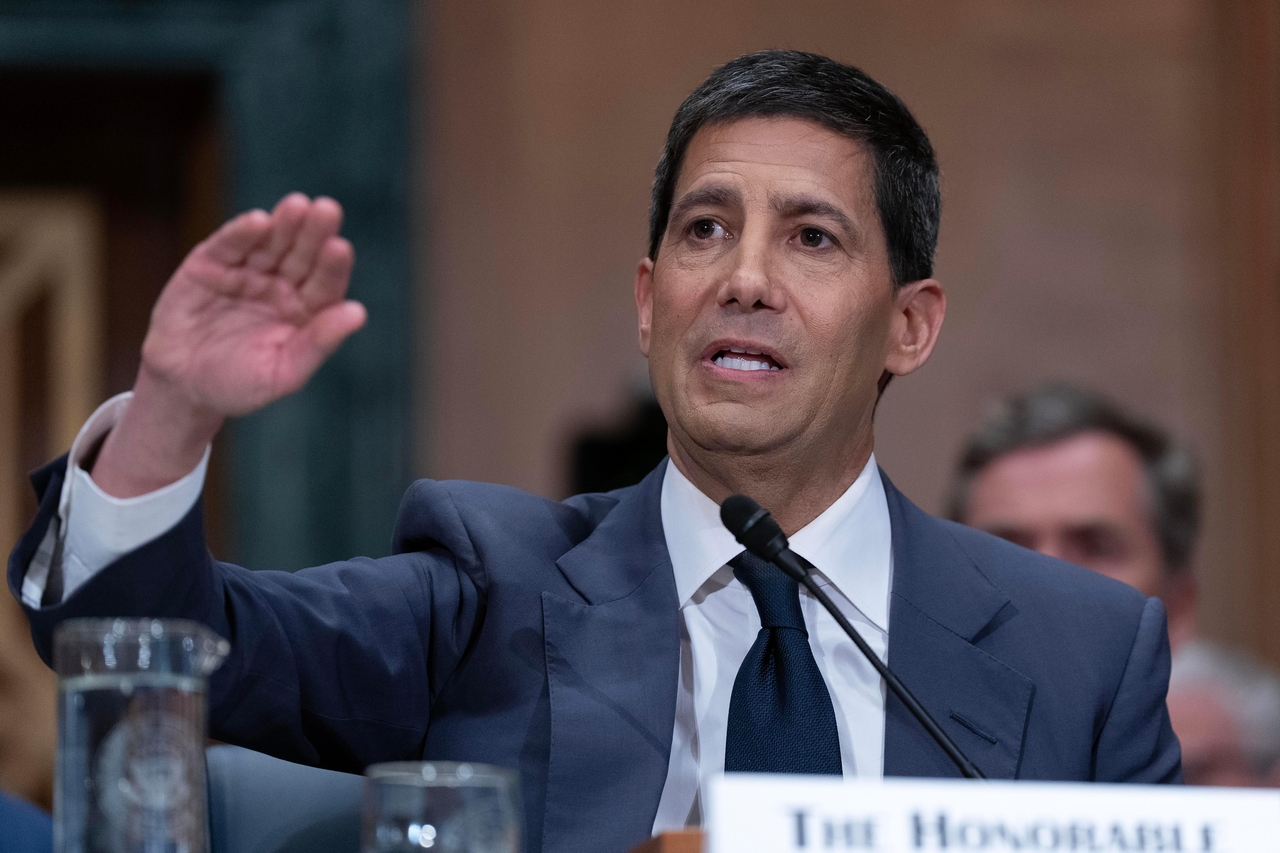
At his Senate confirmation hearing on April 21, Warsh said he prefers a "trimmed mean" inflation gauge over the core personal consumption expenditures index the Fed currently uses as its primary benchmark. The approach strips out not only food and energy prices but also one-off price spikes and other extreme values, with the aim of capturing underlying inflation trends more accurately.
"What matters is the fundamental trend in prices, not geopolitical shocks or sudden surges in specific items," Warsh said. "We need to look at the overall price trend with one-off factors removed." The remarks were widely interpreted as an effort to establish a more stable benchmark at a time when oil price swings and food price volatility have caused headline inflation to fluctuate sharply.
The Fed's current core PCE already excludes food and energy to smooth out short-term noise. Warsh's proposal goes a step further by filtering out sharp moves in individual categories as well, effectively applying a narrower definition of inflation than the existing measure.
The financial industry, however, is sounding a counterintuitive warning. Bank of America said the trimmed mean approach would show inflation running at an average of 2.3 percent and a median of 2.8 percent over the past 12 months — below the current core PCE reading of 3 percent — but cautioned that the new gauge could actually register higher inflation going forward.
The concern is that when volatile items such as energy and food are not fully excluded but partially reflected, the trimmed mean could overshoot the existing measure during periods of broad price increases. Historical data supports the concern: a similar trimmed median gauge ran above core PCE during 2019 and 2020.
The policy implications are significant. The Fed typically holds or raises rates when inflation is above target and considers cuts when it falls below. If the new gauge under a Warsh-led Fed reads higher than the current measure, rate cuts could be delayed or the tightening cycle extended. Conversely, a lower reading would provide justification for easing — meaning the choice of benchmark itself could become a decisive variable in setting policy direction.
Markets are also focused on what analysts are calling "benchmark-change risk." The Fed's inflation gauge has until now been clear enough for markets to anticipate the rate path with reasonable confidence. A change in the reference metric would make that far harder. Analysts say the uncertainty could deepen further if forward guidance is simultaneously weakened.
Central bank credibility is another concern. If the perception spreads that the Fed is cherry-picking metrics to suit particular circumstances, policy consistency could be undermined. Bank of America said Warsh must stick with his chosen gauge even when it produces unfavorable readings, warning that abandoning it under pressure would erode the Fed's credibility.
Political controversy continues as well. Warsh denied at the hearing that he would bow to President Donald Trump's demands for rate cuts, but concerns — led by the Democratic Party — persist that Fed independence could be compromised. Should rate policy and the choice of inflation benchmark become entangled, the risk of renewed political interference cannot be ruled out.
Ultimately, Warsh's proposed overhaul of the inflation framework goes beyond a technical statistical adjustment. It amounts to redefining the very standard against which monetary policy is calibrated, and stands to simultaneously amplify market volatility and policy uncertainty.
The Bank of Korea assessed the hearing as having widened uncertainty over the future path of US monetary policy, noting that Warsh gave no clear signal on the direction of interest rates while emphasizing changes to the inflation gauge and the broader policy framework. The central bank said a shift in how inflation is judged could reduce markets' ability to forecast rate moves and increase volatility, making it a variable with potential ripple effects across global financial markets.
sjy@heraldcorp.com