Historic three-way summit raises fears of great-power carve-up; South Korea, Canada and Australia assert independent voices
Lee Jae-myung warns of economic fragmentation; Carney calls for trade diversification; Albanese tells Putin to end war now
Critical minerals and energy supply chains emerge as new arena of competition among middle powers
Unlike 1945 Yalta, tangled interests limit what the big three can decide alone
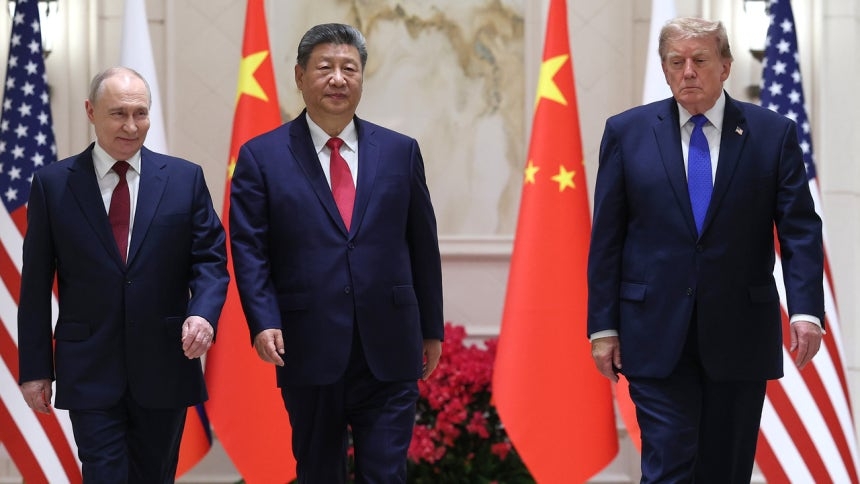
The world's attention turned to Shenzhen, China, on Thursday (local time) as the leaders of the United States, China and Russia gathered for what became the first-ever trilateral summit among the three powers — a meeting that drew immediate comparisons to the 1945 Yalta Conference, where the great powers carved up the postwar world order. Yet on the same sidelines, middle powers including South Korea, Canada and Australia made their own voices heard, pushing back against the prospect of a great-power-dominated reshaping of the international order and moving to diversify their economic partnerships and supply chains.
Bloomberg assessed the Asia-Pacific Economic Cooperation summit in Shenzhen on Thursday (local time), concluding that while the US-China-Russia trilateral meeting carried powerful symbolism, its tangible results were limited.
Ahead of the meeting, concerns had mounted across Europe and Asia that the three leaders might settle major issues — Ukraine, Taiwan and others — without adequate participation from the parties directly involved. Many observers feared it could amount to a "second Yalta," with Washington, Beijing and Moscow dividing the world into their respective spheres of influence.
Xi said at the summit that the three countries bear a "special responsibility" in the world. Putin also invoked the shared legacy of victory in World War II and the founding of the UN, emphasizing the trio's responsibility for maintaining international peace and security.
The outcome, however, remained at the level of broad principles. The three leaders reached agreement on UN reform, questions over the jurisdiction of the International Criminal Court, continued discussions on nuclear weapons, and expanding energy supply — but offered no concrete implementation plans. Bloomberg noted that even the pledge to expand global fuel supplies drew little reaction from international energy markets.
While the great powers debated the direction of the world order, middle powers — South Korea, Canada and Australia among them — each laid out their own response strategies.
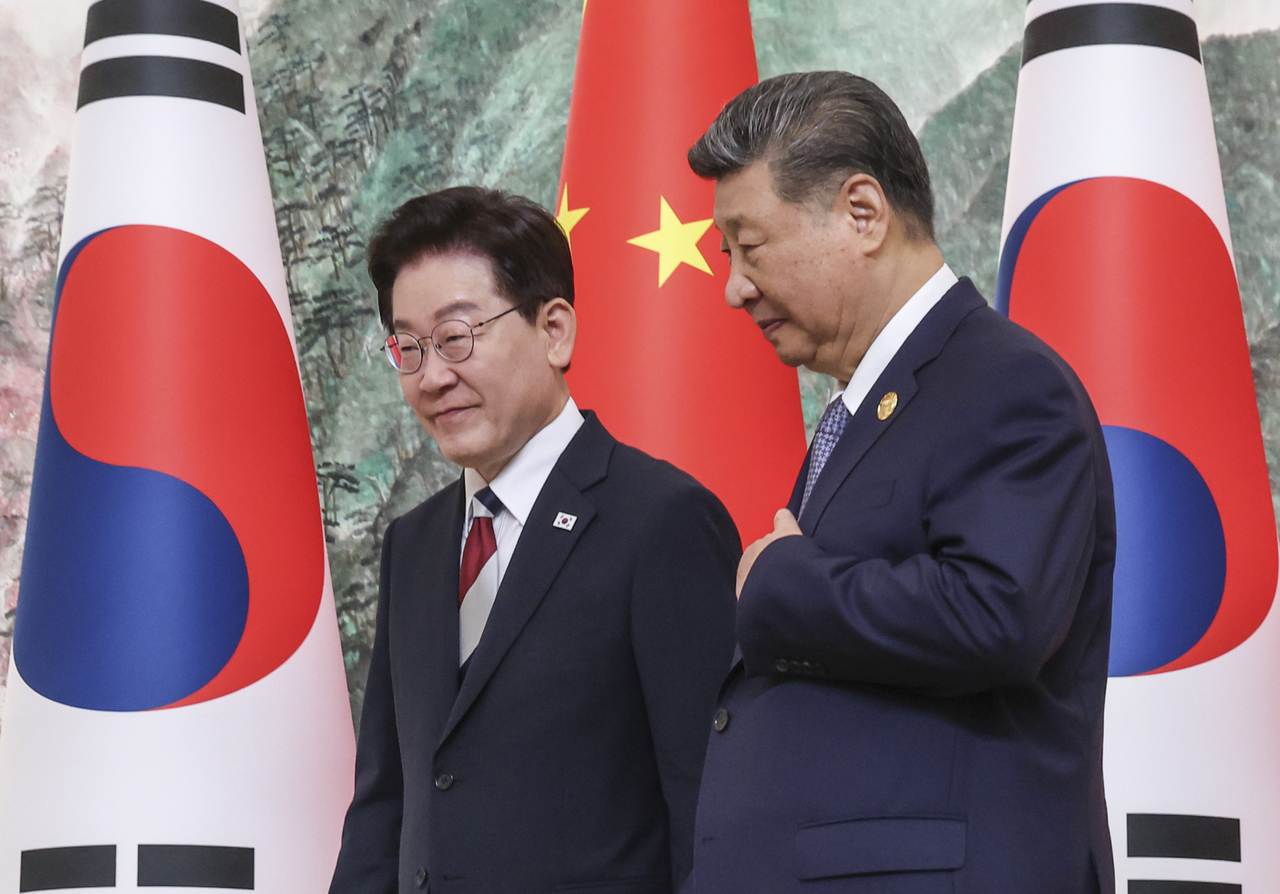
President Lee Jae-myung warned at the APEC CEO Summit on Wednesday (local time) that the global economy was growing increasingly fragmented under the pressures of spreading protectionism and geopolitical conflict. Lee urged coordinated action to ensure stable supplies of critical minerals and energy.
South Korea relies on advanced manufacturing — semiconductors, automobiles and batteries — as its primary growth engines. Securing the raw materials and energy those industries require means reducing dependence on any single country and diversifying supply chains.
Lee held a separate bilateral summit with Canadian Prime Minister Mark Carney on Thursday (local time), with the two sides agreeing to cooperate on building a stable and mutually beneficial energy supply chain.
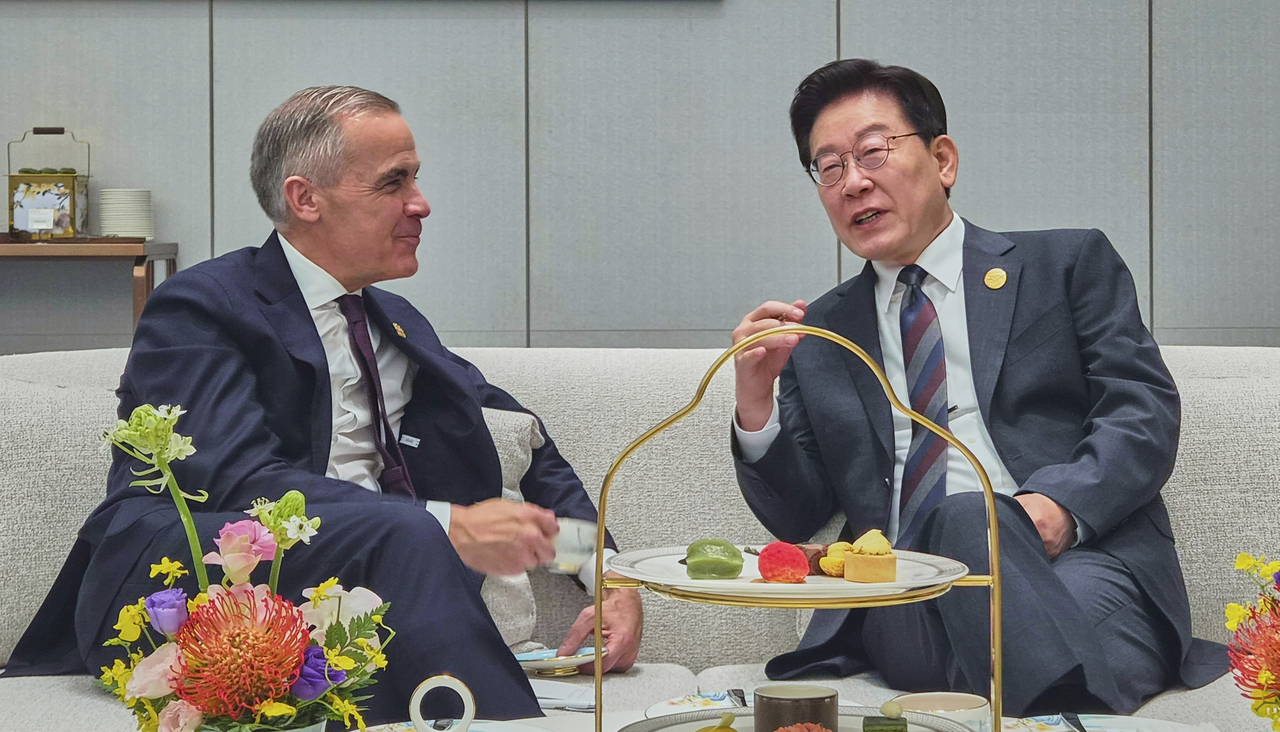
Canada, too, stressed economic autonomy. Prime Minister Carney said the country must strengthen its domestic industrial capacity while building cooperative ties with a wider range of overseas partners. He pointed to new trade agreements, critical minerals cooperation and expanded engagement with Asian nations as concrete steps forward.
Canada's push to broaden its reach into Asia — despite its deep economic integration with the United States — is widely read as an effort to reduce dependence on any single market and build resilience against external shocks.
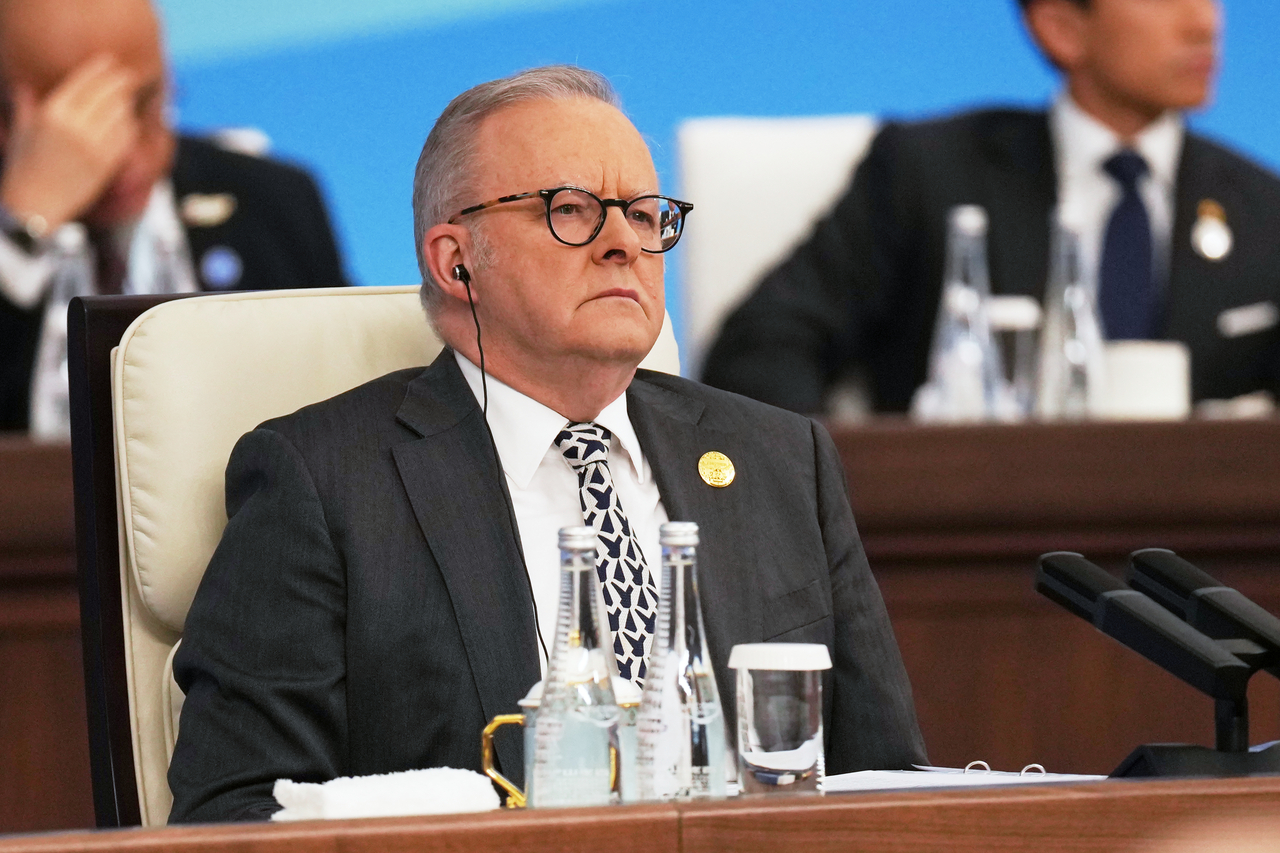
Australia placed greater weight on international security than on economic cooperation. Prime Minister Anthony Albanese, speaking at the APEC plenary session on Thursday (local time), identified the wars in Ukraine and Iran as major factors disrupting global trade.
Albanese directed his remarks pointedly at Putin, who was present in the room. "End the war. End it now," he said. The public rebuke came as the US, Chinese and Russian leaders were holding their own separate discussions on international security — making Australia's opposition to Russia's continued war all the more conspicuous.
Australia maintains close trade ties with China while deepening security cooperation with the United States, a balancing act that grows more demanding as US-China tensions intensify and economic interests increasingly collide with security imperatives.
The APEC summit illustrated how middle powers are navigating economic and security challenges according to their own interests. South Korea focused on stabilizing critical mineral and energy supply chains; Canada on trade diversification; Australia on international security.
These moves came as the US, China and Russia sought to expand their influence over major international issues. Analysts note that advanced-industry supply chains — spanning critical minerals, semiconductors and batteries — stretch across too many countries to be restructured by great-power agreement alone.
Cooperation that links South Korea's advanced manufacturing capabilities with Canada's and Australia's resource-supply strengths has been cited as one way to improve supply chain resilience. However, analysts also caution that differences in each country's economic relationships with Washington and Beijing, as well as diverging security interests, place real limits on how far joint action can go.
Meanwhile, Xi said the summit underscored the need to institutionalize regular consultations among the leaders of the three powers. Wu Xinbo, director of the Center for American Studies at Fudan University in Shanghai, said the interaction among the three countries serves their national interests regardless of who leads the US or Russia. "This will not be the last time," Wu said.
Bloomberg said the most enduring image from the summit would be the sight of the three leaders standing side by side. Yet with the great powers failing to reach concrete agreements on core issues, South Korea, Canada and Australia used the gathering to assert independent positions on supply chain cooperation, trade diversification and international security — signaling their wariness of a world order remade on great-power terms alone.
sjy@heraldcorp.com