
With temperatures in Gwangju forecast to run above seasonal norms this summer, the city has stepped up its heat wave response efforts.
Gwangju has drawn up a comprehensive 2026 heat wave response plan aimed at preventing casualties and easing public discomfort, with full-scale countermeasures to run through Sept. 30.
Two new weather alert categories will be introduced this year — a "serious heat wave warning" and a "tropical night caution." The city has built a coordinated response framework combining emergency duty rosters across 23 departments with situation management systems in five autonomous districts. The heat wave response budget has also doubled from last year to 1.7 billion won (about $1.12 million).
Protections for outdoor workers are also being activated. Construction sites will be encouraged to avoid outdoor work during peak heat hours and to adjust shift schedules. For mobile workers, the city will operate 34 public rest shelters, one 24-hour unstaffed rest facility called "Swiso" and two community-participation shelters called "Swigo." Delivery and designated-driver workers who join the campaign will receive convenience store coupons.
The city will also expand infrastructure to lower the perceived temperature for residents. It plans to install 100 new shade structures, three cooling fog systems and 27 bus stop seats with cooling and heating functions at high-traffic locations. Two smart urban rest shelters will also be newly built in densely populated areas.
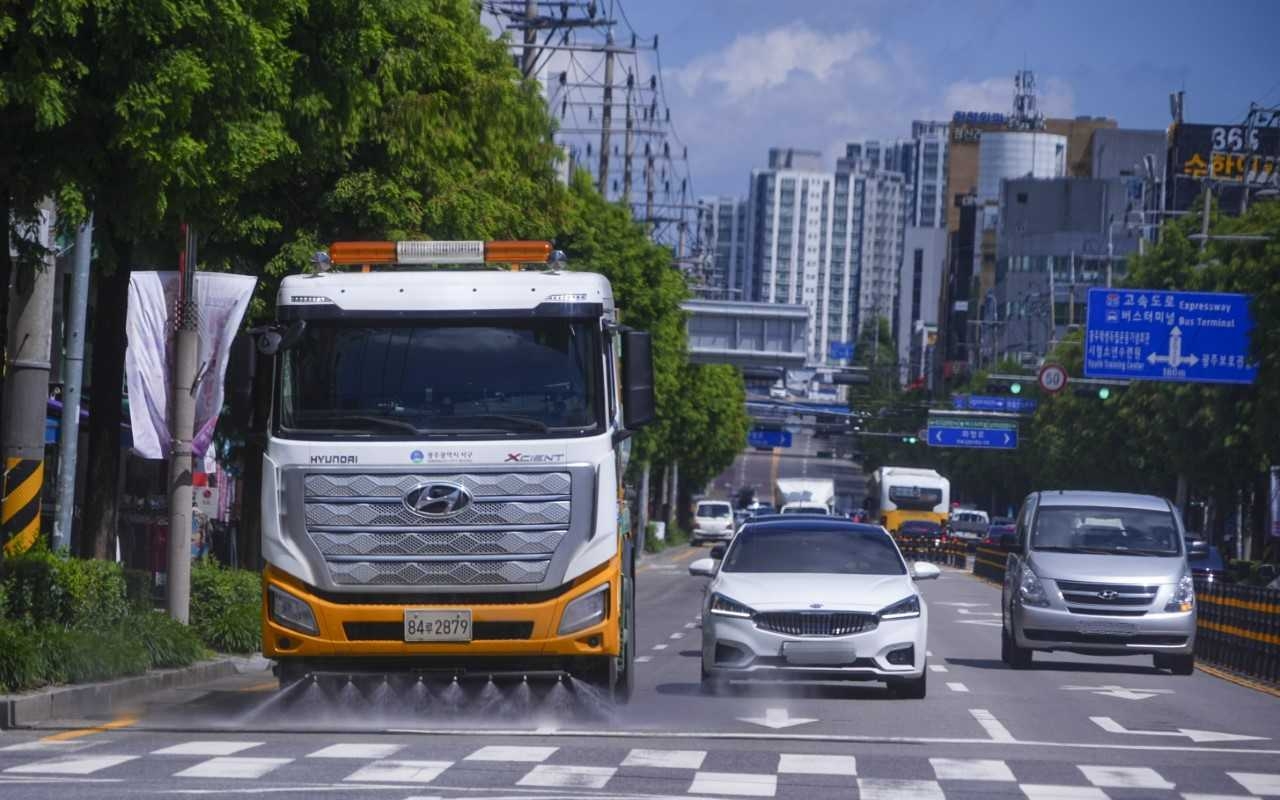
On major roads, an average of 20 water-spraying trucks will be deployed daily. During serious alert phases, the city will significantly expand that operation, and automated road-spraying systems — known as "clean road" units — will run three to four times a day.
To improve management efficiency, Gwangju has reorganized its heat wave protection categories, consolidating what had been 15 types into 10 types across three broad areas.
More than 1,000 lifestyle support workers will be assigned to elderly residents receiving care services, conducting daily in-person visits and phone check-ins whenever a heat wave alert is issued. Households with disabled members will be monitored through neighborhood associations and related organizations, with transportation support to cooling shelters and an emergency transfer system in place. Residents with chronic or underlying conditions will receive home health management services and health supplies through community health center staff.
Monitoring of vulnerable residents at risk of dying alone will be strengthened using ICT equipment, and preventive items such as cooling masks will be distributed. Around 1,000 homeless people and residents of low-income lodging houses will receive access to cooling shelters and emergency sleeping arrangements through a community hub called "Jjokbit Counseling Center."
"With climate change pointing to a record-breaking heat wave this summer, it is critical to activate a preemptive safety net," said Kim Jun-young, head of Gwangju's Citizen Safety Office. "We will mobilize the full force of city administration — from managing urban heat-reduction facilities to providing close protection for vulnerable residents — to make Gwangju a safe city."
sij@heraldcorp.com





