Master plan to cover Kumho Tire factory relocation site and other key areas
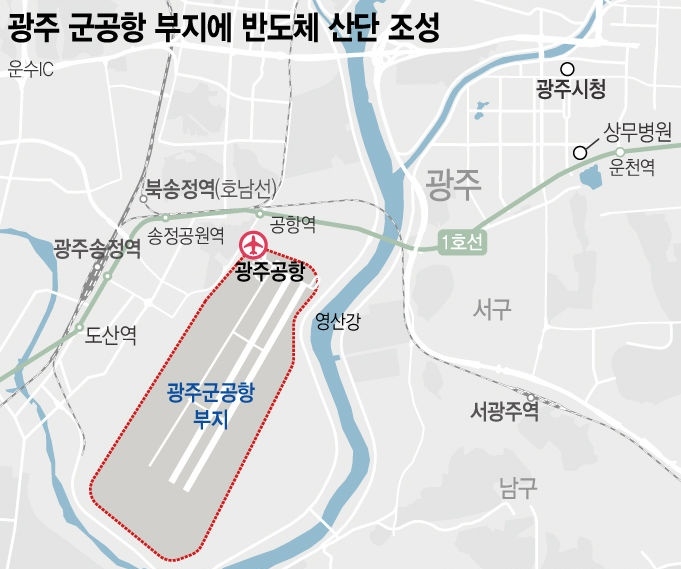
The Gwangju-South Jeolla integrated special city is moving ahead with a project to develop a 3.94 million-square-meter "semiconductor gateway city" linking Gwangju Songjeong Station, the Kumho Tire Gwangju factory relocation site and a former military airport site.
The integrated city will establish the "NOVA Integrated Master Plan," covering a combined 3.94 million square meters — encompassing the Songjeong transit-oriented area, the Kumho Tire relocation site, the Songjeong residential district and the military airport relocation site.
The NOVA acronym stands for four development concepts: Next vision for the airport relocation site, Open gateway for Songjeong Station, Value industry for the Kumho Tire site and Alive community for the original Songjeong downtown area.
The military airport relocation site will serve as the industrial backbone of the future city, linked to a separately planned semiconductor national industrial complex.
Gwangju Songjeong Station will be developed into the largest multimodal transit hub in the southwestern region, integrating high-speed rail, urban rail and bus services.
The city plans to upgrade the transportation network by connecting existing KTX investment-led development zones with transit-oriented development projects, while also preparing for increased traffic demand that the semiconductor national industrial complex will generate.
The approximately 415,000-square-meter Kumho Tire Gwangju factory relocation site will be transformed into a future industrial district combining manufacturing, business, startup and research and development functions.
The vision goes beyond simple redevelopment of a vacated factory site — the city intends to cluster companies, research facilities and startup spaces that support the semiconductor industry.
The existing Songjeong downtown area will be designated a community revitalization zone, with improvements to pedestrian infrastructure and everyday amenities and efforts to energize local commerce, so that the area grows in tandem with newly developed zones nearby.
The plan also aims to prevent redundant investment and haphazard development by coordinating what have until now been separately pursued initiatives — transit-oriented development, industrial complex construction, factory site redevelopment and downtown regeneration — under a single integrated framework.
The city incorporated the project into its integrated special city action plan in July and in October established a dedicated "NOVA Future City Team" within the semiconductor city division of its metropolitan urban affairs bureau.
The project runs from 2026 to 2030, with a master plan consulting study to be commissioned next year to map out a phased development schedule.
Shin Jae-wook, director of the metropolitan urban affairs bureau, said the city would "leverage the locational advantage of being both a major transportation gateway and adjacent to the semiconductor national industrial complex, linking the project to urban regeneration efforts." Shin added that the city would gather expert input this year to set the development direction and use next year's consulting study to establish investment priorities for each component project.
sij@heraldcorp.com