GTC Taipei 2026 media briefing
"Supply constrained despite full partner support"
Nvidia CEO confident in RTX Spark superchip for AI PCs
Strong intent to resume sales in Chinese market
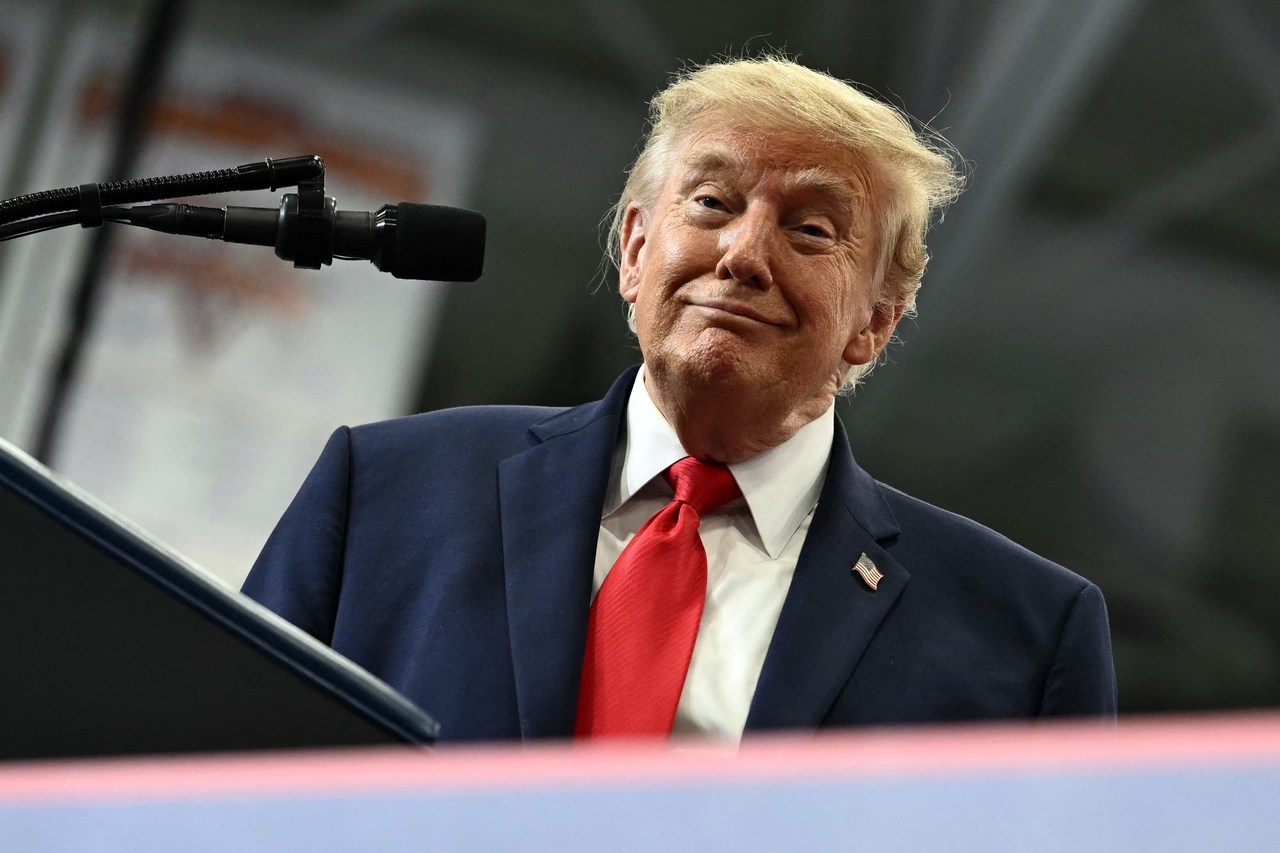
![[Reuters]](https://wimg.heraldcorp.com/news/cms/2026/06/02/rcv.YNA.20260601.PRU20260601235101009_P1.jpg)
Nvidia CEO Jensen Huang said Monday that chip supply remains constrained despite full backing from global semiconductor supply chain partners, signaling the current shortage will persist for the foreseeable future.
Huang made the remarks at the GTC Taipei 2026 media briefing held Monday morning local time at the Grand Hilai Hotel in Taipei, Taiwan, in response to questions about the supply outlook for Nvidia superchips, including Blackwell and Vera Rubin.
"We have secured enormous volume alongside our partners to achieve strong growth," he said, "but the reality is that demand in the market is so explosive that supply still cannot keep pace."
Huang also expressed confidence in Nvidia's next-generation CPU, Vera, and signaled a strong desire to re-enter the Chinese market, which is currently blocked by U.S. export regulations.
Huang went on to praise MediaTek, one of Nvidia's key partners, going so far as to invite MediaTek CEO Rick Tsai to join the media briefing — an unusual gesture that underscored Nvidia's deepening alliance with Taiwan's semiconductor ecosystem. MediaTek contributed to the CPU design inside RTX Spark, Nvidia's first superchip for AI PCs, which the company unveiled the previous day.
Nvidia said hundreds of engineers from both companies spent two years collaborating on a custom CPU design, achieving best-in-class power efficiency, performance and connectivity compared with comparable products.
"Without MediaTek's system-on-chip technology, I cannot complete my chip," Huang said. "MediaTek has become a core pillar of our supply chain and has provided us with strong support."
He expressed equal confidence in RTX Spark itself. "This will be the moment the PC evolves from a mere tool into a true personal assistant," he said.
Asked why Nvidia was extending its reach from B2B AI chips into personal AI PCs, Huang said AI would not remain confined to inference running agents but would expand into edge devices. "The personal computer is the world's largest edge device," he said, adding that with PCs now more than 40 years old, Nvidia was fully focused on "a truly massive project to completely reinvent the PC for the age of AI agents."
On employee compensation — a topic that surfaced in the context of the labor dispute at Samsung Electronics — Huang said he was no expert but was clear in his view. "Employees should be compensated as much as possible. They should not be dissatisfied," he said. "I pay my employees the most I can."
Huang also expressed strong pride in Nvidia's transformation from a high-end GPU maker into what he called an AI infrastructure company. "We ask ourselves: are we merely a GPU company, or are we an AI computing company? Do we want to settle for making a single chip, or do we want to run entire large-scale computing processes?" he said. "That is why Nvidia never stops evolving."
Meanwhile, asked about plans to resume sales to China, Huang offered a measured but pointed response. "Nvidia sells wherever it is permitted to sell and complies with all export and import restrictions. We respect and follow every rule, law and policy on earth," he said. He then noted that the Chinese market was fiercely competitive and that only products of exceptional value could survive there. "In that regard, the Vera CPU is a highly differentiated product," he said, signaling Nvidia's strong intent to re-enter the Chinese market.
joze@heraldcorp.com
go@heraldcorp.com