Trade minister Yeo Han-koo holds back-to-back meetings in Brussels with European Commission, Parliament members
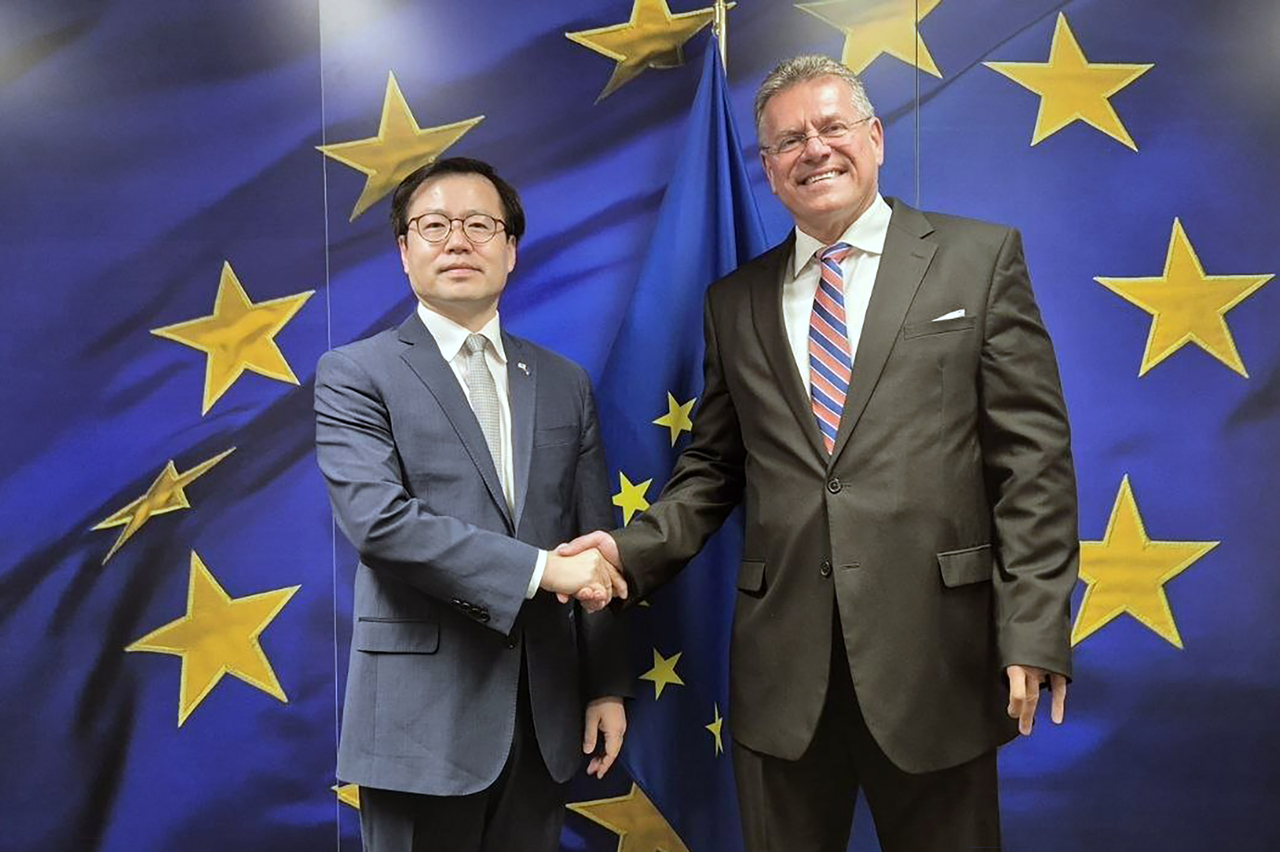
South Korea has mobilized both senior and working-level negotiations to secure market access for its steel industry amid the EU's plan to introduce a tightened tariff-rate quota system for steel imports starting next month.
According to the Ministry of Trade, Industry and Energy, Trade Minister Yeo Han-koo met EU Trade and Economic Security Commissioner Maros Sefcovic in Brussels, Belgium, on June 1 and 2, strongly urging favorable treatment for South Korean steel.
The Brussels visit came just three weeks after Yeo's previous trip there on May 11, underscoring the urgency of Seoul's response as the EU moves to sharply tighten steel import barriers starting July 1.
The EU's new measures are expected to deal a significant blow to South Korea's steel industry. The bloc plans to cut its duty-free tariff-rate quota for steel roughly in half — from 35 million tons to 18.3 million tons — and impose a 50 percent tariff on volumes exceeding that threshold, up from the current 25 percent.
According to the Korea International Trade Association, South Korea's steel exports to the EU totaled $4.48 billion in 2024, accounting for 13.5 percent of the country's total steel exports. That figure surpassed exports to the United States — South Korea's top single-country steel market — which stood at $4.35 billion.
In his meeting with Sefcovic, Yeo emphasized the trade relationship and mutual trust built on the Korea-EU free trade agreement, and urged that South Korea receive special consideration in the allocation of country-specific quotas.
The EU side said it would maintain close communication to find a mutually acceptable solution before the measures take effect.
Yeo then held a series of meetings with key European Parliament members, including Anna Cavazzini, chair of the Committee on the Internal Market and Consumer Protection, and César Luena, head of the Parliament's delegation for relations with the Korean Peninsula. He told them the EU — long a champion of a rules-based, open multilateral trading system — risks facing international criticism for turning toward protectionism with these measures.
He also warned that the measures would not only restrict market access for South Korean steel but could also hurt the production and investment activities of Korean automakers and home appliance manufacturers that have poured billions of dollars into the EU and created tens of thousands of jobs there.
Yeo also met with South Korean steel companies operating in Europe to hear their concerns firsthand and review response strategies, including the search for alternative markets.
Companies at the meeting asked the government to actively share relevant developments, citing high volatility in the period leading up to the measures taking effect.
"With little time left before the July 1 implementation, the government will focus all its efforts on securing the maximum quota volume for our companies through comprehensive negotiations at both the senior and working levels, in close coordination with industry," Yeo said. "We will use every available negotiating channel to the end to maximize our companies' access to the EU market."
oskymoon@heraldcorp.com