Regional balance strategy expected to boost manufacturers' growth plans
Gyeonggi Province semiconductor cluster awaits power, water solutions
Gunsan's Saemangeum area set for robot and renewable energy push
South Gyeongsang, Ulsan manufacturers eye AI-driven productivity gains
![A construction site for the semiconductor cluster SK Hynix is building in Yongin, Gyeonggi Province. [Herald DB]](https://wimg.heraldcorp.com/news/cms/2026/06/04/news-p.v1.20251230.ed17618a24e34b22814f50ac13e16b11_P1.jpg)
Winners of the June 3 local elections campaigned on pledges to strengthen existing industries and foster new ones powered by AI, raising expectations among related companies that their growth strategies will gain fresh momentum.
Analysts expect the Lee Jae Myung administration's regional balance development strategy to accelerate plans by major manufacturers based in the Gyeongsang and Jeolla regions to build new production facilities.
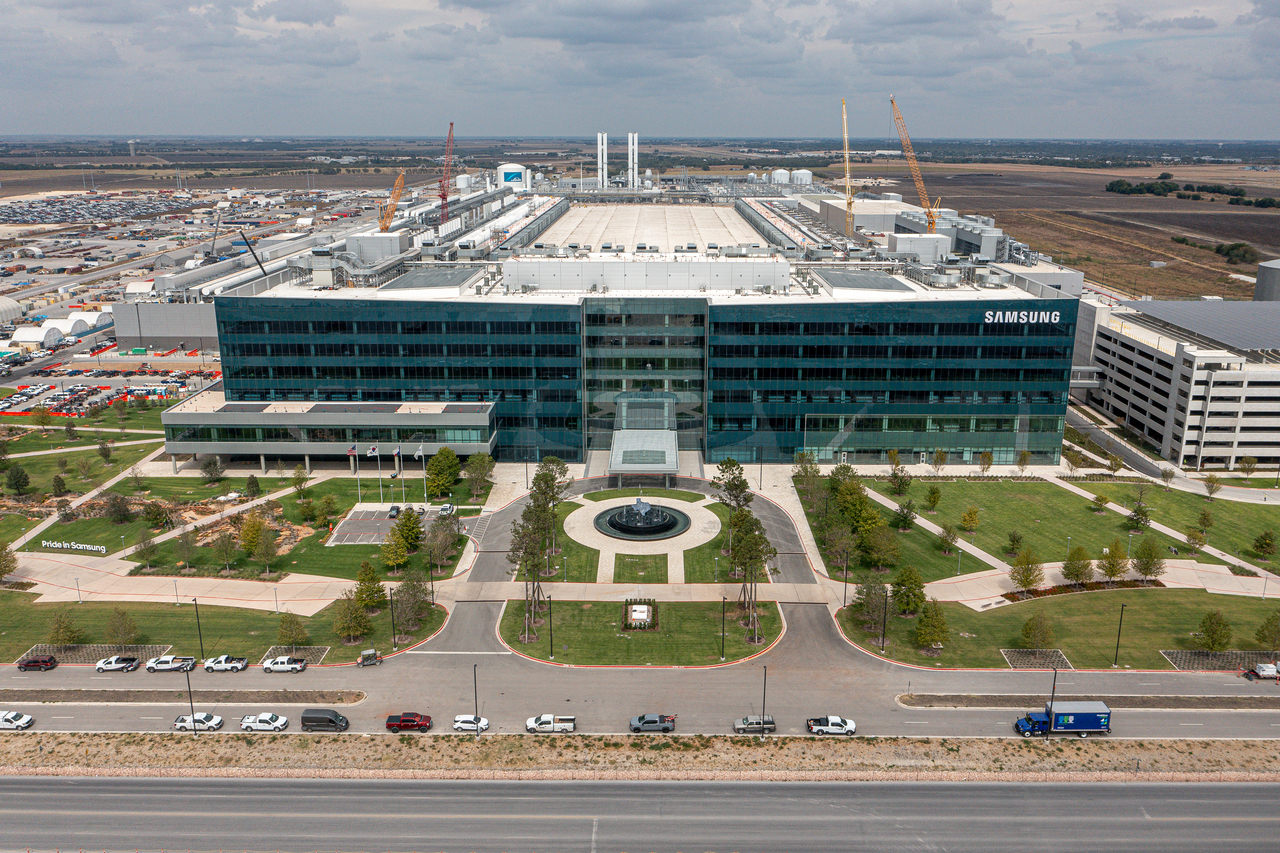
Gyeonggi Province, home to South Korea's largest semiconductor belt, is expected to push ahead with completing a K-semiconductor cluster centered on Yongin following the election of Democratic Party of Korea candidate Choo Mi-ae as governor.
Samsung Electronics and SK Hynix have both committed to building new semiconductor production bases in the Yongin area and are hoping for swift permits for essential infrastructure — power and water supply networks and transportation links.
Choo, the governor-elect, said she would "secure a plan to supply 16 gigawatts of power and ensure the uninterrupted supply of 1.07 million tons of water per day," adding that Gyeonggi Province and eight local governments would work together to expand regional transportation networks including roads and railways.
![Democratic Party of Korea gubernatorial candidate Choo Mi-ae and mayoral candidates from the Gyeonggi region present their joint semiconductor campaign pledges at a press conference held at the Gyeonggi Provincial Assembly in Suwon on June 19. [Yonhap]](https://wimg.heraldcorp.com/news/cms/2026/06/04/rcv.YNA.20260519.PYH2026051912150006100_P1.jpg)
South Korea holds a strong position in memory chip manufacturing but is considered weak in fabless design and in materials, components and equipment.
To address those gaps, Choo plans to transform southern Gyeonggi Province into a fully integrated semiconductor cluster — covering everything from chip design and materials to testing, evaluation and back-end packaging — as a core base for achieving a decisive lead in the K-semiconductor sector.
In the North Jeolla Province gubernatorial race, the victory of Democratic Party of Korea candidate Lee Won-taek is expected to give a boost to AI, renewable energy and agri-biotech industries. Lee earlier unveiled a plan to develop a 3 million-pyeong AI semiconductor mega-cluster at Saemangeum and attract a total of 200 trillion won ($132 billion) in investment.
The vision is to turn Saemangeum into an "all-in-one AI semiconductor ecosystem hub" covering everything from semiconductor packaging production to AI data processing. Lee also pledged to pursue a "sunshine and wind pension" project — developing renewable energy production and advanced industries so that the proceeds flow back to residents as pension income.
Those plans are also expected to give added momentum to Hyundai Motor Group's earlier decision to invest 9 trillion won in the Saemangeum area near Gunsan. Kim Ui-gyeom of the Democratic Party of Korea, who won the by-election for the Gunsan-Gimje-Buan A constituency, plans to leverage his experience as head of the Saemangeum Development Authority to connect Hyundai Motor's investment to local jobs and future industry.
North Jeolla Governor-elect Lee Won-taek also campaigned on building a "physical AI ecosystem" combining AI with robot and mobility industries. He plans to fast-track Hyundai Motor's investment and develop Saemangeum into a Northeast Asian logistics hub through a "tri-port" network linking Saemangeum Port, Saemangeum International Airport and a connecting railway.
![Prime Minister Kim Min-seok poses for a photo with attendees after receiving a briefing on Hyundai Motor Group's investment plans at the Saemangeum Development Authority in Gunsan, North Jeolla Province, on March 5. From left: Democratic Party of Korea lawmaker Lee Won-taek, Saemangeum Development Authority chief Kim Ui-gyeom, Hyundai Motor Group Strategic Planning Division executive vice president Shin Seung-gyu, Prime Minister Kim Min-seok, North Jeolla Governor Kim Kwan-young, and Prime Minister's Office chief of staff Min Ki. [Yonhap]](https://wimg.heraldcorp.com/news/cms/2026/06/04/rcv.YNA.20260305.PYH2026030517830001300_P1.jpg)
Min Hyeong-bae of the Democratic Party of Korea, elected as the inaugural mayor of the newly integrated South Jeolla-Gwangju Special Metropolitan City, pledged to transform Gwangju into a production hub for AI and mobility. With Kia's Gwangju factory and Gwangju Global Motors already in place, analysts say the city has a strong chance of emerging as a future mobility center through autonomous driving pilots and the development of a mobility data hub. Hyundai Motor and Kia plan to launch autonomous vehicle services directly in Gwangju in the second half of this year.
In the South Gyeongsang Province gubernatorial race, People Power Party candidate Park Wan-su won re-election, drawing attention to whether his pledges to develop small modular reactors, the defense industry and the aerospace sector will now gain traction.
Park pledged to build up the central part of the province — anchored by Changwon, home to the Changwon National Industrial Complex — as a hub for manufacturing AI and defense industries, and to establish an Advanced Defense Industry Promotion Institute to bolster defense competitiveness.
Major companies including Hanwha Aerospace, Hyosung Heavy Industries and Doosan Enerbility operate facilities in Changwon. Park also said he would make it his top priority to push for legislation — a special act on aerospace complex city construction — to develop Sacheon, home to Korea Aerospace Industries, into South Korea's "aerospace capital" on a par with Toulouse, France, Europe's largest aerospace hub.
Ulsan Mayor-elect Kim Sang-uk of the Democratic Party of Korea plans to integrate AI into the city's core manufacturing sectors — automobiles, shipbuilding and petrochemicals — to raise productivity while ensuring that the gains flow back to workers, reigniting Ulsan's growth engine.
![Democratic Party of Korea Ulsan mayoral candidate Kim Sang-uk celebrates with supporters at his campaign office in Nam-gu, Ulsan, on Wednesday after his election victory appeared certain. [Yonhap]](https://wimg.heraldcorp.com/news/cms/2026/06/04/rcv.YNA.20260604.PYH2026060401230005700_P1.jpg)
Kim also announced plans to expand liquefied natural gas storage facilities, develop floating offshore wind projects and attract energy companies to the city, signaling that energy industry development will likewise accelerate.
In Pohang, North Gyeongsang Province, attention turns to whether newly elected Mayor Park Yong-seon of the People Power Party can ease the city's chronic burden of high electricity costs.
Park campaigned on a preferential tariff scheme grounded in a so-called K-Steel Act, proposing to lower industrial electricity rates to around 120 won and presenting the construction of small modular reactor plants tailored to distributed energy special zones as an alternative.
Posco plans to complete a hydrogen-based direct reduction ironmaking facility in the Songjeong-dong area of Pohang's Nam-gu by 2027. Because the process relies more heavily on electricity than conventional blast furnaces, securing a stable power supply and reducing electricity costs are considered critical challenges.
Park also said he intends to raise the competitiveness of Pohang's steel industry by shifting production toward high-value-added specialty steel and accelerating the adoption of hydrogen-based ironmaking.
joze@heraldcorp.com
keg@heraldcorp.com
kwater@heraldcorp.com