ECB report shows gold at 27% of global reserves vs. 22% for US Treasurys; buying accelerated after Russia sanctions
China, India, Poland and Turkey lead purchases; euro's global role also expands
By Seo Ji-yeon, The Herald Business
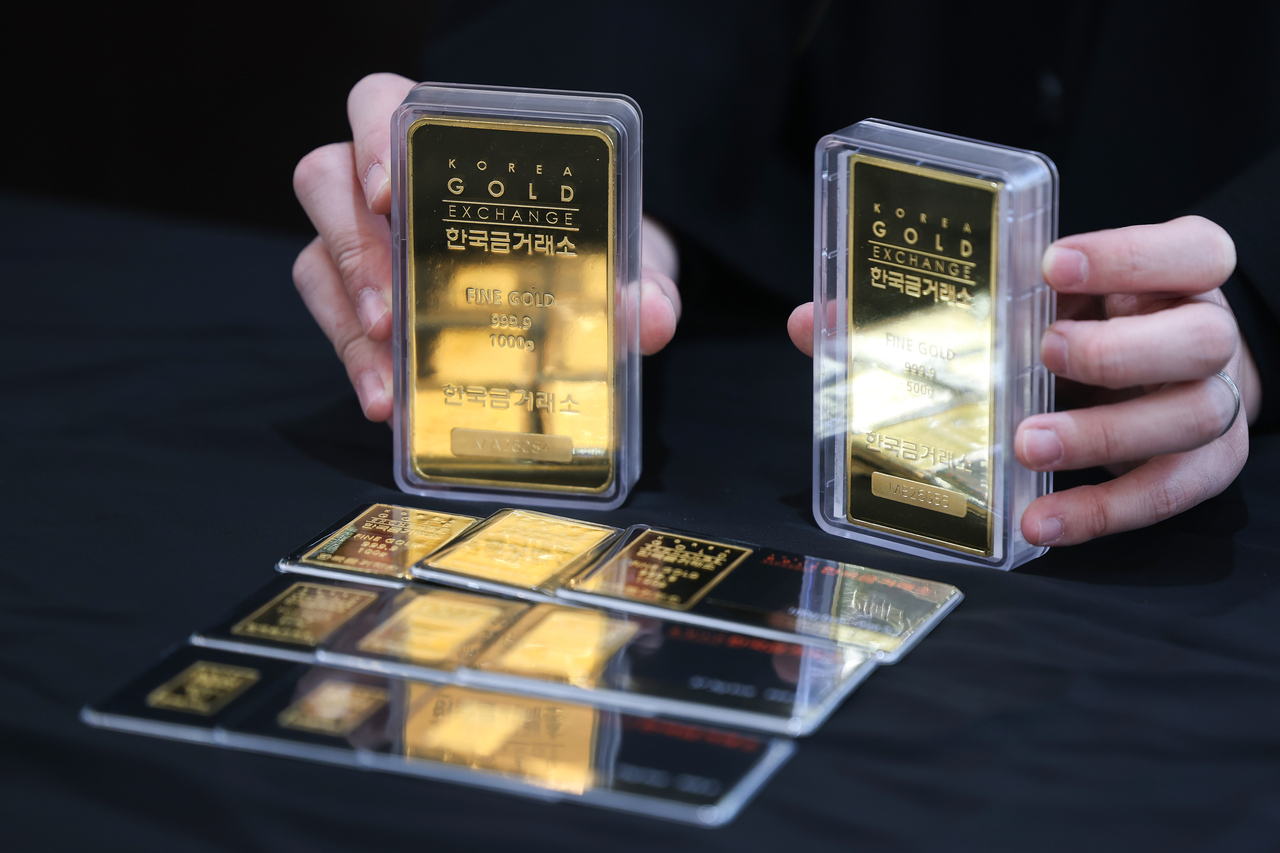
Gold has surpassed US Treasurys in global central bank reserves for the first time. Dollar-denominated assets still account for the largest share overall, but the freeze on Russia's foreign exchange reserves has prompted central banks worldwide to cut their reliance on the dollar and build up gold holdings — a shift that is beginning to reshape the international monetary order.
The European Central Bank said in its "International Role of the Euro" report, released Monday, that gold accounted for 27% of global central bank reserves at the end of last year — up 7 percentage points from 20% a year earlier.
By contrast, the share held in US Treasurys fell from 25% to 22% over the same period. Dollar-denominated assets as a whole, including US Treasurys, still commanded the largest share at 42%, but on a single-asset basis gold has now pulled ahead of US government bonds. The share of euro-denominated assets held steady at 15%.
Central bank reserves are highly liquid assets that monetary authorities hold to defend their currencies, meet international payment obligations and provide liquidity during financial crises. They typically include US Treasurys, dollar deposits, gold and euro-denominated assets.
The ECB cautioned, however, that much of the increase in gold's share reflects a valuation effect from surging gold prices rather than outright purchases. Adjusting last year's gold holdings to end-2023 prices would put gold's share at 16% — on par with the euro and well below the 26% share for US Treasurys.
Even so, the trend of central bank gold buying is unmistakable. Global central bank gold holdings have now exceeded 36,000 metric tons, the ECB said — approaching the roughly 38,000 metric tons held at the peak of the Bretton Woods system, when the dollar was pegged to gold.
The biggest driver of recent gold demand has been geopolitical anxiety. Since the United States froze Russia's foreign exchange reserves in 2022 over the war in Ukraine, central banks have been cutting their exposure to dollar assets and expanding gold holdings, which carry relatively lower risk of political sanctions.
"Geopolitical tensions continue to drive strong central bank demand for gold," ECB President Christine Lagarde said in the report.
China, Poland, Turkey and India have added the most gold since 2022. Central banks' net gold purchases totaled 850 metric tons last year, a slight decline from the year before, but the pace has remained near 1,000 metric tons annually for three consecutive years.
Also notable is the emergence of Tether, the dollar-pegged stablecoin issuer, as the single largest institutional gold buyer last year, having purchased more than 100 metric tons. Some analysts say it marks the first time a private digital-asset company has entered the gold market at a scale previously associated with central banks.
Turkey, meanwhile, sold or lent roughly 130 metric tons of gold early this year following the outbreak of the Iran war — one of the largest drawdowns of gold reserves in recent years, according to the ECB.
The Financial Times interpreted the broader shift as central banks seeking alternatives to a dollar-centered financial system. As awareness grows that holding dollars exposes countries to US financial sanctions, gold is increasingly seen as a buffer against geopolitical risk.
Most analysts, however, say the dollar's dominance is not under immediate threat. Dollar-denominated assets still make up 42% of global reserves, and the dollar retains an overwhelming share of international settlements, trade finance and foreign exchange transactions.
The euro's international standing is also rising. Euro-denominated international bond issuance hit a record high last year at around 1 trillion euros (approximately $1.16 trillion), up 30% from the year before. Net inflows into eurozone assets by foreign investors reached 850 billion euros, approaching the highest level since the euro's launch.
With the dollar-centered system intact but gold and the euro gaining ground as alternative assets, the structure of global foreign exchange reserves is shifting. Analysts say central banks are likely to keep buying gold for now, particularly if geopolitical tensions persist.
sjy@heraldcorp.com