Nvidia's next-generation AI server platform 'Vera Rubin'
AI bottleneck shifts from computing and memory to connectivity
Marvell seen gaining on data links; Doosan on substrate materials
The "server connectivity" value chain has surged to the forefront of AI investment following Computex 2026, held in Taipei, Taiwan, from June 2 to 5. AI semiconductor investment has long been concentrated in Nvidia graphics processing units and high-bandwidth memory. Market observers now say the next wave of beneficiary stocks will center on how quickly the increasingly large and complex AI servers can be <style ref="s0">"connected" (Connectivity)</style>.
Connectivity has emerged as the new bottleneck because the interior of AI servers is growing ever more intricate. A data center AI server is essentially a large rack-style cabinet in which GPUs, CPUs, memory chips and switches are stacked across multiple layers. Until now, those components have been linked by bundles of cables — but as AI servers grow larger, those cable bundles multiply in complexity. The faster data transmission speeds become, the shorter the distance over which copper cables can reliably carry a signal, and simply stretching cables to connect components at the top and bottom of a rack is running into its limits.
The key solution is Nvidia's next-generation AI server platform, Vera Rubin. Vera Rubin targets the data-movement challenges that grow more acute as AI servers expand in size and complexity. Rather than routing cables in every direction among components inside a rack, the platform places a large circuit board at the center or rear of the rack and plugs each component directly into it.
Securities analysts say Computex 2026 confirmed that "data connectivity" has emerged as the semiconductor industry's new bottleneck. Lee Jong-wook, a researcher at Samsung Securities, said the launch of the Vera Rubin platform in the second half of this year marks "a new turning point at which the warmth of AI spreads beyond the GPU." He added that the AI bottleneck is shifting from "how fast can you compute" to "how quickly and broadly can you connect more data."
The stock drawing the most attention domestically and internationally as a connectivity beneficiary is Marvell Technology.
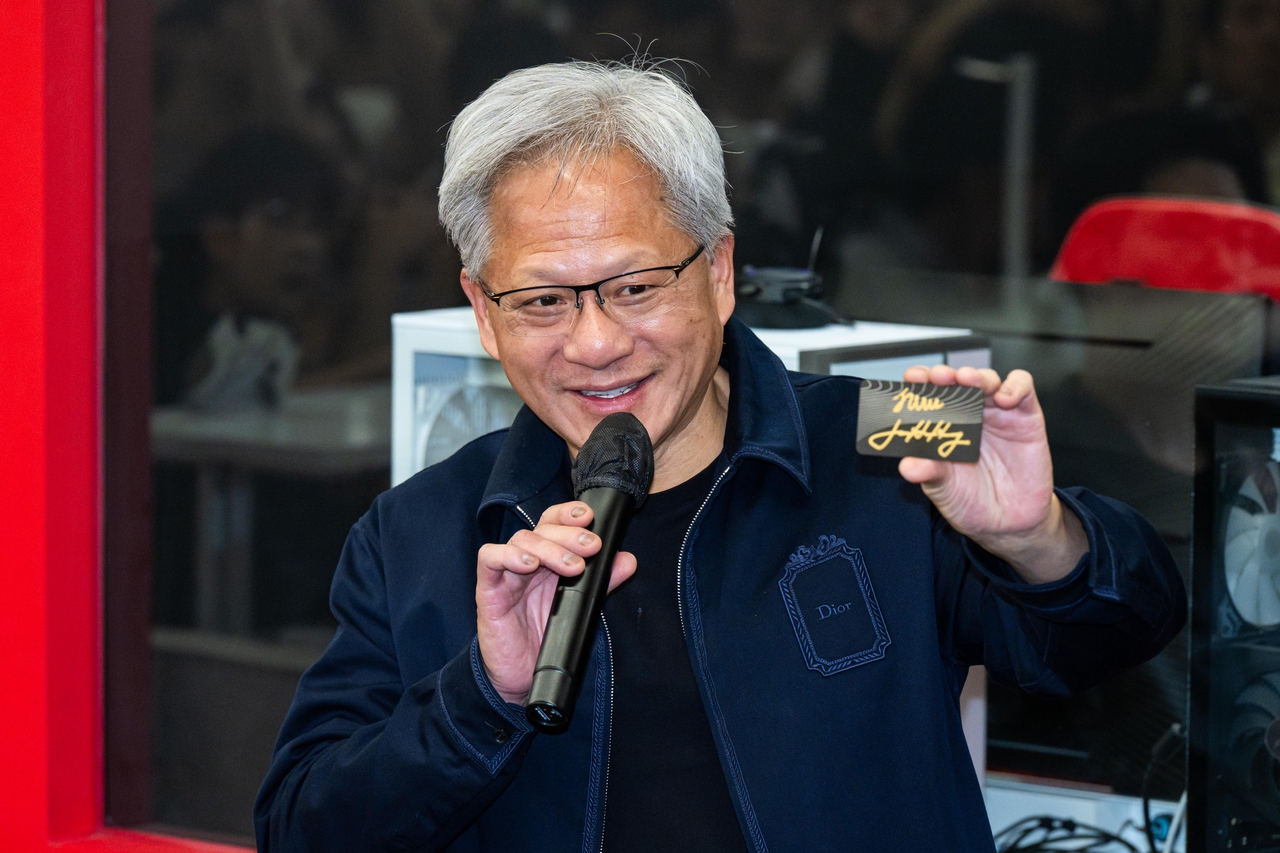
At Computex 2026 on June 2, Nvidia CEO Jensen Huang took the stage alongside Marvell CEO Matt Murphy, highlighting the two companies' AI infrastructure partnership and calling Marvell a future "trillion-dollar company." The keynote's theme was "The Future of AI Scaling Depends on Connectivity."
Marvell's share price surged more than 30 percent that day, then added further gains of 3 to 4 percent over the following two trading sessions.
Within South Korea, the industry is pointing to Doosan as a Vera Rubin beneficiary, citing the company's role as a key supplier of substrate materials for Nvidia AI server boards.
Doosan manufactures copper-clad laminate, a high-performance substrate material used inside AI servers. Vera Rubin's architecture routes data through a central circuit board rather than through tangled cable bundles, placing that substrate material at the heart of the server's data pathways.
As that architecture becomes more widespread, demand for the high-performance substrate materials used in those circuit boards could rise in tandem. Samsung Securities estimates that Vera Rubin adoption will increase copper-clad laminate demand per server rack by roughly 1.5 times compared with Nvidia's existing AI server platform.

kacew@heraldcorp.com