Seoul High Court holds first hearing in injunction appeal
Whether key processes such as cell culture are covered remains central issue
Semiconductor 'normal-level maintenance' ruling seen as key variable
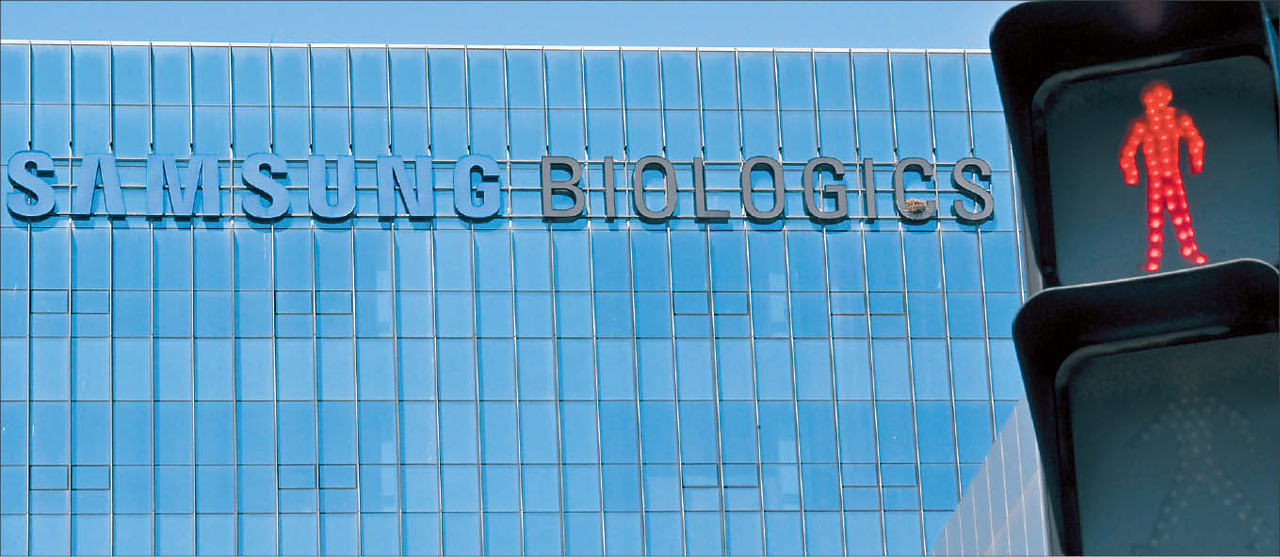
A Seoul High Court appeal hearing over a labor dispute injunction at Samsung Biologics is set to begin in earnest. The company filed the appeal after a court in April partially granted its request for an injunction banning strike action but stopped short of covering all production processes. Industry and legal observers are watching closely to see how much weight the court gives to the unique nature of biopharmaceutical production — which involves handling living cells — and whether the strike ban will be expanded to cover the entire production line.
The first hearing of the appeal before the Incheon First Civil Division of Seoul High Court was scheduled for Thursday, according to industry sources.
In the first-instance ruling, the court recognized the need to prevent biopharmaceuticals from deteriorating or becoming contaminated, and restricted strike action only for certain essential tasks. Of the nine processes Samsung Biologics had originally sought to protect, the court limited the ban to three final-stage operations: concentration and buffer exchange, bulk filling, and buffer manufacturing and supply.
The exclusion of the cell culture process — the most critical stage of production — from the ban has continued to draw concern from the industry. Biopharmaceutical production involves handling living cells and must be carried out strictly according to set procedures and timelines.
At an expert forum hosted by the Shareholder Action Research Institute on May 15, Kang Seung-hoon, a professor of biopharmaceutical engineering at Inha University, warned that interruptions or inadequate control during production could result in substandard biopharmaceuticals. "Current quality control systems and analytical methods may not immediately reveal problems, but the possibility of unexpected quality issues emerging in the future cannot be entirely ruled out," he said.
Samsung Biologics has asked the court to expand the injunction's scope, arguing that all production processes must run continuously around the clock and that the 24-hour nature of its operations demands special consideration.
Legal observers say a recent court ruling in a separate case could prove a significant variable in the appeal. In a case involving semiconductor manufacturing — which, like biopharmaceutical production, runs on 24-hour continuous processes — a court recently set a strict standard requiring that operations be maintained at normal levels even during a strike.
The union's track record of defying the existing injunction is also expected to weigh heavily on the court's decision. The court had previously ordered the union not to instruct its members to stop work on the restricted essential processes or to distribute guidelines to that effect.
Despite that order, the union reportedly ignored the ruling and circulated strike guidelines telling workers in those processes that joining the strike was lawful. The court ultimately issued an indirect enforcement order requiring the union to pay Samsung Biologics 20 million won (about $13,100) for each violation of the injunction. The court had initially rejected the company's request for such an order, reasoning that the union would not risk criminal penalties by defying the injunction — but it reversed course after the union and company clashed over annual leave and overtime during the actual strike. "The union promised to comply with the injunction but then ignored it, which led to the indirect enforcement order," a legal source said. "With the principle of good faith broken, the court is likely to approach this case with greater caution and seriousness."
silverpaper@heraldcorp.com