
Samcheok Tourism and Culture Foundation mounts storytelling-style exhibition
It was in the early sixth century that Silla — a kingdom in which the Huns (Xiongnu), a branch of the Korean people, ruled over two-thirds of the dynasty — extended its reach beyond the continental coast and into the Korean Peninsula, pushing past what is now North Gyeongsang Province into southern Gangwon Province (including Uljin) and South Gyeongsang Province. Standing in its way were Silljikguk, a kingdom centered on Samcheok in the southeastern corner of Gangwon and the northeastern corner of North Gyeongsang, and the formidable Gaya confederacy to the south.
General Isabu is said to have played a major role in Silla's expansion across the peninsula.
A Silla royal-born commander, Isabu secured Samcheok — the capital of Silljikguk — and roughly 1,500 years ago set out from Samcheok and Uljin to subjugate the kingdom of Usan.
Some historians argue that Usan was located not in the East Sea but along the eastern continental coast — near the Silla settlements in what are now Shandong, Fujian and Guangdong provinces (known by various names before the Unified Silla period). Regardless, Isabu is widely credited with attempting to bring Ulleungdo and Dokdo under Silla's control.
Legend has it that Isabu won territory with a single lion. The tale of the "wooden lion" — "mokwusaja" — has been passed down to the present day as a symbol of the Korean history that has guarded Dokdo and the East Sea. Whether it is fact is difficult to verify; the historical records offer no detail on how it happened, noting only that "Usan surrendered."
According to the legend, after several failed expeditions to Usan, Isabu devised a ruse: he mounted lion-shaped figures on his ships to unnerve the islanders, and they surrendered without much of a fight.
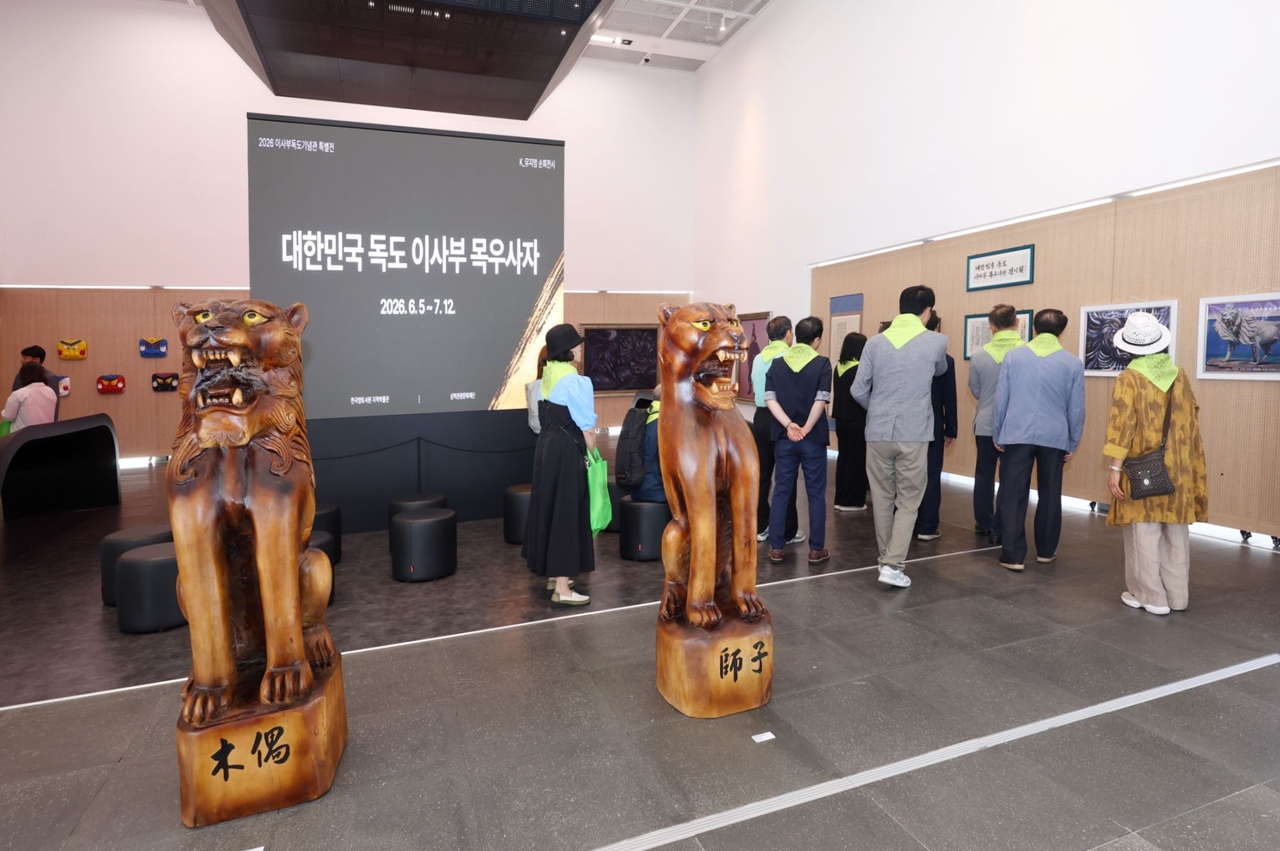
The Samcheok Tourism and Culture Foundation opened the special exhibition "2026 K-Museum Touring Exhibition: Korea's Dokdo — Isabu and the Wooden Lion" at Hall D of the Isabu Dokdo Memorial on Friday, running through July 12. The show reinterprets Isabu's subjugation of Usan and the historical significance of Dokdo through contemporary art and interactive content.
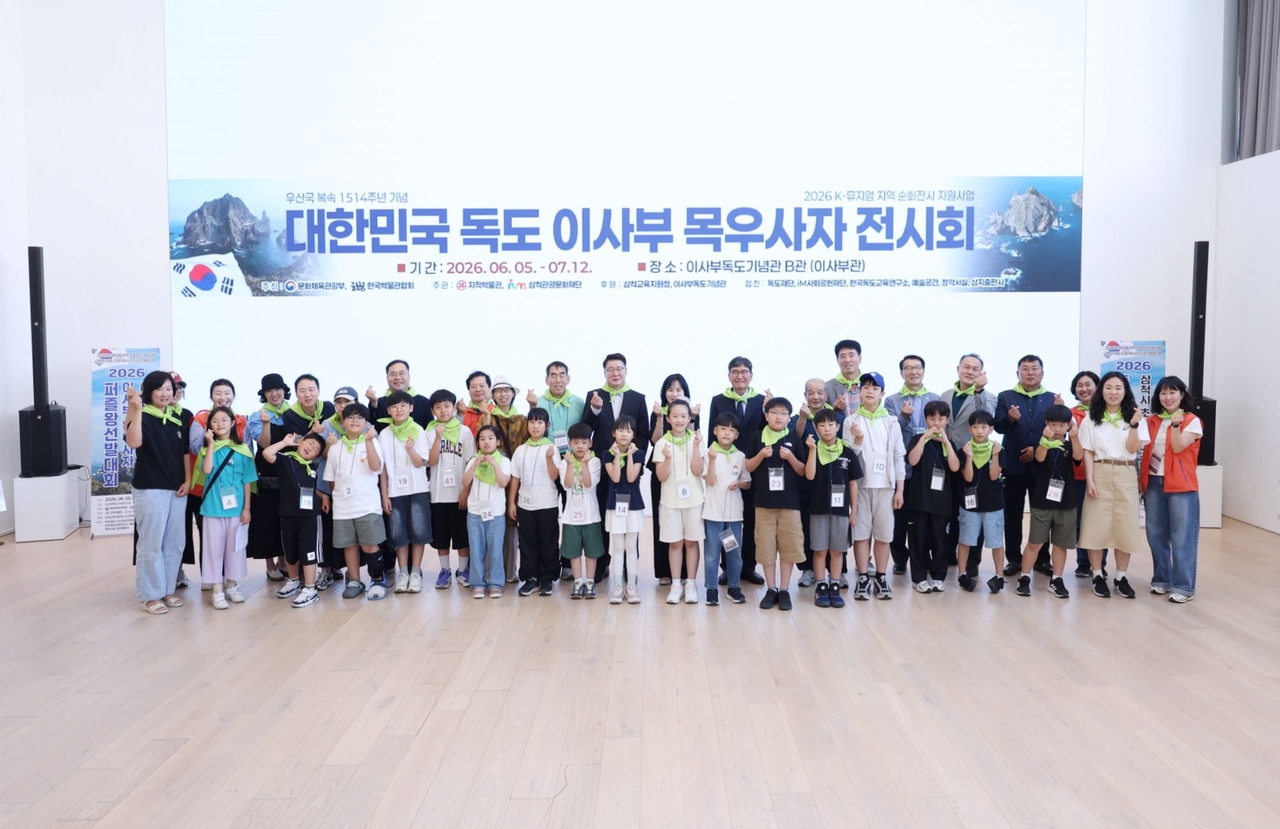
The storytelling-style exhibition is organized into four sections: "Meet the Hero — Isabu," "See the Wisdom — the Wooden Lion," "Read the Record — Usan and Ancient Maps," and "Share Together — Experience and Exchange."
A total of 33 works are on display, anchored by a large wooden mokwusaja sculpture and paintings, alongside records from the Samguk Sagi and Samguk Yusa, Joseon-era historical maps, and works of calligraphy and seal carving.
Particularly for children and families, the exhibition offers hands-on content including a mokwusaja puzzle, a Bukcheongsaja lion-mask experience, a question-and-answer program, and a reading corner featuring books about Isabu — all designed to make the history accessible and engaging.
"The wooden lion is not simply a carved lion — it is a symbol of how wisdom and imagination changed the course of history," said Yoo Jae-hyeon, secretary general of the Samcheok Tourism and Culture Foundation. "We hope this exhibition gives citizens and tourists a natural way to understand General Isabu's pioneering spirit and the historical significance of Dokdo."
abc@heraldcorp.com





