Exclusive interview with former TSMC engineer
'Would have jumped to Samsung if it had a factory in Taiwan'
TSMC engineers launch 'on-call refusal' movement
Taiwan Micron worker: 'Our share price is higher than Samsung's and SK's — so why are our bonuses lower?'
'Tang ping' lying-flat culture spreads as sacrifice ethos fades
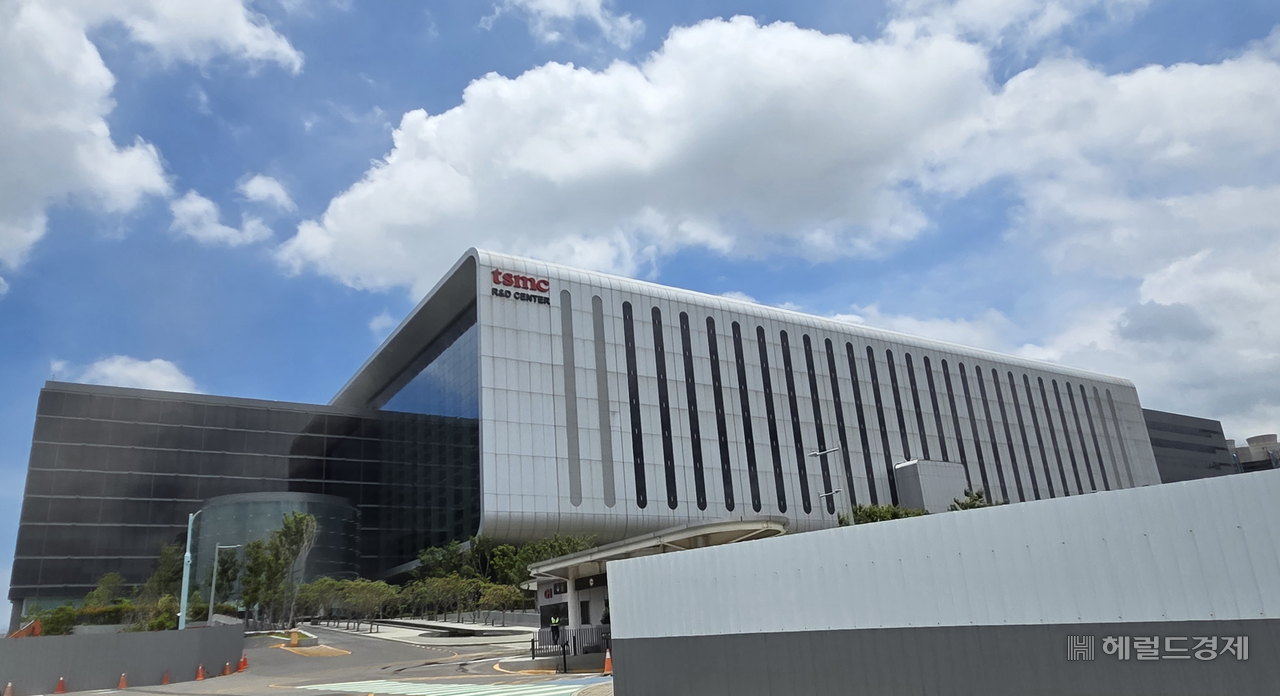
"If Samsung had a factory in Taiwan, I would have quit TSMC and joined Samsung."
A former TSMC engineer, identified only as A, spoke to The Herald Business in Taiwan about the recent agreement between Samsung Electronics and its union to allocate roughly 30 trillion won (about $19.4 billion) for employee bonuses. "TSMC engineers truly envy Samsung Electronics," A said. "We work ourselves to death for the company, but the company is more interested in building factories than in taking care of its employees. Engineers are extremely angry."
According to A, the Samsung Electronics bonus agreement has pushed the total compensation gap — including bonuses — between Samsung Electronics and TSMC to at least fivefold. A newly hired engineer with a master's degree at TSMC earns roughly 100 million won (about 2.5 million New Taiwan dollars) per year in combined salary and bonuses. By contrast, a Samsung Electronics employee in the memory chip division is estimated to receive bonuses worth around 600 million won under the new agreement.
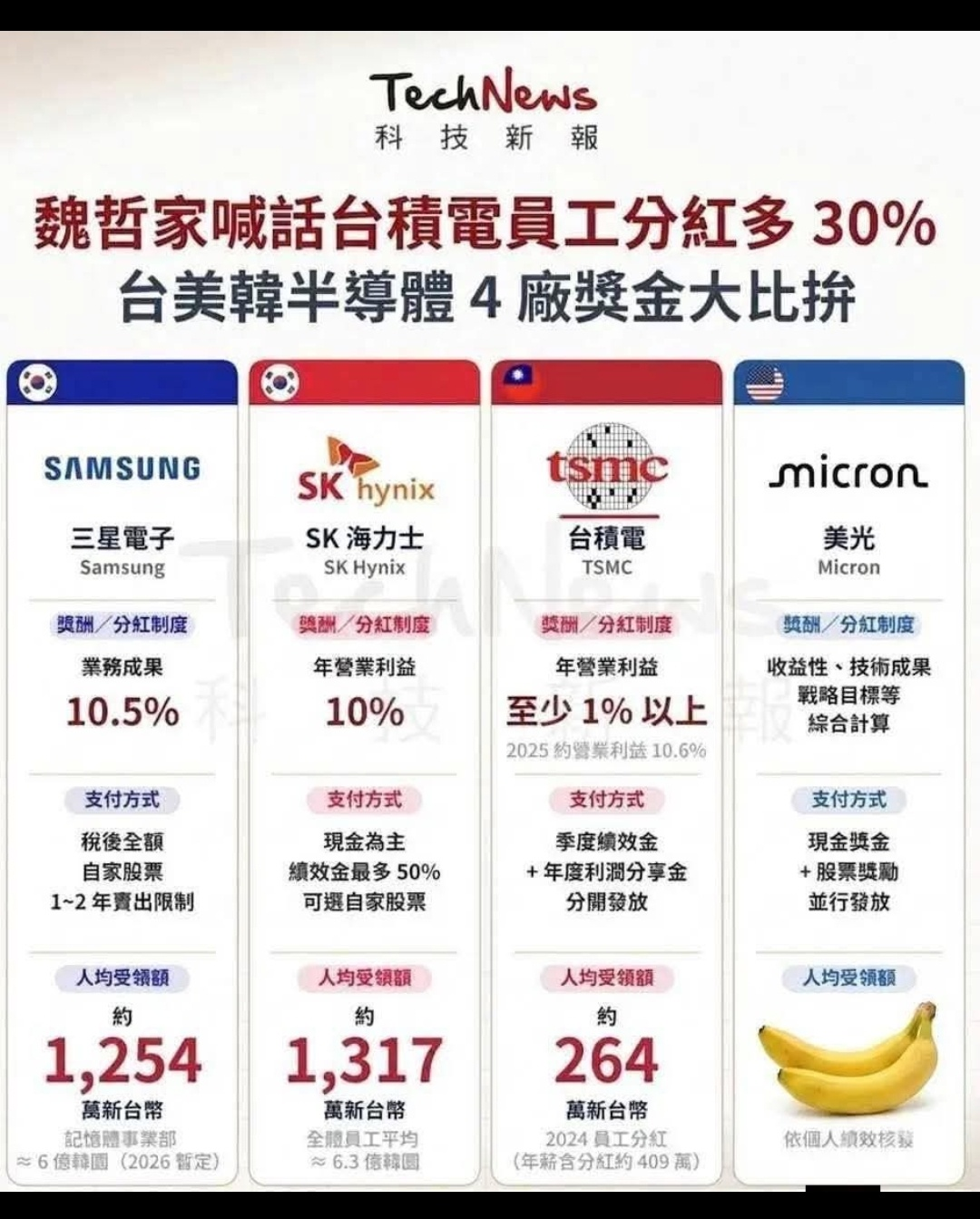
Samsung Electronics' bonus agreement has given TSMC engineers a concrete benchmark for comparing their own compensation against peers in the industry.
"CEOs in Taiwan's semiconductor industry generally want to pay only at the Taiwan market rate, benchmarking against other local companies," A said. "TSMC has paid far more than other Taiwanese companies in that regard." Even so, A said the Samsung Electronics deal was a turning point: "It made TSMC engineers realize they could be earning much more, and it unleashed a sense of deprivation — 'We're providing the world's most advanced knowledge, so why are we paid this little?'"
That mood has fueled an "on-call refusal movement" among TSMC engineers. Under normal practice, TSMC engineers must be on call around the clock, responding immediately whenever a production line problem arises or a customer makes a demand. Following the Samsung Electronics bonus agreement, engineers have begun pushing back with the attitude of "I'll work as much as I'm paid."
"Engineers routinely work 12 to 16 hours a day. Having four weekends off in a month is considered lucky," A said. When the on-call refusal movement gained momentum, the company responded by hiring bachelor's-degree assistant engineers dedicated to handling on-call duties, easing some of the burden on senior engineers, A added.
"TSMC engineers are under intense pressure and have so much to do that overtime is unavoidable — there isn't even enough time to sleep after getting home," A said. "On top of that, they're paid far less than what Samsung offers in bonuses, so everyone is furious and some have started refusing work altogether. If Samsung had a factory in Taiwan, TSMC engineers would have defected en masse to Samsung Electronics for the better working conditions and pay."
TSMC employees have cited the Samsung Electronics union agreement to pressure management, raising the possibility of strikes and union formation to voice their bonus grievances. TSMC CEO C.C. Wei abruptly canceled a business trip to the Netherlands and held a town hall meeting with employees, announcing that the company's profit-sharing bonus pool for this year would grow by more than 30 percent compared with last year.
The ripple effect of the Samsung Electronics bonus agreement has been strong enough to sap the motivation of TSMC engineers. "Taiwan is constantly under the threat of a Chinese invasion, and TSMC plays the role of a so-called 'Silicon Shield' protecting Taiwan from that threat," A said. "Engineers have worked hard out of that sense of patriotism." But the Samsung deal changed the atmosphere: "TSMC engineers are now deeply disappointed in the company and say they no longer feel like working."
The Samsung Electronics bonus debate has hit Micron's Taiwan operations as well. An engineer working at Micron Taiwan said colleagues have been sending complaints directly to CEO Sanjay Mehrotra, asking: "Our share price is higher than SK Hynix's and Samsung Electronics', so why are our bonuses lower than theirs?" and "You have money to build factories but not to improve employee treatment?" The engineer added that some colleagues are now considering jumping to SK Hynix or Samsung Electronics.
Lin Hong-wen, an adviser at Taiwanese business magazine Jinzhoukan who has covered TSMC for 30 years, said the bonus discontent reflects a broader cultural shift. "In Taiwan, too, the so-called 'tang ping' — or lying-flat — culture is spreading, with people pursuing work-life balance instead of a spirit of sacrifice for the company and the nation," Lin said. At the same time, he noted, former TSMC Chairman Mark Liu has said at recruitment events that TSMC wants not merely smart people but talent willing to dedicate themselves to advancing cutting-edge technology. "It's a generational conflict," Lin said.
Wu Da-ren, a research fellow at the Taiwan Economic Development Research Center at National Central University, said Taiwan's semiconductor talent has earned a global reputation for cost-effectiveness — delivering flawlessly on demanding assignments, even through all-nighters, without pushing back against the organization. "Global big-tech companies like Nvidia, Qualcomm and AMD are aggressively poaching TSMC talent by offering dramatic salary increases and better treatment," Wu said. "Taiwan's semiconductor industry needs to be on alert about brain drain."
"Foundry is a service industry, not manufacturing" — how 600-plus chipmakers collaborate in one place and compete on speed [At the Heart of Global Semiconductor Manufacturing ①]
![“파운드리는 제조업 아닌 서비스업”…600여개 반도체 기업들이 한 곳에서 협력·속도로 승부 [세계 반도체 제조 심장을 가다①]](https://wimg.heraldcorp.com/news/cms/2026/06/08/news-p.v1.20260607.52b53d4a3766466fa1e3cf12f6f8221d_T1.gif)
go@heraldcorp.com