Report from LG Electronics' Taipei Yuandong department store
Anti-China sentiment sidelines Chinese brands; Japanese rivals stuck with older models
LG ranks No. 1 in AI-based TVs, washing machines, dehumidifiers and more
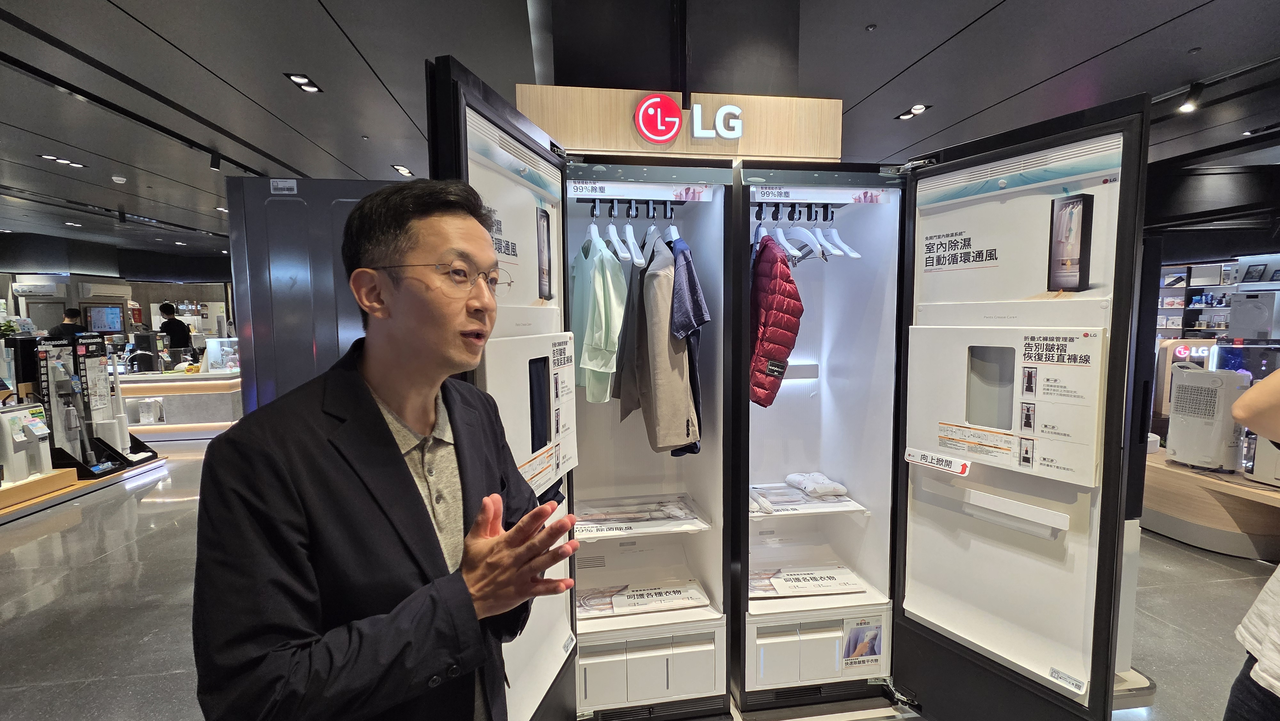
"There was anti-Korean sentiment in Taiwan, but LG worked hard to break that perception, and our standing in the Taiwan market has improved remarkably fast. LG now leads the home appliance market here."
LG Electronics is sustaining sharp growth in Taiwan by pushing an AI-driven premium appliance strategy. The company has expanded beyond straightforward product sales into subscription services, B2B and direct-to-consumer businesses, signaling that qualitative growth is achievable across Asian markets. LG currently holds the No. 1 position in Taiwan in TVs, washing machines, Stylers, air purifiers and dehumidifiers.
Kim Geon-il, head of LG Electronics' Taiwan subsidiary, said at a press briefing held at Yuandong Department Store in Xinyi District, Taipei, on May 31 that "Taiwan has one of Asia's highest levels of receptivity to advanced technology." He added that LG Electronics "is establishing itself as the fastest-growing premium home appliance brand in the local market by putting AI forward as a differentiating factor."
LG Electronics releases new products in Taiwan once a year, consistently outpacing the older-model lineups offered by Japanese rivals. The Styler is a prime example. Positioned as a "hygiene management" appliance rather than simply a "clothing care" device — reflecting Taiwan's hot, humid climate, fine-dust pollution and strong public awareness of cleanliness — the product has grown at an average annual rate of roughly 50 percent over the past three years. Outside South Korea, Taiwan is the largest overseas market for the Styler. B2B demand from hotels, premium lounges and fashion stores has also been rising rapidly.
Incorporating local consumer insights into the product has proved equally decisive. Kim said that when his team visited customers' homes, they found some using two Stylers in place of a wardrobe. "Because so many people in Taiwan ride motorcycles, their outerwear picks up a lot of exhaust fumes and pollutants," he said. "Awareness of health has also grown through experiences like SARS and COVID-19. We are actively promoting those points."
LG Electronics also holds strong positions in the air purifier and inverter dehumidifier segments. Its inverter dehumidifier commands more than 50 percent market share, keeping it at No. 1, while its air purifier ranked first by sales volume last year. Allergen-specific filters and air management technology tailored to Taiwan's large pet-owning population are cited as key competitive advantages.
The WashTower, which uses heat-pump technology, has also gained popularity by emphasizing space efficiency and ease of installation. This month, LG will launch in Taiwan a WashTower with a width of 65 centimeters — about 10 centimeters narrower than the existing model — developed at the direct request of local customers. Because TSMC alone consumes 12.5 percent of Taiwan's annual electricity output, consumers face high electricity bills, making the heat pump's energy savings a compelling selling point. The dryer function also spares users the effort of hanging laundry, and those advantages helped LG claim the top spot in Taiwan's washing machine market.
Kim noted that anti-China sentiment in Taiwan means Chinese-made imports are technically permitted across all appliance categories except refrigerators, yet consumers largely avoid them — robot vacuums being the main exception. "Japanese appliances have a high market share, but they feel old-fashioned," he said. "LG's product lifecycle is far shorter and faster than other brands. We keep bringing in new products. LG believes in the power of growth." The Taiwan subsidiary has in fact delivered double-digit growth on a five-year average and ranks among the top performers in the Asia-Pacific region in both sales and operating profit.
LG Electronics is also accelerating its subscription business beyond product sales. Taiwan is the second country outside South Korea — after Malaysia — to adopt LG's home appliance subscription service. Since a pilot program last year, subscription sales for major product categories including air conditioners, washing machines and refrigerators have grown by as much as 20 times. As of May this year, air conditioner subscription sales were up 50 percent from a year earlier.
The company has also stepped up its corporate social responsibility activities. After typhoon damage struck the Hualien region last year, LG donated 100 washing machines and provided free inspections and repairs. It continues to run a range of community programs, including education support for rural areas, AI education programs, youth sports support and school meal assistance.
"Taiwan and South Korea share many economic and cultural similarities," Kim said. "We will earn our place as a trusted premium brand by delivering innovative products and differentiated services, while also fulfilling our responsibilities as a corporate citizen."
go@heraldcorp.com