AI seen widening income divide further
By Kim Byeo-ri, The Herald Business
South Korea has entered a phase of "compound polarization" in which asset inequality and income inequality are deteriorating simultaneously, the Bank of Korea warned Thursday. In a report on household polarization in the Korean economy, the central bank said surging real estate prices have entrenched wealth disparities while income gaps — which had been narrowing — are now widening again.
The report said structural asset polarization between households and generations has taken hold amid soaring property prices, and that income inequality, which had been on a moderating trend, is now showing signs of re-expansion driven by uneven growth across industries.
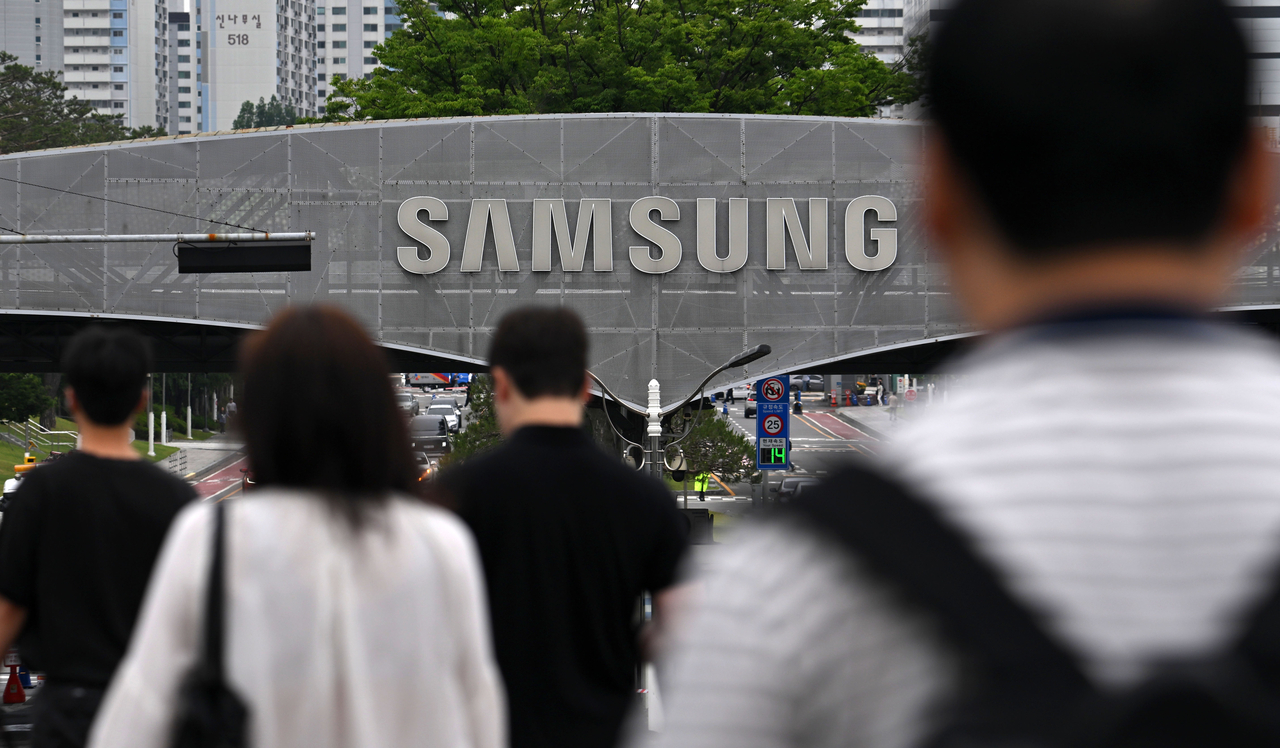
The income Gini coefficient, a measure of income inequality, had been falling since 2021 but rebounded in 2024 for the first time in three years. The bank pointed particularly to the technology sector, where Samsung Electronics and SK Hynix have announced large performance bonuses, pushing wages sharply higher — while wage growth in other sectors remains limited, deepening income inequality across industries.
"A defining feature of recent income polarization is that wage gaps, which in the past were largely tied to employment type — regular versus non-regular workers — are now emerging between industries," said Lee Jae-ho, a deputy director at the Bank of Korea's research department.
The spread of AI technology is also likely to widen income gaps further, the report found, as it increasingly displaces the work of lower-income earners and younger workers with less experience.
In a survey the Bank of Korea conducted, respondents in lower income brackets and younger age groups were more likely to say their jobs could be replaced by AI.
Employment data since the launch of generative AI tools bear this out: youth employment has declined rapidly, while employment among workers in their 50s has actually increased.
The Bank of Korea said the economic standing of non-homeowners and young people has deteriorated sharply as widening income gaps — driven in part by the spread of AI — compound an already entrenched wealth divide rooted in rising real estate prices.
Among households ranking in the bottom 20 percent for both net assets and income, the share of people in their 20s and 30s nearly doubled, rising from 7.9 percent in 2020 to 15.2 percent in 2025. Across all age groups, only the shares of people in their 20s and 30s grew.
The bank cautioned that deepening asset and income polarization risks dragging down overall economic productivity and acting as a brake on growth.
The report found that a 1 percentage point increase in the top 10 percent's share of assets is associated with a 0.16 percent decline in total factor productivity — a measure of how efficiently an economy converts labor, capital, and intangible inputs such as technology development and labor relations into output.
The bank added that reduced economic capacity among lower-income and younger households — who tend to spend a higher share of their income — could dampen domestic demand across the broader economy.
To address compound polarization, the Bank of Korea recommended restructuring household asset portfolios away from real estate and channeling household funds toward productive sectors to improve resource allocation.
It also called for redesigning redistribution systems so that the gains from technological progress spread more broadly across the economy, and for strengthening job training and career transition support for workers in occupations most at risk of technological displacement.
The bank further said that for the gains from the IT sector to ripple through the wider economy, South Korea should strengthen the domestic ecosystem around key industries such as semiconductors — including materials, components and equipment — while also increasing investment in non-IT strategic industries such as shipbuilding, defense and nuclear power.
![“비트코인 5만5000달러 급락” 베팅 73%…시총 1조2500억달러 증발 [크립토360]](https://wimg.heraldcorp.com/news/cms/2026/06/10/news-p.v1.20260610.692962efcc8241739e56c5f808607d93_T1.png)
kimstar@heraldcorp.com