Messi, 39, and Ronaldo, 41, prepare for their sixth — and likely final — World Cup
South America's best vs. Europe's best in one last showdown
Both overcame poverty and serious illness to reach the pinnacle of the sport
The GOAT debate has all but been settled — in Messi's favor
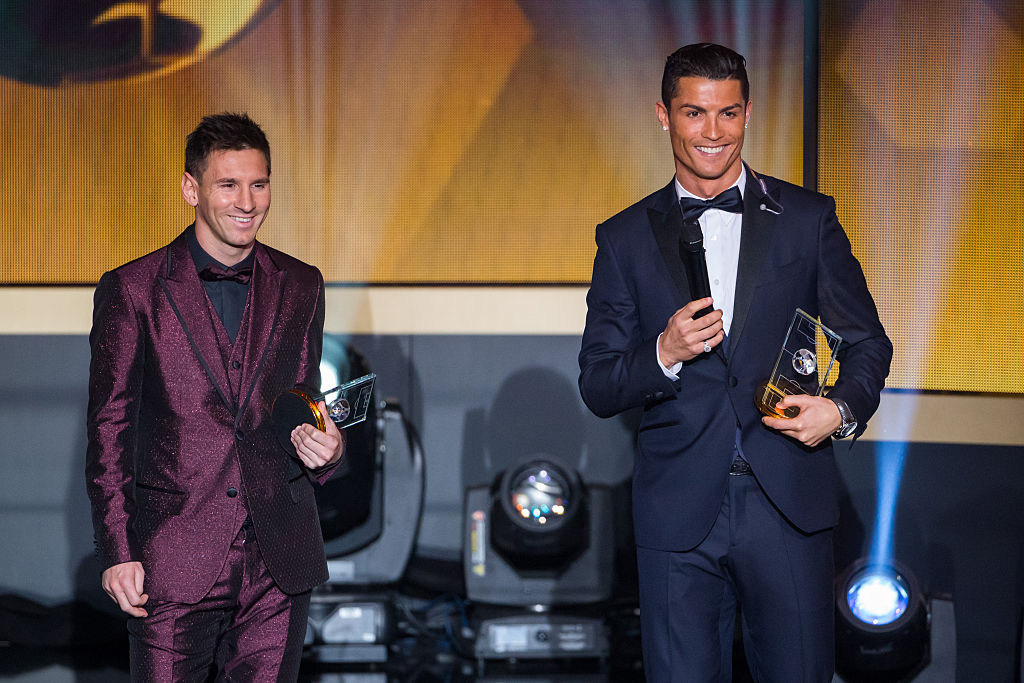
The 2026 FIFA World Cup kicks off Thursday with the match between Mexico and South Africa, marking what is expected to be the closing ceremony of the most fiercely competitive era in football history. Argentina's Lionel Messi, 39, and Portugal's Cristiano Ronaldo, 41, are set to join Mexico's Guillermo Ochoa in making their sixth World Cup appearances — a record shared by only a handful of players. Argentina, the defending champion after its 2022 triumph, is once again considered among the favorites to lift the trophy. Portugal's chances are rated considerably lower. All eyes are on how the two icons will light up the tournament one final time.
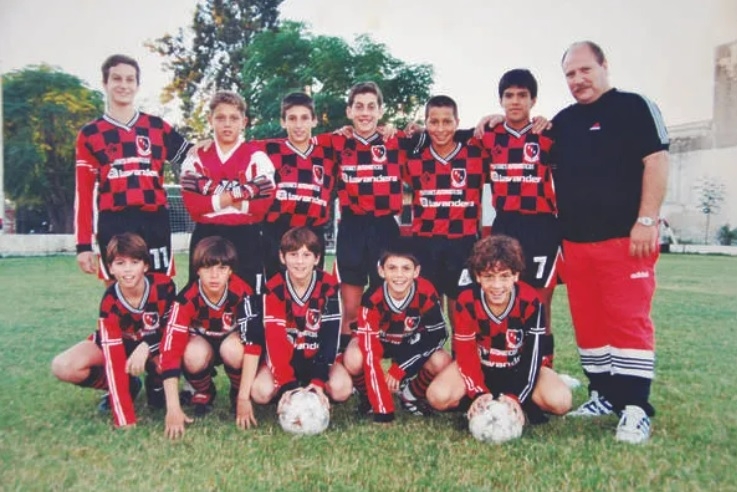
Childhood talent, poverty and illness — a shared story
The two men share remarkably parallel life stories: unmistakable talent from an early age, and the courage to overcome sudden, devastating setbacks. Raised largely by his maternal grandmother while both parents worked, a young Messi wandered into a youth football match one day and was asked to fill in for a missing player. His grandmother persuaded the organizers to let him play, and Messi put on a performance that set him irrevocably on the path to greatness.
His first great trial came at age 11, when he was diagnosed with growth hormone deficiency. Treatment cost between $1,000 and $1,500 (approximately 1.5 million to 2.3 million won) a month — far beyond what his father, a steelworker, and his mother, a cleaner, could afford. FC Barcelona provided the solution. The club's technical director, Carles Rexach, was instantly captivated after watching Messi play and brought the then-13-year-old to La Masia, Barcelona's famed youth academy, with the club covering all medical costs.
![The contract FC Barcelona signed with Messi when he was 13 years old. Technical director Carles Rexach was in such a hurry to secure the deal that, unable to find paper nearby, he wrote the agreement by hand on a restaurant napkin. [Getty Images]](https://wimg.heraldcorp.com/news/cms/2026/06/11/news-p.v1.20260607.f4b3d47720a14fd9ac0ccf67414539a4_P1.jpg)
Cristiano Ronaldo's childhood was, if anything, even harder. His father struggled with alcoholism, his brother battled drug addiction, and his mother worked as a cleaner to keep the family afloat.
Ronaldo grew up in Funchal on the island of Madeira — one of Portugal's poorer regions — in what was considered the poorest household in the neighborhood. Excluded from the other children's games, he spent his days alone in an empty lot playing in the dirt, until a stray football rolled his way and he felt a rush of joy unlike anything before. He begged his mother to let him play, and after honing his skills at CF Andorinha and CD Nacional, he joined Sporting CP's youth academy.
Crisis struck when Ronaldo was 17: he was diagnosed with tachycardia and required heart surgery. The ordeal brought his fractured family together. His father and brother found work, and the family pooled their savings over more than a year to pay for the operation. After surgery and an intensive rehabilitation, Ronaldo rose through Sporting's ranks at a remarkable pace, becoming the only player in the club's history to represent the youth, reserve and first teams all in the same season.
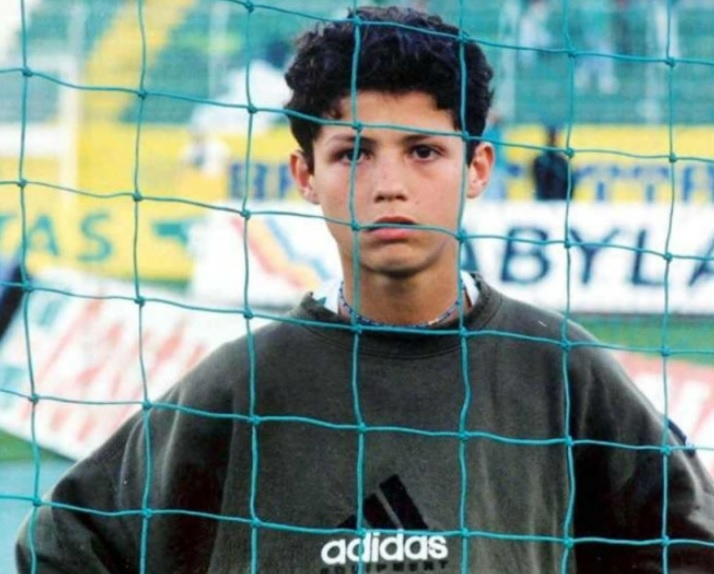
Beyond human — messiah, alien, legend
Rumors of a "secret weapon" hidden inside La Masia had spread well beyond Spain. In the 2004-05 season, the secret was finally revealed. Messi made his official La Liga debut at 17, becoming the youngest player to appear in the league at the time.
By the time he left Barcelona in 2021, Messi had played 778 matches for the club, scoring 672 goals and registering 268 assists. During his time there, he won the FIFA World Player of the Year award twice, the Ballon d'Or twice, and the combined FIFA Ballon d'Or — awarded during the years the two prizes were merged — four times. He added one more Ballon d'Or and one FIFA World Player of the Year award during his stint at Paris Saint-Germain (2021-22), then claimed another Ballon d'Or and another FIFA World Player of the Year honor in 2023 and 2024 while at Inter Miami.
Yet for all his club brilliance in the 2010s, his record with the national team was a source of frustration. He won gold at the 2008 Beijing Olympics, but the World Cup eluded him, and Argentina repeatedly fell short at the Copa América, losing to Chile on multiple occasions.
The anguish ran so deep that Messi announced his retirement from international football, only to reverse the decision. When he made the announcement in 2016, Argentina launched a nationwide campaign to bring him back.
Billboards at airports and along highways read "No Te Vayas Lio. PERDONANOS" — "Don't go, Leo. Forgive us." Then-President Mauricio Macri called Messi personally to persuade him to stay. The city of Buenos Aires erected a statue in his honor, and rallies and petition drives followed. Once he returned, results seemed almost magical. Argentina won the Copa América in 2021, then the 2022 Qatar World Cup — with Messi also claiming the Golden Ball as the tournament's best player. He added another Copa América title in 2024.
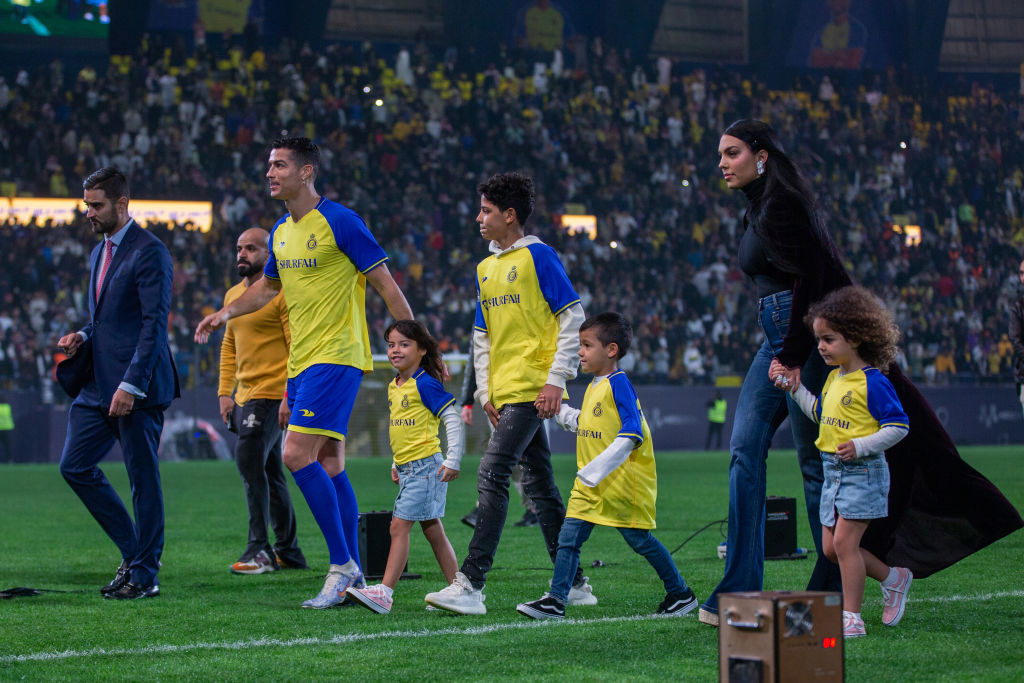
'The greatest in European history' — Ronaldo's star power proven
After his formative years in Portugal, Ronaldo began writing the first chapter of his legend in the English Premier League. Driven by the determined pursuit of then-manager Alex Ferguson, Ronaldo joined Manchester United ahead of the 2003-04 season for a transfer fee of 12.24 million pounds (approximately 17.5 billion won at the exchange rate at the time) — a record for a teenage player in English football history.
From 2009 to 2018, Ronaldo played for Real Madrid — the club his mother had always dreamed of seeing him join, and one he himself considered his dream destination. The Real Madrid years were widely recognized as Ronaldo's golden era, a period that also produced the most celebrated rivalry in football history as he and Messi faced off in El Clásico — the storied fixture between Real Madrid and FC Barcelona. During that stretch alone, Ronaldo won the Ballon d'Or twice, the FIFA World Player of the Year award twice, and the combined FIFA Ballon d'Or twice.
In 2018, Ronaldo signed with Juventus for a transfer fee of 105 million euros (approximately $121 million) and an annual salary of 30 million euros. In his first two seasons, he led Juventus to back-to-back league titles, making him the only player to have won league championships in three of Europe's four major leagues — the Premier League, La Liga and Serie A.
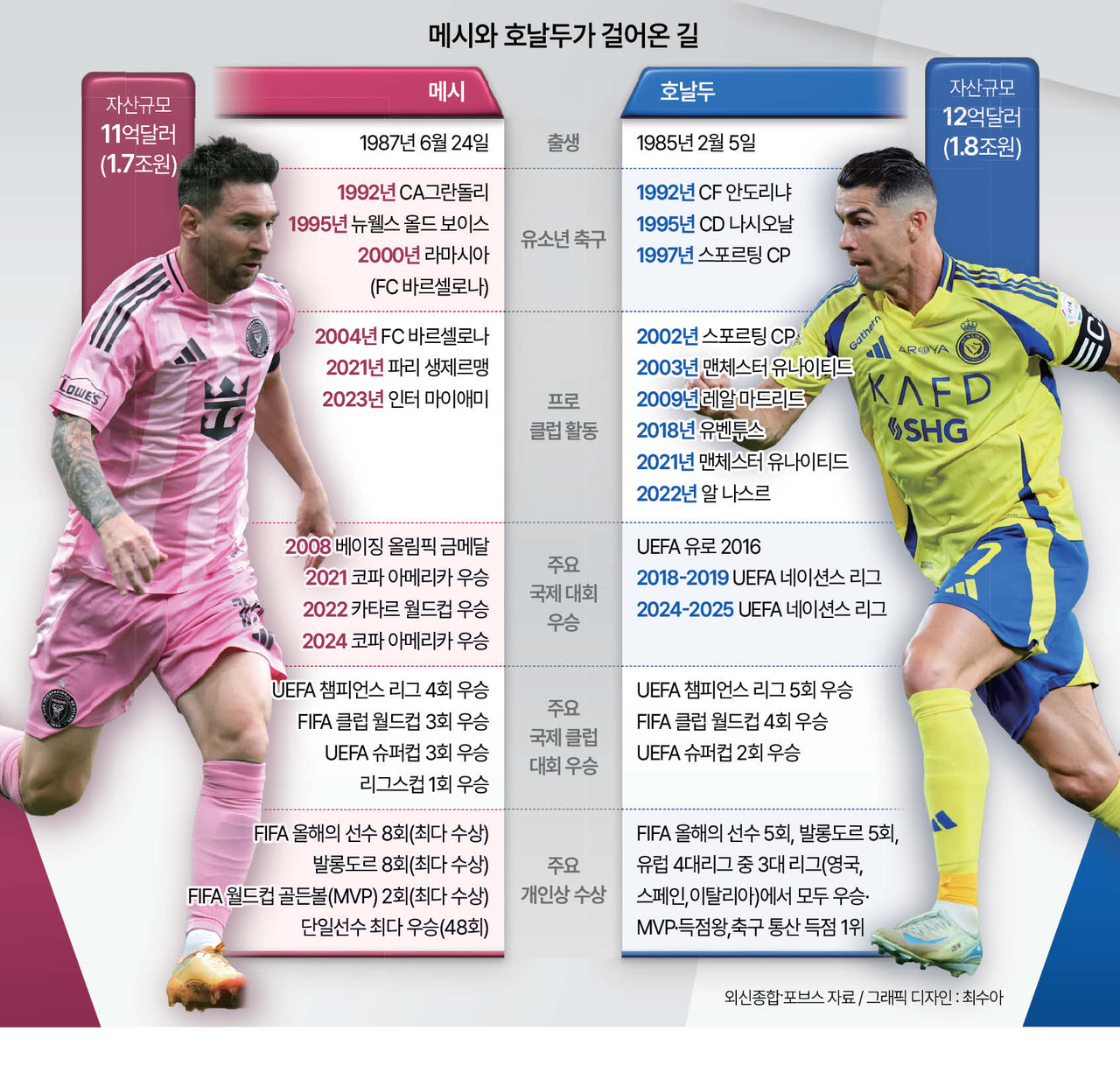
The Messi-Ronaldo rivalry — a debate that transcended football
Having two generational talents active at the same time made comparisons inevitable. The result was what fans came to call the "Messi-Ronaldo debate" — an argument that consumed the football world for more than a decade. Ronaldo was the more sensitive of the two on the subject. The surest way to unsettle him during a match, it was said, was for the crowd to chant Messi's name. Whether in club games or international fixtures, the moment fans began calling out "Messi! Messi!" the composure Ronaldo was otherwise known for would visibly crack.
Beyond their shared competitive drive and ability, the two are more different than alike. Ronaldo, at 187 centimeters (6 feet 1 inch), is praised as perhaps the greatest aerial player in history, with a vertical leap that rivals a basketball player's. Messi, at 169 centimeters (5 feet 6 inches), carries a far lower center of gravity, which makes him a master of body feints — using subtle shifts of his upper body to wrong-foot defenders.
Their personalities and private lives are near opposites. Messi is deeply introverted; Gerard Piqué and Cesc Fàbregas, his teammates in the so-called "Class of '87" at La Masia, have said they initially thought he was mute. Ronaldo, by contrast, is a natural showman who takes as much pride in his appearance as in his play.
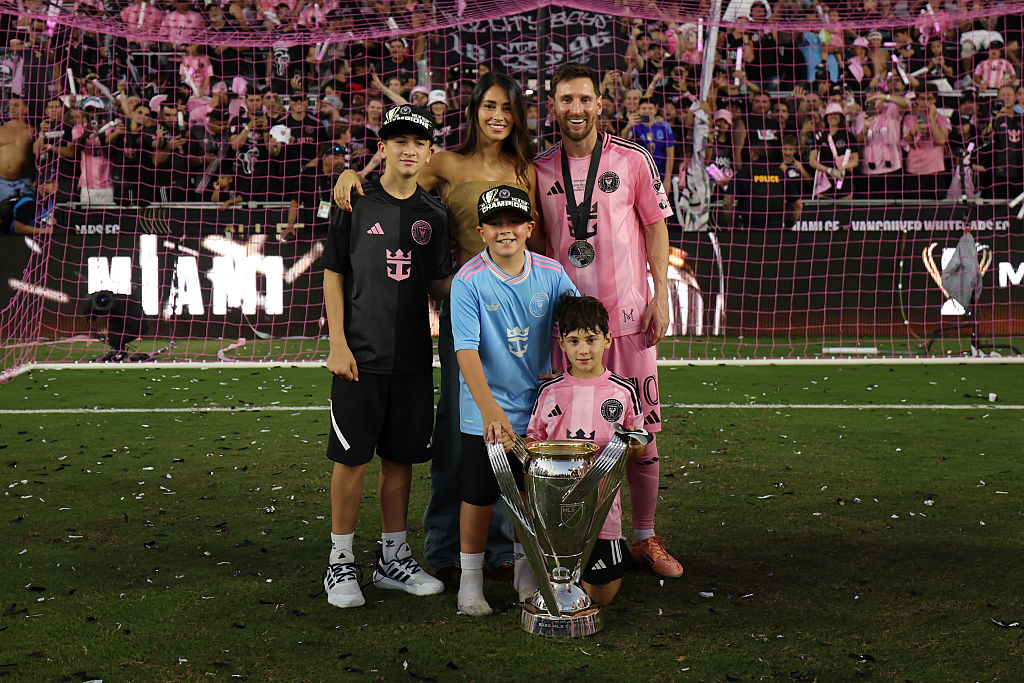
There is an old saying in football that players' wives are either childhood sweethearts or models. Messi fits the first description. After a long relationship with his childhood friend, the couple had sons in 2012 and 2015, married in 2017, and welcomed a third son in 2018.
Ronaldo is closer to the second. After a string of high-profile relationships with models and broadcasters — including Paris Hilton and Irina Shayk — he had his first son outside of a relationship in 2010. In 2016, he met Georgina Rodríguez, who was working as a sales assistant at a Gucci store, and the two have been partners ever since. In addition to his eldest son, Ronaldo has twins born via surrogate in 2017 and two daughters with Rodríguez — five children in all.
Two decades of dominance — and now, the last dance
The GOAT debate that has consumed football since the 2010s has all but been settled in Messi's favor. The consensus view is that the lineage of football's greatest runs from Pelé to Maradona to Messi. Maradona himself — who, given their shared homeland, had long been invoked whenever Messi was called "the next Maradona" — gave his blessing explicitly, saying: "My Maradona is Messi."
The decisive factor in Messi's favor was the World Cup, football's highest honor. Immediately after Argentina's victory at the 2022 Qatar World Cup, FIFA's official X (formerly Twitter) account posted: "The GOAT debate is settled. The ultimate prize is now part of the collection. The legacy is complete." Ronaldo has yet to win a World Cup, and his chances of doing so at this tournament are considered relatively slim.
This year, Spain, France, England, Argentina and Brazil are among the leading favorites. Portugal is rated a tier below. In terms of individual scoring, Messi is projected to finish around fourth or fifth in the Golden Boot standings, while Ronaldo is expected to come in around seventh or eighth.
Yet as the saying goes, the ball is round — anything can happen in football. Even if this World Cup serves as a graceful farewell for both legends, the star power they generated far beyond the pitch is likely to shine for years to come. Messi's net worth is estimated at between $850 million and $1.1 billion, built from his salary and club contracts, global sponsorships with Adidas, PepsiCo and Mastercard, and personal ventures including hotels and a beverage line.
Ronaldo's net worth is estimated at between $1.2 billion and $1.4 billion. A succession of record-breaking contracts made him the first footballer in history to become a billionaire on career earnings alone. Sponsorships with Nike and other brands, advertising revenue and personal business ventures add further to that figure.
kate01@heraldcorp.com