
Weekly closing rate stays above 1,500 won for 24th consecutive trading day
Multiple factors beyond geopolitical risk keeping exchange rate elevated
① Global inflation fears push dollar higher
② Speculative trading — plus real demand and hedging needs
③ Discord persists, ceasefire deal remains uncertain
Inflation concerns must ease first — prolonged high rate seen as inevitable
By Kim Byeo-ri, The Herald Business
The won-dollar exchange rate remains stubbornly above 1,500 won even after the United States and Iran reached a ceasefire agreement, leaving the expected relief from reduced geopolitical risk largely unrealized. Analysts warn that the elevated rate could persist for a considerable time until inflation concerns are brought under control.
Financial industry sources said Friday that foreign exchange authorities attribute the won-dollar rate's continued elevation above 1,500 won — even after news of the US-Iran ceasefire — to three factors: uncertainty over interest rate hikes, dollar demand and speculation, and the incomplete nature of the US-Iran agreement.
Won above 1,500 won for 24 trading days straight as global inflation fears linger
The won-dollar rate closed the weekly session Thursday at 1,527 won, down 0.1 won from the previous trading day on the Seoul foreign exchange market. The rate has now posted a weekly closing above 1,500 won for 24 consecutive trading days since May 15, when it closed at 1,500.8 won. The rate briefly dipped to the 1,510-won range — slightly below prior levels — from June 15 through June 17 as news of the US-Iran ceasefire deal spread. But it rebounded after the US Federal Open Market Committee sent hawkish signals on monetary policy, breaking back above 1,540 won in Thursday's after-hours session for the first time in eight trading days.
Although the Iran war — long cited as a root cause of the elevated exchange rate — appears to be winding down, the rate remains high because complex factors beyond geopolitical variables are propping up its floor.
Chief among them is persistent global inflation concern. While oil prices have broadly declined since the ceasefire, energy costs that stayed elevated for more than four months are expected to push up overall prices with a lag. Oil prices themselves are also unlikely to fall sharply, given anticipated demand from infrastructure reconstruction and restocking by various countries.
The dollar has strengthened further as the United States recently signaled a possible rate hike, citing inflation pressure. The dot plot released by the FOMC early Wednesday showed a median forecast for the benchmark interest rate at the end of this year of 3.8 percent — up 0.4 percentage points from the 3.4 percent median in the previous dot plot released in March. That shift is widely interpreted as reflecting a consensus among participants that one rate hike this year is likely.
The dollar index, which measures the greenback against six major currencies, rose 0.18 percent Thursday to 100.99. At one point during the session it climbed as high as 101.12, hitting its highest level in 13 months.
Speculative trading skews exchange rate — real demand and hedging add to pressure
Speculative trading, which authorities have recently identified as a key driver of exchange rate distortion, is also at play. When speculative demand betting on won weakness grows in the non-deliverable forward market, domestic foreign banks buy dollars in the domestic spot market to hedge their exposure — pushing up dollar demand in the spot market and driving the rate even higher. The Bank of Korea and the Financial Supervisory Service have been monitoring activities that artificially move or fix foreign exchange rates in response.
Beyond speculative trading, genuine demand for dollars has also increased. The stock market is a prime example. Last month, foreign investors recorded net selling of 44.715 trillion won (about $29.4 billion) in Kospi — the largest monthly net selling figure in history. The surge in profit-taking is seen as a result of portfolio rebalancing amid a sharp Kospi rally. When foreign investors sell shares and convert the won proceeds into dollars, it puts upward pressure on the exchange rate. While the pace of foreign net selling has eased somewhat recently, profit-taking demand remains high.
Uncertainty over the implementation of the US-Iran ceasefire agreement is another obstacle to exchange rate stability. Some market participants have characterized the deal as effectively a "small deal" — a limited agreement — given that sensitive issues such as the nuclear program and the lifting of sanctions remain unresolved.
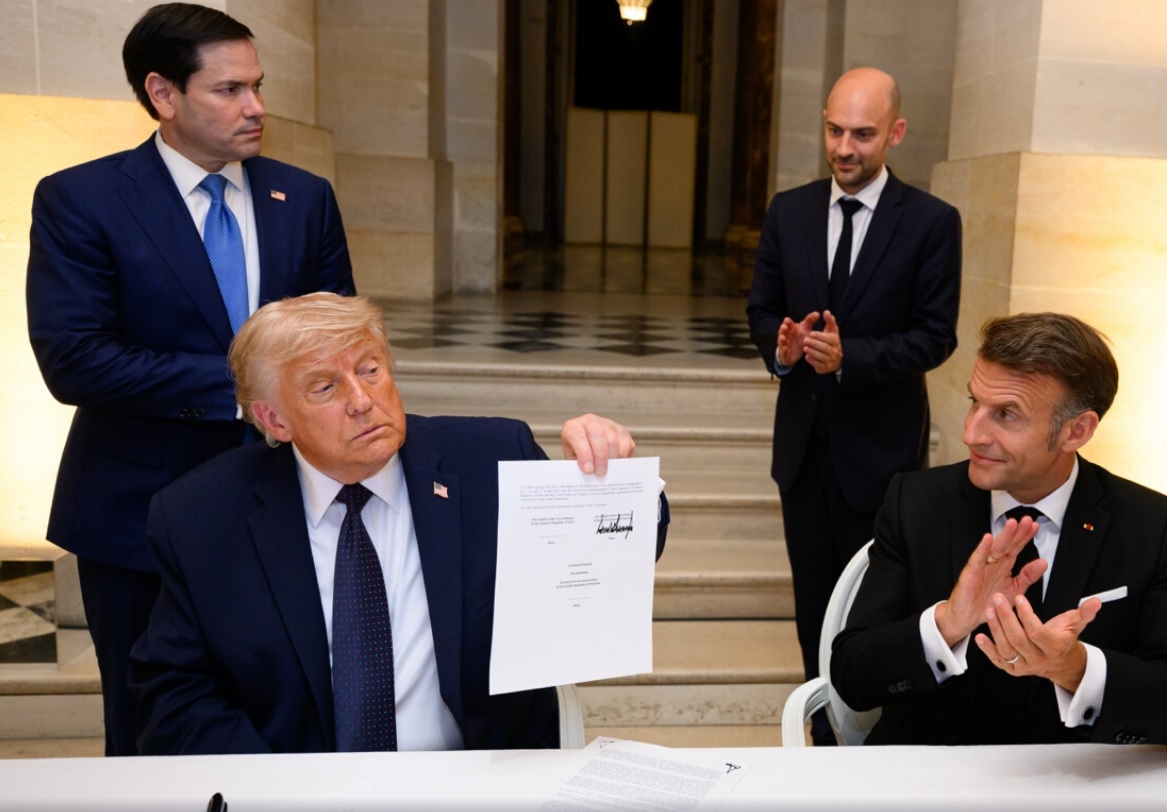
On June 17 local time, the presidents of the United States and Iran signed an MOU agreeing to open the Strait of Hormuz, lift the maritime blockade on Iran, and negotiate denuclearization and sanctions relief over 60 days. But discord emerged almost immediately after the signing, as Israel launched airstrikes on Lebanon and working-level negotiations were postponed.
Exchange rate stability hinges on resolving interest rate uncertainty — prolonged elevation seen as unavoidable
Authorities believe that resolving uncertainty over interest rate hikes must come first before the exchange rate can stabilize.
"Easing foreign investors' domestic equity rebalancing, along with resolving uncertainties such as potential rate hikes, is the most urgent priority for exchange rate stabilization," a senior official said. The implication is that the exchange rate cannot stabilize until inflation concerns are sufficiently addressed — making a quick return to lower levels unlikely.
The United States' core consumer price index — excluding energy and food — rose 2.9 percent year on year last month, 0.9 percentage points above the Federal Reserve's 2 percent target. This suggests that US inflation risk, even setting aside the effect of higher oil prices, has increased. Compounding the pressure are the fallout from the Donald Trump administration's tariff policy and massive AI infrastructure investment led by hyperscalers — companies that operate large-scale data centers.
South Korea is also expected to face continued inflation pressure through next year. Bank of Korea Governor Shin Hyun-song said June 17 at the bank's first-half 2026 inflation briefing that while risks in the Middle East have eased following the US-Iran ceasefire, "upside risks to the inflation path still remain latent." Even as oil prices fall, prices in non-energy sectors are expected to rise with a lag, and demand-side inflation pressure — centered on semiconductors — is forecast to intensify from next year onward.
"We have long pointed to supply-demand imbalances as the main cause of the elevated exchange rate, but it now seems we may have to accept a rate above 1,500 won as the new normal," another senior official said.
![“코스피140% vs. 정기예금 0.3%” 은행서 돈 빠져 나가는 소리가 들린다 [머니무브 뉴웨이브]](https://wimg.heraldcorp.com/news/cms/2026/06/18/news-p.v1.20260618.085004d3db4d4a4c8bab5ca171813cd1_T1.jpg)
kimstar@heraldcorp.com





