
'Hair loss is a survival issue for young people' vs. 'There isn't enough funding even for seriously ill patients'
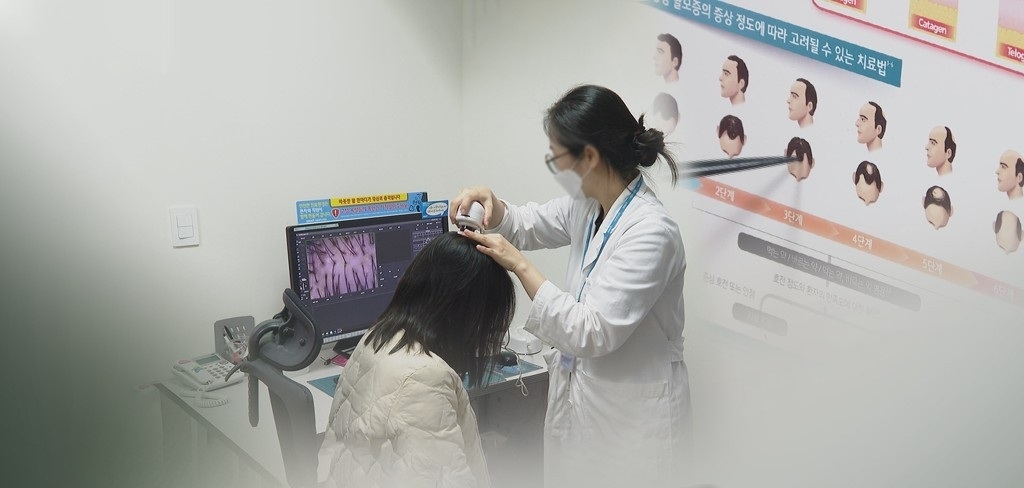
As South Korea's hair loss treatment market continues to grow, a broader public debate has begun over whether prescription hair loss drugs should be covered by the national health insurance system — a benefit they have long been denied.
With the value of prescription hair loss drugs supplied to pharmacies and hospitals rising every year, the government is now moving to hold a public policy forum to hear directly from citizens and build consensus on potential reforms.
Supply of hair loss drugs tops 250 billion won; combined drug and medical costs exceed 290 billion won
Data released Monday by the Health Insurance Review and Assessment Service, obtained by Rep. Kim Seon-min of the Rebuilding Korea Party on the National Assembly's Health and Welfare Committee, show that the supply value of prescription hair loss drugs rose steadily from 216.4 billion won ($155 million) in 2022 to 256.8 billion won in 2025.
The volume of drugs supplied over the same period jumped from about 295.7 million units in 2022 to about 446.3 million units in 2025. Through April of this year, about 157.3 million units worth 86.5 billion won had already been distributed.
The number of patients visiting hospitals for hair loss has also held steady in the hundreds of thousands each year.
Detailed claims data show that the number of patients treated for hair loss conditions was 250,573 in 2022, 247,382 in 2023, 241,217 in 2024 and 237,009 in 2025 — consistently between 230,000 and 250,000 annually.
Through April this year, 115,028 patients had sought hospital care. By gender, men accounted for 134,155 of the 2025 total compared with 102,854 women, though women made up about 43.4 percent of all patients.
By age group, patients in their 20s through 40s — the core of the working-age population — accounted for more than half of all cases. In 2025, patients in their 40s were the largest group at 53,489, followed by those in their 30s at 50,712, those in their 50s at 46,539 and those in their 20s at 35,803.
By condition, alopecia areata was by far the most common diagnosis at 175,493 patients, followed by other non-scarring hair loss at 29,583, androgenic alopecia at 23,941 and scarring alopecia at 11,779.
Medical costs paid by patients at hospitals have also been climbing year after year.
Total hospital treatment costs for hair loss conditions rose from 36.7 billion won in 2022 to 39.3 billion won in 2025. The figures cover only consultation and examination fees incurred at hospitals, excluding pharmacy dispensing costs.
Adding drug costs to hospital fees, total annual spending on hair loss treatment in 2025 exceeded 290 billion won.
Insurance burden varies by co-payment rate; a 30% patient share would cost the system 179.7 billion won
As costs mount, public pressure to bring hair loss drugs under national health insurance coverage has intensified. The debate gained fresh momentum after President Lee Jae-myung called for a review of extending coverage to hair loss treatments.
If coverage is granted, the fiscal burden on the national health insurance system will depend on how the patient co-payment rate is set. Based on 2025 prescription drug supply figures, a 30 percent co-payment rate — meaning patients pay 30 percent of drug costs out of pocket — would require the insurance system to cover about 179.7 billion won. At a 50 percent co-payment rate, the estimated cost to the system would be around 128.4 billion won.
Supporters of extending coverage argue that hair loss is a genuine medical condition that severely diminishes quality of life and can trigger depression and social anxiety. For young people facing job searches and marriage, they say, treating hair loss is not a cosmetic matter but a necessity for survival and social reintegration — and the financial burden currently borne entirely by individuals should be eased.
Opponents counter that the purpose of the national health insurance system is to protect people from life-threatening serious illnesses. With funding already insufficient for patients with cancer and cardiovascular disease, they warn that extending coverage to hair loss caused by aging or genetics could harm patients in genuine emergencies and would ultimately drive up premiums for everyone.
To bridge the divide, alternatives to an outright blanket rollout or blanket exclusion have also been proposed.
One option would target benefits selectively at young people who are socially active but economically vulnerable, or at low-income households below a certain threshold. Another approach seen as a reasonable middle ground would run a pilot program limited to a specific age group or defined population, then analyze the fiscal impact and public satisfaction before deciding whether to expand coverage.
Against this backdrop, the Ministry of Interior and Safety and the Ministry of Health and Welfare plan to hold a public forum where citizens can directly explore alternatives on this issue, where competing interests and social values collide.
The first "Everyone's Forum," co-hosted by the two ministries, will run from 10 a.m. to 6 p.m. on Saturday, July 4, at the Grand Ballroom of Yonsei University's Baekyang Nuri building. Findings drawn from study materials and expert presentations at the forum are expected to inform future revisions to the enforcement decree of the National Health Insurance Act or related ministerial notices.
thlee@heraldcorp.com





