Classified as semiconductor manufacturing components in 3rd Tariff Classification Committee ruling of 2026
South Korea has established new tariff classification standards for semiconductor manufacturing equipment components and unisex apparel.
The Korea Customs Service announced Monday that its 3rd Tariff Classification Committee of 2026 reached decisions on 11 classification cases, publishing the resulting amendments to the "Notice on Tariff Classification Changes for Import and Export Goods" in the official gazette.
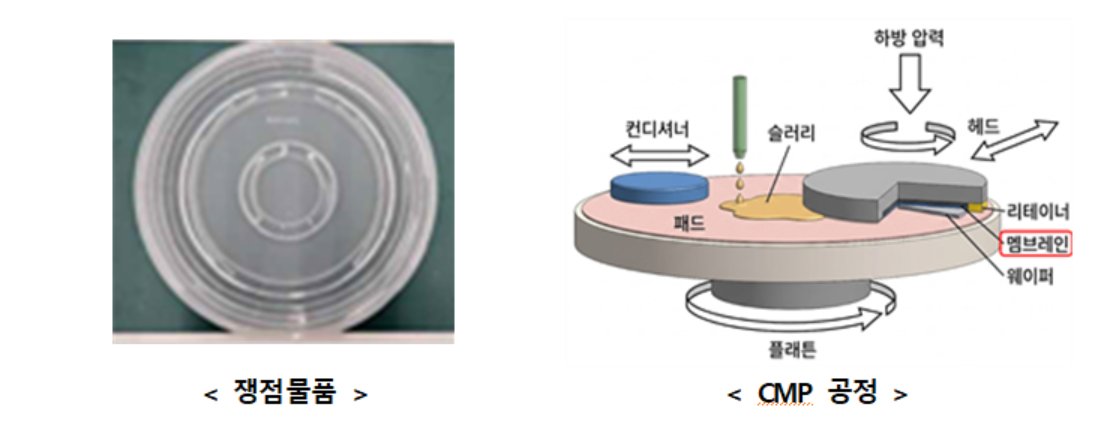
In the most significant ruling, the committee classified a "membrane" — a component installed in CMP equipment used in semiconductor manufacturing that holds wafers in place and transmits uniform pressure to enable precise surface polishing — as a part of semiconductor manufacturing machinery (subheading 8486.90-2090, base tariff rate 0%), rather than as a plastic product (subheading 3926.90-9000, WTO bound rate 6.5%).
The committee noted that the membrane is dedicated exclusively to specific CMP equipment and performs an essential function in the manufacturing process, ruling it a duty-free component of semiconductor manufacturing equipment.
The decision illustrates how actual function, intended use, and the relationship to specific equipment can outweigh raw material composition as classification criteria for advanced semiconductor industry goods. The ruling is expected to strengthen the competitiveness of the semiconductor industry by extending duty-free treatment to a key component widely used in chip manufacturing.
The committee also deliberated on the classification of trousers that carry stitching mimicking a fly-front closure but have no actual opening or fastening structure — determining whether they should fall under boys' trousers (subheading 6103.49-0000, Korea-China FTA rate 2.6%) or girls' trousers (subheading 6104.69-0000, Korea-China FTA rate 13%).
The committee ruled the garments unisex, finding no actual fastening and no objective design elements identifying them as boys' wear, and classified them as girls' trousers in accordance with World Customs Organization rules.
The ruling illustrates that apparel classification turns on actual construction under established rules rather than outward appearance alone, and is expected to improve the predictability of classifications for similar products.
The Korea Customs Service said it will continue to develop rational and consistent classification standards for newly emerging goods as the industrial environment evolves and new technologies emerge, while proactively publishing key rulings to reduce classification-related uncertainty for businesses and the public.
Oh Hyeon-jin, head of the Revenue Examination Division, urged import and export companies to make active use of the advance tariff classification ruling system, which the agency also operates to help resolve classification uncertainty.
kwonhl@heraldcorp.com