Guidelines aim to improve user convenience and support efficient, safe facility operations
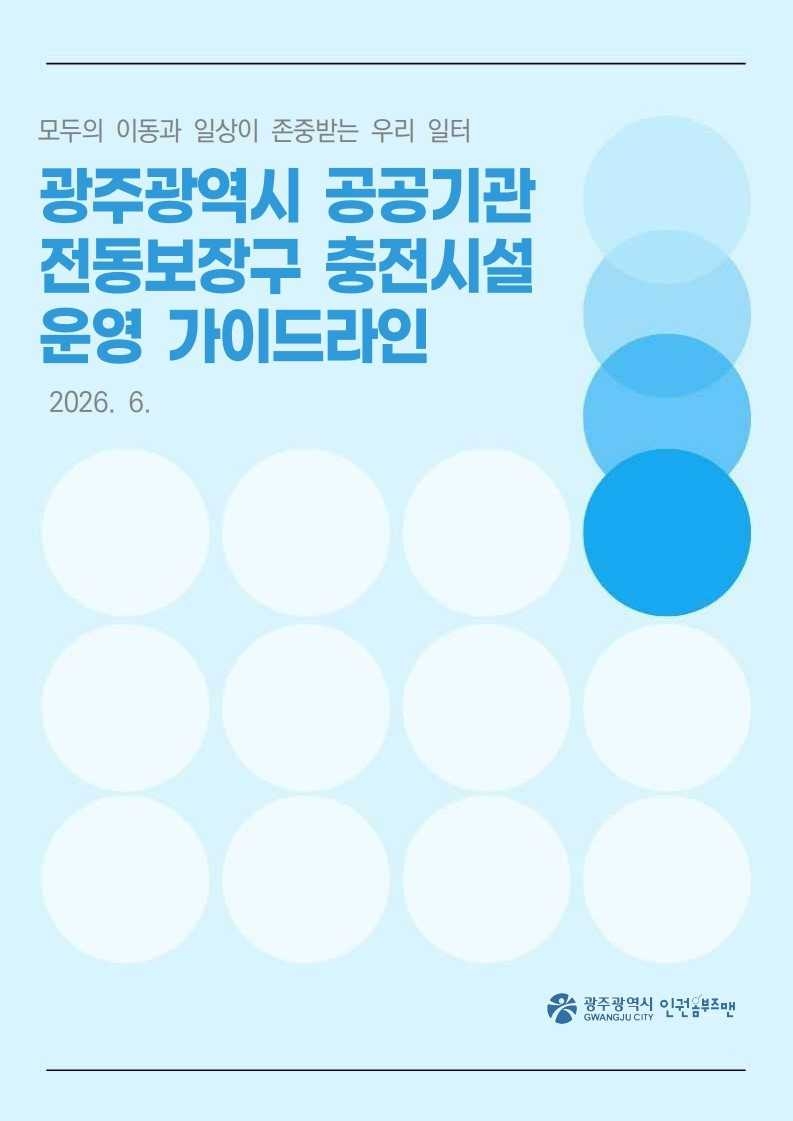
Gwangju Metropolitan City, led by Mayor Kang Ki-jung, recently established operational guidelines for electric mobility aid charging facilities at public institutions to protect the mobility rights of electric mobility aid users and improve their access to such facilities.
Under the Act on Guarantee of Convenience Promotion for Persons with Disabilities, the Elderly, Pregnant Women, etc., public buildings and facilities frequently used by people with disabilities are required to install electric mobility aid charging stations. In practice, however, users have reported difficulties including a lack of signage indicating charging station locations, poor accessibility and inadequate safety management, highlighting the need for standardized operational guidelines.
In response, Gwangju city developed the guidelines to improve convenience for charging facility users and to support public institutions in operating the facilities efficiently and safely.
The guidelines are built around facility improvement measures drawn from the usage needs and on-site feedback of electric mobility aid users, as well as practical information that public institutions can apply during installation and management.
Specifically, the guidelines cover an analysis of electric mobility aid users' charging needs, installation and management standards for charging facilities, examples of successful improvements, and precautions for facility operators. They also include a checklist to help each institution independently assess and improve the accessibility, convenience and safety of its charging facilities.
Jeon Jin-hui, standing human rights ombudsman, said charging facilities for electric mobility aids are essential infrastructure for guaranteeing the mobility rights of citizens who use electric wheelchairs and electric scooters. "I hope these guidelines will help establish a user-centered system for managing such facilities," she said.
sij@heraldcorp.com