Kang Wi-won championed data centers, semiconductors and administrative integration during his tenure — retiring Tuesday.
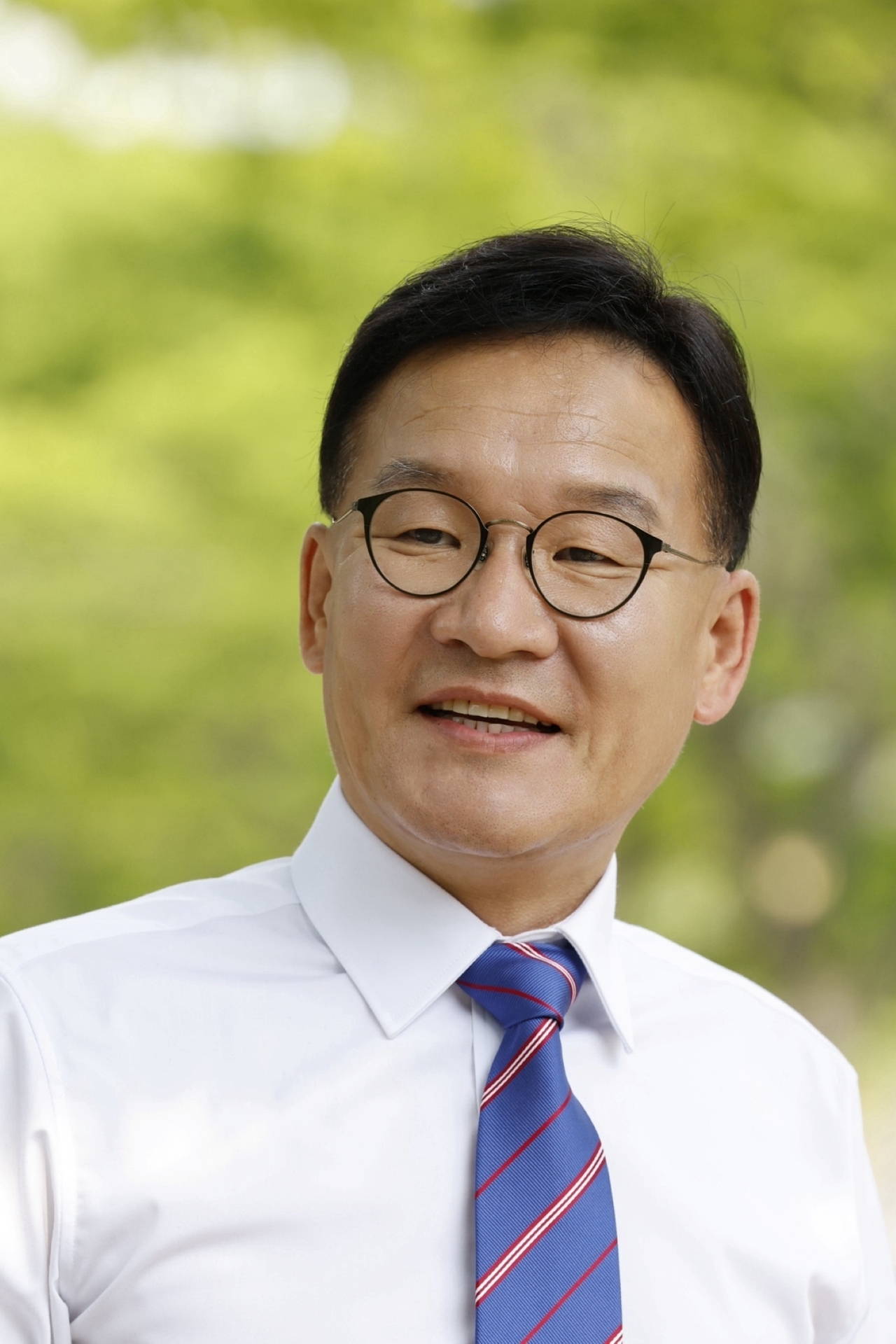
South Jeolla Province announced that Kang Wi-won, its economic deputy governor, will retire Tuesday after a tenure in which he helped secure 10 trillion won ($6.47 billion) in national government funding and advanced key initiatives in AI, data centers, semiconductors, energy and the proposed administrative merger of South Jeolla Province and Gwangju.
Kang took office in June last year and pursued the province's economic agenda through field-oriented communication and cooperation with relevant agencies. He visited the central government, the National Assembly and the presidential office to present South Jeolla's priorities and request state support.
He was particularly instrumental in advancing the Ministry of Science and ICT's national AI computing center construction project, facilitating cooperation on the SK Group-OpenAI data center, and attracting an artificial-sun research facility to the province. He also participated in efforts to recruit chipmakers before his retirement, supporting the expansion of South Jeolla's advanced-industry base.
Kang also pushed for special legislation to help the petrochemical and steel industries weather their respective crises. He was involved in efforts to designate a 7.3-gigawatt offshore wind power complex and establish distributed energy special zones across South Jeolla Province.
He worked to attract investment from companies including LS Cable & System, Sungkyung, Haejin Fisheries, Costco Korea and Yeosu Green Energy, helping to strengthen the regional industrial base and create conditions for job growth.
Kang also played a central role in the push to merge South Jeolla Province and Gwangju, serving as the inaugural co-chair of the joint integration task force. In that capacity, he oversaw preparations for the launch and the drafting of enabling legislation.
As part of that effort, he conceived and ran a civic forum — dubbed the "20 trillion won citizens' community forum" — through which residents could directly propose how to use the government's administrative integration support funds. The forum drew 10,000 members and gathered policy opinions spanning future industries, health and welfare, and social overhead capital.
He also held five rounds of an offline public deliberation forum called "Baran," creating a space where residents could propose and debate policies directly rather than through formal protocol. The sessions broadened the governance foundation for citizen participation in the policymaking process.
"It was meaningful and an honor to work as economic deputy governor and to be part of laying the groundwork for South Jeolla's advanced industries and energy transition," Kang said. "I am deeply grateful to the residents and fellow public servants who helped open the path to a new era of local governance. I will always cheer for the development and prosperity of the integrated special city of South Jeolla and Gwangju."
Kang is a native of Myoryang-myeon in Yeonggwang and previously served as student body president at Chonnam National University and chair of the Korean Federation of University Student Associations. He later led the civic group Yeomindongnak, served as director of the Gwangsan-gu Senior Welfare Center under Deobureolak, and headed the Gyeonggi Province Agriculture and Fisheries Promotion Agency. Throughout his tenure, he communicated openly with staff and listened closely to voices from the field.
kkm9971@heraldcorp.com